NEW DELHI, November 8: The National Highways Authority of India (NHAI) has issued guidelines to standardise the design of toll plazas on four-lane and wider National Highways so they can support Multi-Lane Free Flow (MLFF) tolling, in which vehicles are charged without stopping at a barrier. The rules will apply to all future highway projects and to those already under construction, the Ministry of Road Transport and Highways said.
Key highlights
- What changes: a standard design for barrier-less toll plazas, covering layout, number of tolling lanes, gantries, road infrastructure, lighting, signage and support facilities.
- Fewer lanes: because vehicles no longer stop, the number of lanes needed at a toll plaza has been “rationalised” compared with conventional plazas.
- Where: four-lane and wider National Highways.
- Which projects: new projects at the Detailed Project Report (DPR) stage will build in the design; awarded and under-construction projects will adopt it through contract provisions.
- Safety: more lighting, advance signage and electronic variable message signs (VMS) at tolling zones.
| Project stage | How the MLFF design applies |
|---|---|
| Detailed Project Report (DPR) stage | New design incorporated in project documents |
| Already awarded | Changes adopted through applicable contractual provisions |
| Under construction | Changes adopted through applicable contractual provisions |
| NHAI field offices | Directed to include requirements in upcoming projects and help ongoing ones adopt them |
What MLFF means for drivers
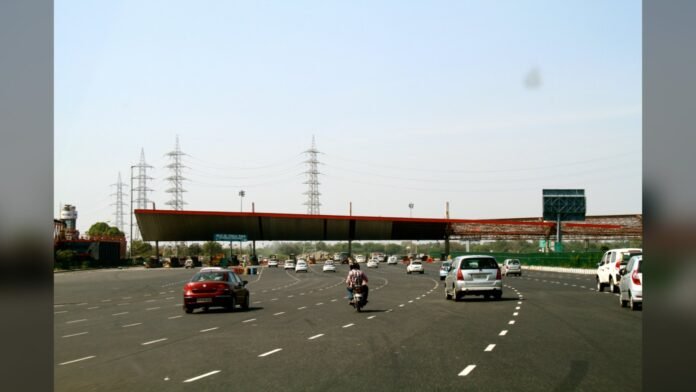
In a conventional toll plaza, vehicles slow down and stop at a booth or a barrier while the fee is collected. Under MLFF, tolls are collected electronically as vehicles pass under overhead gantries, so traffic keeps moving. The ministry said the aim is to eliminate queues and waiting time, cut fuel burned at toll plazas and make highway journeys safer and smoother.
What the guidelines cover
The policy circular sets out uniform requirements for the plaza layout, lane configuration, the provision and placement of gantries, road safety features, signage and lighting. It also provides for an administrative building that doubles as an operations and maintenance centre for each plaza. NHAI had earlier issued separate guidelines for planning and designing high-speed, access-controlled National Highways other than expressways.
Our calculation
- The guidelines cover three groups of projects: those at the DPR stage, those already awarded, and those under construction.
- Unlike conventional plazas, MLFF plazas need fewer lanes, which frees up land and road space at the tolling zone, according to the ministry.
What it means for India and Asia
Toll queues are a daily cost for truckers, bus operators and car owners on India’s busiest corridors. Standard designs mean new highways will be built ready for barrier-free tolling, rather than being retrofitted later. Several Asian countries already use free-flow electronic tolling on expressways, and India’s move brings its highway network closer to that model as traffic grows.
What to watch
- Which highway stretches get MLFF plazas first under the new design.
- How tolls will be enforced on vehicles that pass without valid payment, which the release does not detail.
- Updates to FASTag and number-plate rules that support barrier-free tolling.
A conventional toll plaza on a National Highway in Rajasthan (file photo). Image: TeshTesh, CC BY-SA 4.0, via Wikimedia Commons. Photo source · Licence
Sources

The National Desk covers India's politics, governance, security and public-interest news. Stories are checked against at least two credible sources before publication.