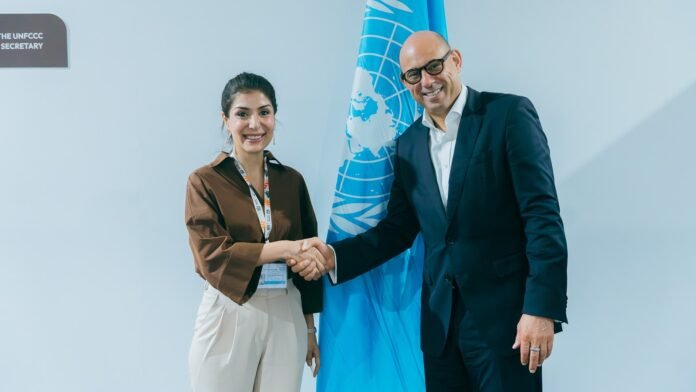
November 9: The World Meteorological Organization released its 2026 climate update as COP31 opened in Antalya, warning of exceptional heat and risks from a strengthening El Niño. At a November 9 press conference, UN climate chief Simon Stiell also urged negotiators to treat climate impacts as a health issue, with major consequences for Asia.
Key highlights
- January–September global temperature averaged about 1.47°C above the pre-industrial baseline.
- The update is provisional and does not provide a completed full-year result.
- WMO says El Niño can intensify risks into 2027.
- Early warnings and health-system preparedness are central concerns.
What the temperature figure does and does not mean
WMO’s update covers data available through September, with some indicators using earlier cutoffs. The agency expects 2026 to rank among the four warmest years recorded and plans a final annual report in March 2027. The 1.47°C figure compares January–September with the 1850–1900 average.
A partial-year global temperature anomaly is not the temperature of every city, and a single year’s anomaly is different from a long-term warming threshold. Readers comparing climate headlines should check the averaging period and baseline before treating different numbers as contradictory.
The update also warns about ocean heat and sea levels. These indicators describe different parts of the climate system, so a temperature figure alone cannot summarise the exposure facing coasts, farms or high-mountain communities.
The health message at COP31
In the official UNFCCC transcript, Stiell connects extreme heat, pollution and climate disasters with pressure on health systems. WMO Secretary-General Celeste Saulo discusses dangerous heat across India, Pakistan and other parts of Asia, as well as the importance of observation networks and early warnings.
The connection is practical. A warning must reach a person in time and lead to an action that reduces exposure. For a health service, preparation can involve anticipating demand and maintaining essential operations during extreme conditions. A forecast by itself does not establish that every vulnerable person receives protection.
The speakers’ regional impact estimates do not all use identical wording or totals. This report does not combine their European mortality estimates into a single settled count. Such estimates need consistent periods, methods and definitions before they can be compared directly.
Why 2027 is part of the discussion
Saulo said El Niño generally has its largest effect on global average temperature in the year after it develops. Her remarks frame 2027 as a period requiring preparation, rather than announcing a measured full-year outcome that has already occurred.
A global climate outlook also differs from a local weather forecast. It cannot by itself tell a city whether rain will fall on a particular day. Asian readers should use national meteorological warnings and local emergency instructions for immediate decisions, alongside the broader climate information.
Early warnings are an implementation test
Saulo said the number of countries reporting multi-hazard early-warning systems increased from 56 in 2015 to 136 in 2025. The existence of a system, however, is not the same as a guarantee that every community has reliable coverage or can act on an alert.
That distinction gives negotiators and readers a concrete test: whether investment supports observations, communication and practical response. Announced finance, funds awarded and completed protective work are separate stages, and should be reported separately as COP31 continues.
At a glance
| Item | Detail |
|---|---|
| Conference opening | COP31, Antalya, November 9 |
| Temperature period | January–September 2026 |
| Published anomaly | About 1.47°C above 1850–1900 |
| Report status | Provisional update; final report due March 2027 |
| Near-term risk driver | Strengthening El Niño, according to WMO |
What to watch
The next developments are the negotiations, health and adaptation commitments, and evidence of delivery. A speech or opening-day warning is not a completed agreement. For Asia, the most useful follow-up will show who receives protection, when it becomes operational and how progress is measured.
Sources
- WMO: State of the climate in 2026 gives new meaning to off the charts
- UNFCCC: Climate and health press-conference remarks at COP31

The International Desk covers world and Asian affairs, diplomacy and conflict, with a focus on what they mean for India. Stories are checked against at least two credible sources before publication.