November 21: India’s nuclear safety regulator has authorised the first approach to criticality at Rajasthan Atomic Power Project Unit-8. The Department of Atomic Energy announced the November 19 permission on November 20, describing an important commissioning step rather than the start of commercial electricity generation.
Key highlights
- RAPP-8 is an indigenous 700 MWe pressurised heavy water reactor.
- The unit is at Rawatbhata in Rajasthan’s Chittorgarh district.
- Further commissioning tests and regulatory permissions are still required.
What the regulator approved
The Atomic Energy Regulatory Board reviewed the reactor’s design, construction, commissioning test results and operational preparedness before granting permission, the department said. Its safety committees, inspections and board deliberations formed part of the review.
The regulator will continue to oversee subsequent commissioning activities, including through its resident site observer team. The department identifies RAPP-8 as the fourth unit in the indigenous 700 MWe series, after Kakrapar Units 3 and 4 and Rajasthan Unit 7.
Criticality is different from commercial operation
First criticality concerns establishing a controlled, self-sustaining nuclear chain reaction. Permission for the first approach to that stage does not establish that the stage has already been completed. It also does not mean the unit is supplying its full rated electrical output to the grid.
The November announcement explicitly makes later phases conditional on prescribed tests and the necessary regulatory permissions. It does not announce a commercial-generation date. Reporting it as a fully operational new power station would therefore go beyond what has been confirmed.
How this fits into the wider project
NPCIL’s annual report for 2025–26 describes Rajasthan Units 7 and 8 as the second pair of India’s indigenously designed 700 MWe pressurised heavy water reactors. That document supplies project background; the newer departmental announcement establishes the November clearance.
Our analysis: the most useful way to track progress is to record each completed milestone separately. Fuel loading, first criticality, connection to the grid and commercial operation describe different stages. A target date in an older project report should not be substituted for a confirmed completion date.
Rated capacity also differs from electricity actually generated. The former describes the unit’s design rating; the latter depends on its operating conditions and time in service. A commissioning clearance alone cannot establish how much energy has been delivered to consumers.
At a glance
| Item | Confirmed position |
| Unit | Rajasthan Atomic Power Project Unit-8 |
| Location | Rawatbhata, Chittorgarh district |
| Rated capacity | 700 MWe |
| Permission | First Approach to Criticality |
| Permission date | November 19, 2026 |
| Commercial operation | Not announced in this clearance |
What to watch
Watch for separate announcements on the actual achievement of first criticality, subsequent tests and eventual commercial operation. Those developments will determine when the project moves from an authorised commissioning stage to electricity generation.
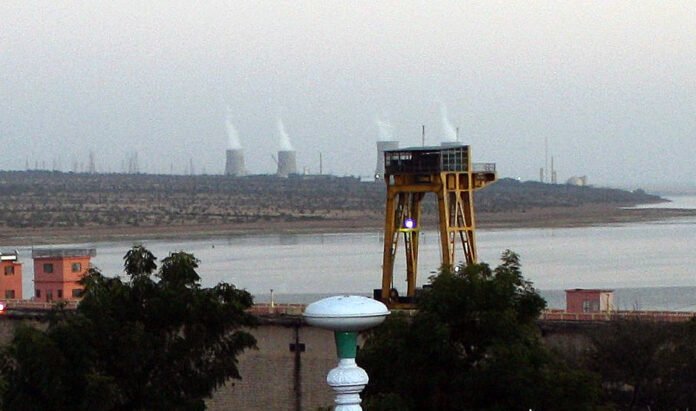
File photo: Distant view of the Rajasthan nuclear power site near Rawatbhata, February 28, 2011. Photo: Nvvchar, Wikimedia Commons, CC BY-SA 3.0. This archival site view does not show the November 2026 RAPP-8 commissioning activity.
Sources
- Department of Atomic Energy / PIB: AERB approves First Approach to Criticality of RAPP Unit-8
- NPCIL: Annual Report 2025–26, Rajasthan Atomic Power Project 7 and 8

The Tech Desk covers technology, artificial intelligence and cybersecurity. Stories are checked against at least two credible sources before publication.