November 13: An amended regional financing agreement has taken effect in East and Southeast Asia, introducing a Rapid Financing Facility for urgent external-payment needs caused by shocks such as disasters and pandemics. Japan’s Finance Ministry and the ASEAN+3 Macroeconomic Research Office confirmed that the CMIM amendments entered into force on November 11.
Key highlights
- The CMIM’s overall financing capacity remains US$240 billion.
- The new facility addresses urgent balance-of-payments needs from sudden external shocks.
- Precautionary-line drawings can also be renewed under the amended framework.
What has changed
Japan’s Finance Ministry identified two main changes: the new rapid facility and greater flexibility to renew drawings under the CMIM Precautionary Line. AMRO said the rapid facility sits alongside the existing stability and precautionary facilities. This is a change in the tools available under the arrangement, rather than an announcement that a named economy has received an emergency payment.
At a glance
| Feature | Position under the amendment |
| Effective date | November 11, 2026 |
| Overall CMIM capacity | US$240 billion, unchanged |
| New tool | CMIM Rapid Financing Facility |
| Main trigger | Urgent balance-of-payments need from a sudden external shock |
| Other change | Renewal of precautionary drawings |
How a currency safety net differs from disaster aid
Analysis: A destructive storm or a health emergency can create both a need to rebuild domestic assets and a shortage of money for international payments. These are related but different problems. Emergency foreign-currency liquidity aims at the payment pressure; it is not automatically a grant for individual households, a reconstruction contract or a payment to every person affected. That distinction matters when reading the word ‘financing’ in a crisis announcement.
Why the unchanged total matters
Analysis: Announcing a new window can make an existing arrangement more responsive without increasing the total pool behind it. The headline US$240 billion should therefore not be read as an additional US$240 billion created this week. Likewise, the existence of a facility does not mean every member may draw its entire headline capacity. The relevant agreement, access provisions and decisions govern actual use.
The currencies and the operating framework
AMRO’s explanation says support can be provided in eligible freely usable currencies, including the US dollar, renminbi and yen. It also describes access limits and arrangements for exchanging non-dollar support into dollars. Its account says the rapid facility is not subject to pre-qualification criteria or subsequent programme conditionality. Those features should be read within the facility’s eligibility and operational framework, not as unlimited funding available without a defined need.
What to watch
The next substantive developments would include operational guidance, any announced activation and evidence of how quickly eligible support can reach a member. AMRO supports the arrangement through surveillance and operational work. For the public, the key measure of success will be whether a temporary external shock can be addressed before it becomes a deeper payment or confidence problem, while retaining a credible framework for the shared resources.
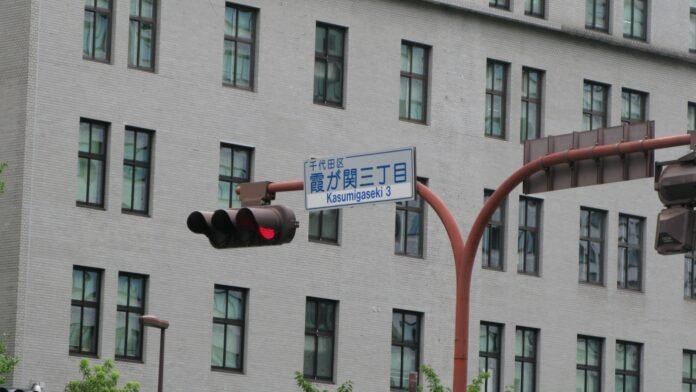
File photo: Japan’s Ministry of Finance building in Tokyo, August 12, 2025. Photo: Comessu / Wikimedia Commons, CC BY-SA 4.0. Cropped and resized; not a photograph of the current event. Photo source; CC BY-SA 4.0.
Sources
- Japan Ministry of Finance: Amended CMIM takes effect
- AMRO: Rapid Financing Facility enters into force

The Business Desk covers markets, the economy, companies and personal finance. Stories are checked against at least two credible sources before publication.