November 11: Indian students have won two gold, two silver and one bronze medal at the fifth International Olympiad on Astronomy and Astrophysics for Juniors in Thailand. A PIB Kolkata release details the results and the National Council of Science Museums’ selection and preparation programme.
Key highlights
- The competition ran from November 1 to November 8 in Ubon Ratchathani.
- The host records 104 students from 25 countries.
- All five students named in India’s team received medals.
- NCSM facilitated India’s participation through a multi-stage selection and training process.
India’s medallists
| Student | Medal | School location identified by PIB |
|---|---|---|
| Siddharth Laxmisha | Gold | Puducherry |
| Swara Srujal Patel | Gold | Gujarat |
| Aarna Chaplot | Silver | Kota, Rajasthan |
| Krish Bhaskar | Silver | Bagar, Rajasthan |
| Akshara Gulab Ambone | Bronze | Maharashtra |
The medal count identifies India’s individual awards. It should not be converted into a global team rank unless an official ranking using a defined method is available.
How the Indian team was prepared
PIB describes a five-stage selection process under the Indian National Junior Astronomy Olympiad. Twenty-five shortlisted students attended an orientation and selection camp at NCSM headquarters during May 12–31. The selected five then attended a pre-departure camp from October 26–31.
Those dates explain the distinction between the national preparation programme and the international competition itself. A training-camp participant is not automatically an international medallist; the final team and results need to be identified separately.
A junior competition with an international field
The organiser’s website identifies the event as a junior astronomy and astrophysics competition and independently confirms its dates, location and student count. Its programme is a separate event from the senior International Olympiad on Astronomy and Astrophysics.
For families and schools, that distinction matters when looking for future participation information. The relevant national representative, competition age rules and current selection notice need to be checked for the appropriate programme. A past result does not establish that registration for the next edition is open.
What the result tells us
The awards recognise the performance of the named students in this competition. They also bring attention to the preparation that takes place before a team travels. They do not, by themselves, measure the quality of all science teaching or predict the students’ future careers.
For educators, a practical follow-up is to examine the types of questions and activities used in the competition and how students can access legitimate preparation opportunities. The host publishes questions and solutions, allowing readers to understand the work behind the medals.
What to watch
Future NCSM notices will be the appropriate reference for later selection programmes. The PIB page’s posting field reads November 10, while the release body carries a November 11 dateline; this report retains the event’s separately confirmed November 1–8 dates and does not treat the posting discrepancy as a change to when the contest occurred.
The full achievement is the five-medal result, with named students and an identifiable preparation route. No overall international team ranking is claimed here.
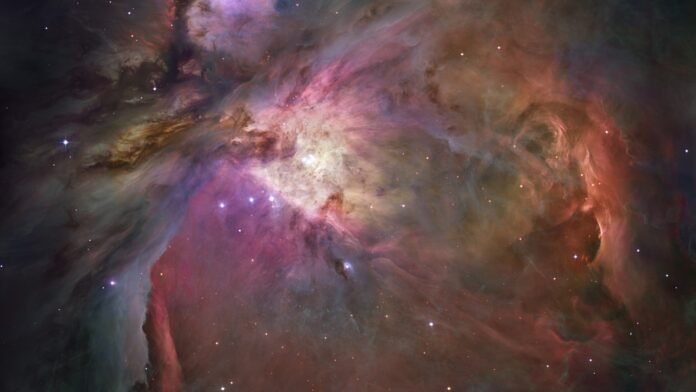
Representational image: Orion Nebula, Hubble mosaic released in 2006. NASA, ESA, M. Robberto (STScI/ESA) and the Hubble Space Telescope Orion Treasury Project Team / Wikimedia Commons, public-domain NASA/ESA Hubble material. Cropped and resized. Illustrates astronomy; not a photograph taken by the 2026 contestants.
Sources
- PIB Kolkata: India’s junior astronomy medals and NCSM preparation
- IOAA-Jr 2026 organisers: Dates, participants and competition information

The Tech Desk covers technology, artificial intelligence and cybersecurity. Stories are checked against at least two credible sources before publication.