
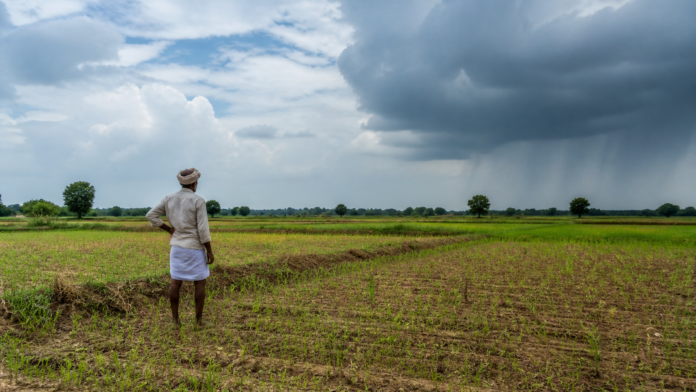
NEW DELHI, September 1, 2026: India is likely to receive below-normal rainfall in September after a weak August, raising fresh concerns for standing crops and rural incomes during the final month of the southwest monsoon season. The India Meteorological Department (IMD) expects September rainfall to be less than 91% of the long-period average, its threshold for the “below normal” category.
The forecast follows an August in which nationwide rainfall was 16% below normal. Reuters and the Indian Express, citing IMD Director General Mrutyunjay Mohapatra, reported that strengthening El Niño conditions contributed to the shortfall and are likely to continue influencing the monsoon. The outlook does not mean every part of India will be dry: the IMD expects normal rainfall in pockets of eastern and central India and the northeast.
Key highlights
- September rainfall is forecast at less than 91% of the long-period average.
- August rainfall ended 16% below normal across India.
- By the end of August, seasonal rain was about 14% below normal, with wide regional differences.
- Cotton, soybean, maize and pulses are among the crops facing higher moisture stress.
- Above-normal maximum and minimum temperatures are expected across much of the country.
India September Monsoon 2026: what the forecast means
The southwest monsoon normally begins withdrawing from parts of northwest India in September, but the month still matters for late-sown crops, reservoir levels and soil moisture ahead of the winter sowing season. A national forecast below 91% of the long-period average places the month in the IMD’s below-normal category. It is a probability-based outlook, not a prediction of identical conditions in every district.
The distribution of rain will be as important as the national total. Parts of Odisha, eastern Madhya Pradesh, Bihar, Jharkhand, eastern Uttar Pradesh, Nagaland, Manipur, Mizoram and Ladakh may receive normal rainfall, according to the regional outlook reported by the Indian Express. Farmers and local authorities therefore need district-level advisories rather than relying on the all-India headline alone.
How weak was August?
August rainfall was 16% below normal nationwide. The southern peninsula recorded a deficit of about 27%, while central India and east and northeast India were each around 16% below normal. Northwest India was about 10% below normal. By the end of August, 312 of the country’s 741 meteorological districts were classified as deficient and another 38 as large deficient, the Indian Express reported.
Those figures show why a modest improvement in one region may not erase crop stress elsewhere. Rain that arrives in short, intense bursts can also raise the monthly total without replenishing soil as effectively as well-spaced showers. Reservoir storage, groundwater, sowing dates and irrigation access will determine how individual farms cope.
Crops facing the highest risk
September rain is especially important for cotton, soybean, maize and pulses that are approaching critical stages of growth. Insufficient moisture can reduce boll formation in cotton, pod filling in soybean and grain development in maize. Pulses are also sensitive to uneven rainfall, though the impact varies by variety, soil and sowing date.
Almost half of India’s farmland lacks assured irrigation, leaving millions of cultivators dependent on the monsoon. The season delivers roughly 70% of the country’s annual rainfall and supports the livelihoods of a large share of the population. The rural impact can extend beyond harvest volumes to farm wages, food demand and loan repayment capacity.
The shortfall may also affect soil moisture before farmers sow wheat, rapeseed and other winter crops. Timely irrigation releases and efficient reservoir management could limit the damage, but areas with low storage or depleted groundwater have less room to absorb another dry spell.
El Niño and higher temperatures
The IMD said El Niño conditions in the tropical Pacific strengthened further and contributed to the weak August rainfall. El Niño often suppresses the Indian summer monsoon, but the relationship is not automatic; regional weather systems, the Indian Ocean and shorter-term circulation patterns can alter the outcome.
Below-normal rain is also associated with less cloud cover and higher daytime temperatures. The September outlook points to above-normal maximum and minimum temperatures over much of India. Extra heat can accelerate evaporation and increase irrigation demand, deepening stress even where the rainfall deficit appears moderate.
Why this matters for food prices and GDP
A weaker harvest can raise prices for edible oils, pulses, vegetables and livestock feed, although inventories, imports and government market interventions also influence retail inflation. Food has a heavy weight in India’s consumer price index, so a broad increase could complicate the Reserve Bank of India’s policy choices.
The farm sector grew 3.6% in the first quarter of FY2026-27, while India’s overall economy expanded 7.8%. Read our full India GDP growth analysis for the services, investment and consumption drivers. If the monsoon slows agricultural output, the effect may be felt through rural spending even when urban services remain strong.
Energy costs are another risk. Brent crude has moved above $91 a barrel amid renewed US-Iran tensions. Higher transport and fertiliser costs could amplify the effect of weak rain on food prices. Our oil-price impact report for India explains that channel in detail.
What governments and farmers can do
State agriculture departments can issue crop-specific irrigation schedules, promote short-duration varieties where feasible and monitor pest outbreaks that sometimes follow uneven rain. Reservoir releases must balance current crop needs with drinking water and the next sowing season. Crop insurance assessments should use verified local weather and yield data so genuine losses are not hidden by a near-normal national average.
Farmers can follow district agrometeorological advisories, conserve soil moisture through mulching and avoid unnecessary irrigation during the hottest hours. These measures cannot replace rain, but they can reduce losses where water remains available.
What to watch next
The next signals will be weekly rainfall distribution, reservoir levels, crop-condition reports and the timing of monsoon withdrawal. The September forecast is a warning of elevated risk, not a declaration of nationwide drought. Outcomes will depend on where the rain falls, how steadily it arrives and how effectively local water systems respond.
Sources / References
- India Meteorological Department: press releases and September outlook
- IMD: monthly and seasonal forecast portal
- Reuters: India expects below-average September rains
- Indian Express: IMD September forecast and regional rainfall data

The National Desk covers India's politics, governance, security and public-interest news. Stories are checked against at least two credible sources before publication.