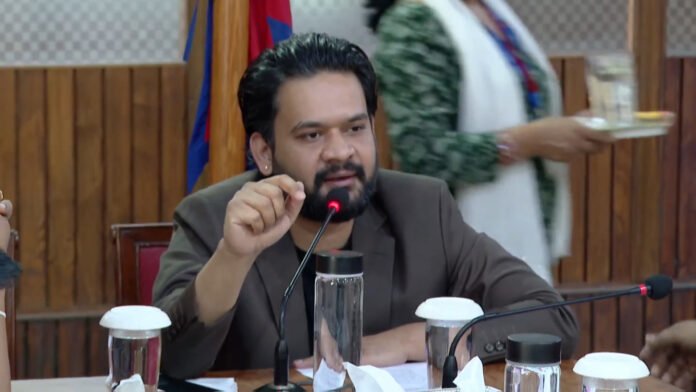
November 23, 2026 — Nepal’s Prime Minister Balendra Shah arrived in New Delhi on Sunday for a two-day state visit, his first bilateral visit since taking office. He met Indian External Affairs Minister S. Jaishankar on November 22, with delegation-level talks with Prime Minister Narendra Modi scheduled for Monday.
Key highlights
- India’s Minister of State for Commerce and Industry Jitin Prasada welcomed Shah at the airport.
- Nepal’s Foreign Ministry said the Sunday discussion covered trade, transit, connectivity, energy, education and cultural ties.
- Nepal’s Finance Minister Swarnim Wagle addressed a business roundtable in New Delhi.
- India’s public broadcaster said the programme included talks at Hyderabad House and a meeting with President Droupadi Murmu.
What happened on the first day
Nepal’s Foreign Ministry said Jaishankar called on Shah in New Delhi on Sunday. The ministry’s account listed both economic and people-to-people issues, including education and sport. At a separate business roundtable, Wagle encouraged Indian companies and investors to explore opportunities in Nepal.
The two engagements served different purposes. The meeting with Jaishankar reviewed government priorities, while the roundtable gave Nepal a platform to make its case to prospective investors. The ministry confirmed the meetings and the subjects discussed.
Why the visit matters to Nepal
Trade and transit will be central to assessing the visit’s practical impact. Better connections can affect how businesses move goods and how people travel across the border. The energy discussion can also matter for the infrastructure needed to trade electricity. Any new commitments will depend on the texts issued by the two governments.
Indian Foreign Secretary Vikram Misri travelled to Kathmandu earlier in November to prepare for the visit. Read our earlier coverage of Misri’s visit.
What to watch
Watch for the joint readout and separate project announcements. Akashvani reported plans for virtual inaugurations and foundation stone ceremonies. The final readout will establish which events took place and distinguish completed projects from projects entering a new phase.
Sources
- Nepal Ministry of Foreign Affairs: first day of the state visit
- Akashvani: November 23 morning bulletin and official programme

The International Desk covers world and Asian affairs, diplomacy and conflict, with a focus on what they mean for India. Stories are checked against at least two credible sources before publication.