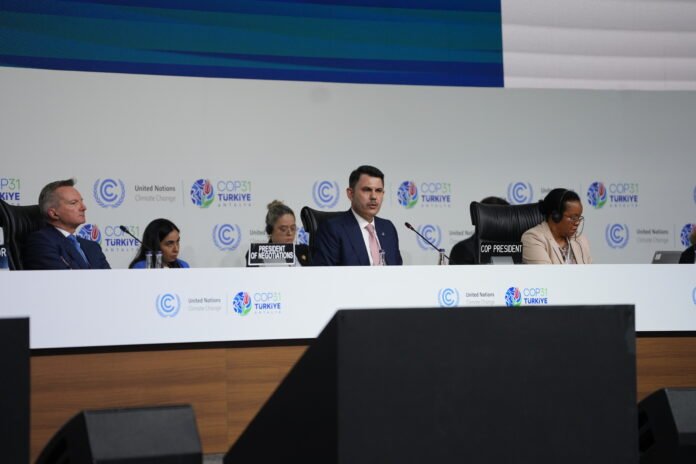
November 23, 2026 — The United Nations climate conference closed in Antalya, Türkiye, on November 22 without consensus on the proposed Antalya Pact. Divisions over fossil fuels persisted through two extra days of talks. The UN and the United Kingdom confirmed that work advanced on individual issues.
Key highlights
- The conference concluded on November 22, two days after its scheduled close.
- The proposed Antalya Pact did not secure consensus.
- UN Climate Change Executive Secretary Simon Stiell identified just transition as an area where negotiators reached a decision.
- The UK government said negotiations would continue at COP32 in Ethiopia.
What the missing pact means
The Antalya Pact was the conference presidency’s attempt to secure an overarching decision. The United Nations identified divisions over fossil fuels as central to the outcome. The UK government said it and others could not support the package as drafted. The Paris Agreement and earlier commitments continue to apply.
Stiell pointed to just transition, which concerns how workers and communities are supported as energy and other sectors change. The UK also reported progress on climate finance and pointed to voluntary commitments on electrification and resilience. The scope of each outcome depends on the text and who agreed to it.
Why finance matters for Asia
Climate finance and adaptation were priorities for India heading into Antalya. The practical question for countries seeking support for flood protection, heat preparedness or cleaner energy is how adopted decisions change access to funds. Pledges, adopted decisions and funded projects each have distinct timetables. Read our report on India’s priorities ahead of the summit.
What to watch
The adopted texts will show who is responsible for the next steps and what deadlines apply. Ahead of COP32 in Ethiopia, watch how governments revisit fossil-fuel language and report progress on climate finance.
Sources
- UN Climate Change: Simon Stiell’s closing remarks
- United Nations: COP31 outcome
- UK Department for Energy Security and Net Zero: COP31 outcomes

The International Desk covers world and Asian affairs, diplomacy and conflict, with a focus on what they mean for India. Stories are checked against at least two credible sources before publication.