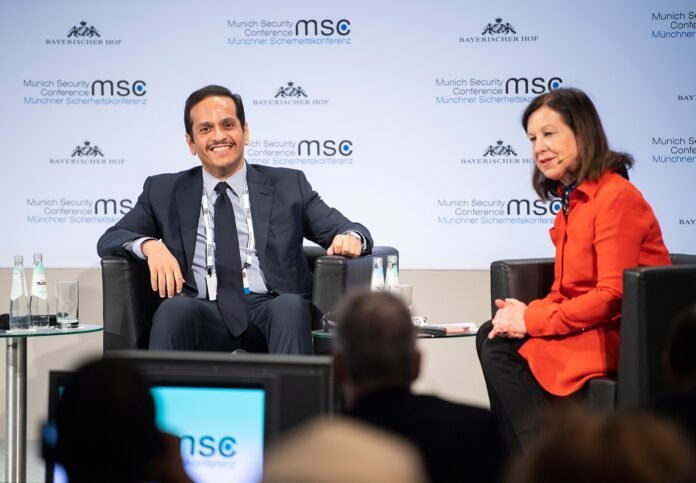
Doha/New York, September 27: Qatar’s Prime Minister Sheikh Mohammed bin Abdulrahman Al Thani has called Israeli Prime Minister Benjamin Netanyahu “the biggest obstacle right now in progressing this peace plan”, accusing Israel of moving “in the opposite direction” of the US-brokered Gaza agreement. The remarks, made in a US television interview that aired on Friday, are the sharpest public criticism yet from one of the plan’s main mediators.
Key highlights
- Qatar’s prime minister said the Gaza deal is stalled “for one person’s gain, for the gain of the (Israeli) prime minister and his far-right government”.
- He said Israel still occupies more than 70% of Gaza instead of withdrawing in stages.
- He said only about 150 aid trucks a day are entering Gaza, against the 600 agreed.
- He denied that Qatari money had reached Hamas’s armed wing, saying “no single penny” had.
- He called the blocking of waterways such as the Strait of Hormuz “unacceptable”, while defending Qatar’s long ties with Iran.
What he said
Qatar, together with Egypt and the United States, brokered the October 2025 Sharm el-Sheikh agreement that halted full-scale fighting in Gaza and set out a phased plan for Israeli withdrawal, hostage releases, reconstruction and the disarmament of Hamas. In the interview, Al Thani argued that Israel was not meeting its side of that deal.
According to his account, Israel still controls more than 70% of the Gaza Strip and continues military operations, while humanitarian aid is averaging around 150 trucks a day against a target of 600. “The biggest obstacle right now in progressing this peace plan” is Netanyahu, he said, adding that Israel was moving in the opposite direction of the agreement.
The disarmament deadlock
The main dispute is over sequencing. Hamas accepted the disarmament plan put forward by the US-led “Board of Peace” on July 30. Netanyahu insists that Israeli troops will pull back only after Hamas has fully disarmed. The plan envisages gradual, reciprocal steps — partial disarmament matched by partial withdrawal. Until that gap is closed, reconstruction and a wider political track remain on hold.
Qatar defends its record
Al Thani also pushed back against Israeli accusations about Qatari funding. He said Qatar’s payments to Gaza — gas bought from Israel for power plants, aid to poor families and public-sector salaries — had been approved by Israeli security agencies, and that “no single penny” went to Hamas’s military wing. He described the Israeli “Qatargate” investigation into alleged Qatari influence as “absurd”, saying it would have been “the worst investment Qatar have ever done”.
Why it matters
- Mediator frustration: Qatar is one of the few channels to Hamas. Open criticism from Doha suggests the Gaza track has stalled at the top level.
- Link to the Iran conflict: the same mediators are working on the US-Iran standoff. Qatar carried Iran’s seven-day Hormuz proposal to Washington (read more), and Al Thani called waterway blockades “unacceptable”.
- India’s stake: India depends on Gulf energy and on safe shipping through the Red Sea and the Strait of Hormuz. A lasting Gaza settlement would lower one source of regional tension that feeds into attacks on shipping — see our reports on Houthi attacks on Saudi Arabia and the Iran war.
What happens next
No public response from Netanyahu’s office to the remarks had been reported at the time of publication. The next test is whether the Board of Peace can agree on a sequence for disarmament and withdrawal that both sides accept, and whether aid deliveries rise toward the agreed 600 trucks a day.

The International Desk covers world and Asian affairs, diplomacy and conflict, with a focus on what they mean for India. Stories are checked against at least two credible sources before publication.