NEW DELHI, October 15, 2026: The Union Cabinet has approved a productivity-linked bonus (PLB) equal to 78 days’ wages for 11,40,770 non-gazetted railway employees, at a total cost of ₹2,009.61 crore. The maximum amount an eligible employee can receive is ₹17,951. The decision was announced on October 14, ahead of the Durga Puja and Dussehra holidays, when the bonus is paid every year.
Key highlights
- Bonus equal to 78 days’ wages for 11,40,770 non-gazetted employees.
- Total cost: ₹2,009.61 crore; maximum per employee: ₹17,951.
- Covers track maintainers, loco pilots, train managers (guards), station masters, supervisors, technicians, helpers, pointsmen, ministerial staff and other Group C staff.
- The government linked the award to record freight loading of 1,670 million tonnes and nearly 7.41 billion passengers in 2025–26.
- About 49,600 more employees are covered than last year.
This year compared with last year
| Item | 2025 decision (for 2024–25) | 2026 decision (for 2025–26) |
|---|---|---|
| Employees covered | 10,91,146 | 11,40,770 |
| Total cost | ₹1,865.68 crore | ₹2,009.61 crore |
| Bonus | 78 days’ wages | 78 days’ wages |
| Maximum per employee | ₹17,951 | ₹17,951 |
| Freight loading | 1,614.90 million tonnes | 1,670 million tonnes |
| Passengers | About 7.3 billion | About 7.41 billion |
Our calculation: The number of eligible employees rose by 49,624, or about 4.5%, and the total cost by ₹143.93 crore, or about 7.7%. The maximum of ₹17,951 for 78 days works out to about ₹230 a day, which matches a wage-calculation ceiling of ₹7,000 a month. Spread across all eligible staff, the total cost averages about ₹17,600 per employee, slightly below the maximum.
Why 78 days does not mean 78 days of take-home pay
The bonus is calculated on a capped wage, not on an employee’s actual salary. That is why the payment stops at ₹17,951 even for staff whose daily pay is far higher than ₹230. Employees should not multiply their own daily take-home pay by 78 and expect that figure; the stated maximum is the relevant upper limit.
Who is covered
The bonus applies to non-gazetted staff, the large workforce that runs trains, maintains track and signals, and staffs stations and offices. Gazetted officers are not part of this scheme. Eligibility depends on service conditions, so individual employees should check with their payroll or establishment office if the amount does not appear.
Why the government gives the bonus
The government describes the PLB as recognition of staff performance and an incentive to improve the railways’ results. In its release it pointed to record freight loading of 1,670 million tonnes in 2025–26, up from 1,614.90 million tonnes a year earlier, and nearly 7.41 billion passenger journeys. Freight is the railways’ main source of earnings, so higher loading is the figure the government most often links to the bonus.
What it means
For more than 11 lakh households, the payment arrives just before the festival season, when spending peaks. It is a one-time annual bonus, not a revision of monthly wages. Because the cap has stayed at ₹17,951 for several years, the real value of the bonus falls as prices rise; the total bill grows mainly because more employees are covered.
What to watch
- Credit of the bonus in employees’ accounts before the festival holidays.
- Any demand by railway unions to raise the ₹7,000 calculation ceiling.
- Freight and passenger figures for 2026–27, which will shape next year’s decision.
Updated October 25, 2026: this report was expanded with a comparison with last year’s bonus, our calculation of the wage ceiling and context on why the bonus is capped.
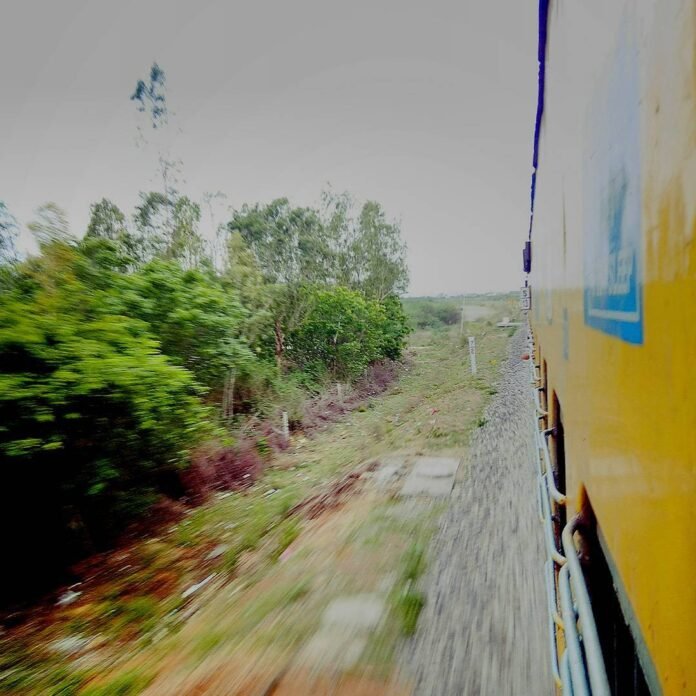
Representative file photo: view along an Indian Railways train, June 13, 2017; not a bonus-payment event. Bhavabhuthi / Wikimedia Commons, CC BY-SA 4.0. Display crops remain under the same licence. Photograph and provenance · Image licence
Sources
- Press Information Bureau: Cabinet approves Productivity Linked Bonus for 78 days to railway employees (October 14, 2026)
- Press Information Bureau: Cabinet approves Productivity Linked Bonus for 78 days to railway employees (September 24, 2025)

The Business Desk covers markets, the economy, companies and personal finance. Stories are checked against at least two credible sources before publication.