NEW DELHI, November 4: The Reserve Bank of Australia raised its cash rate by 25 basis points to 4.85% on Tuesday, November 3, saying inflation was elevated and broadly based and that higher fuel prices linked to the Middle East conflict were feeding through to other goods and services. The decision was taken by a 6–3 vote of the bank’s Monetary Policy Board, with three members preferring to hold the rate at 4.60%.
Key highlights
- Cash rate target raised to 4.85% from 4.60%; six members voted to raise and three to hold.
- The bank now expects headline inflation of 4.5% in the year to December 2026, up from 3.6% in its August forecast.
- Inflation is not expected to return to the top of the 2–3% target range until late 2027.
- Unemployment is forecast to rise to 4.7% by December 2026 and 5.1% by December 2028.
- The bank said housing prices had fallen significantly and growth was slowing, but judged further tightening was needed.
Why the RBA raised rates
In its statement, the Board said the inflation outlook had been revised materially higher, partly because of fuel and commodity prices tied to the Middle East conflict and partly because capacity pressures in the economy appeared a little tighter than previously estimated. It flagged a growing risk that higher inflation expectations could become embedded. The Board said it would stay focused on the data and do what it considers necessary to return inflation sustainably to target.
The new forecasts
| Year to December | 2026 | 2027 | 2028 |
|---|---|---|---|
| GDP growth (%) | 1.6 (1.4) | 1.3 (1.6) | 1.5 (1.8) |
| Unemployment rate (%) | 4.7 (4.5) | 4.9 (4.7) | 5.1 (4.8) |
| Headline CPI inflation (%) | 4.5 (3.6) | 2.7 (2.6) | 2.4 (2.4) |
| Trimmed mean inflation (%) | 3.6 (3.3) | 2.9 (2.6) | 2.4 (2.4) |
The forecasts assume the cash rate follows market pricing as of October 28, averaging 4.7% in 2026 and 4.8% in 2027 and 2028. The bank expects higher interest rates and falling housing prices to weigh on household spending and home building, while business investment, including in data centres, is forecast to be stronger in the near term.
Our calculation
- At 4.85%, the cash rate is 0.35 percentage points above the bank’s own forecast for headline inflation at end-2026 (4.5%) and 1.25 points above its trimmed mean forecast (3.6%).
- The forecast for headline inflation at end-2026 was raised by 0.9 percentage points in three months.
What it means for Asia and India
Australia is a major supplier of coal, gas and iron ore to Asian economies and a leading destination for Indian students and migrants. A central bank raising rates even as its economy slows shows how the energy shock from the Middle East conflict is pushing inflation up well beyond the Gulf. Higher Australian rates also mean higher borrowing costs for households there, including Indian-origin families with home loans.
What to watch
- Australia’s next quarterly inflation figures and monthly jobs data.
- Oil and fuel prices, which the RBA names as a key driver of its forecasts.
- Whether other central banks in the Asia-Pacific follow with rate rises.
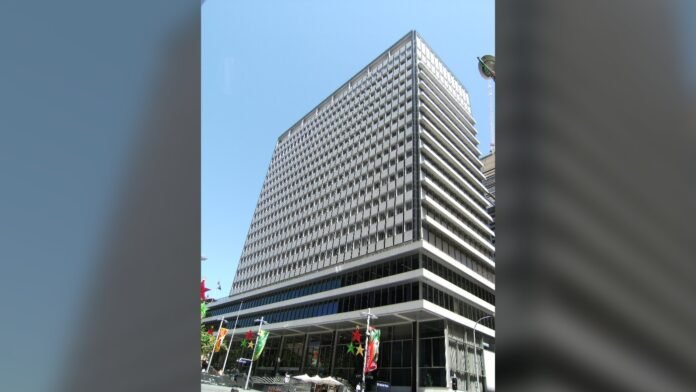
The Reserve Bank of Australia head office in Martin Place, Sydney. Image: Danausi, Public domain, via Wikimedia Commons. Photo source
Sources
- Reserve Bank of Australia: Statement by the Monetary Policy Board, November 3, 2026
- Reserve Bank of Australia: Statement on Monetary Policy, November 2026, Overview

The Business Desk covers markets, the economy, companies and personal finance. Stories are checked against at least two credible sources before publication.