October 23: A magnitude-7 earthquake struck Baqen County in the Nagqu area of China’s Tibet Autonomous Region late on October 22, killing at least 16 people, according to Chinese official-media accounts carried by international news agencies. Rescue teams were searching damaged buildings as later reports raised the number of injured to 46.
Key highlights
- The earthquake occurred at about 10:33 p.m. local time on Thursday, October 22.
- At least 16 deaths were reported; early reports listed 32 injuries, while later accounts put injuries at 46.
- Authorities reported hundreds of damaged or collapsed homes and disruption to essential services.
- The Nagqu-area event is separate from the January 2025 earthquake in Tibet’s Tingri/Dingri area.
What is known about the impact
AFP’s report carried by Gulf News cites CCTV and local officials for the later injury figure of 46, including 11 seriously injured people. It describes 339 houses as collapsed or damaged. Officials were still assessing the impact, so these should be treated as reported interim figures rather than a final disaster total.
Associated Press coverage carried by Moneycontrol also reports 16 deaths and 46 injuries. Earlier AP coverage carried by Arab News listed 32 injuries. This difference reflects successive reporting; it is not a reason to add the figures together or assume that the lower count remains the latest.
Rescue efforts and disrupted access
Moneycontrol’s AP report says emergency supplies, including temporary housing, tents, folding beds and winter clothing, reached the region. It reports interruptions to communications and train operations, and rockfalls affecting a section of National Highway 317, citing Xinhua. Such disruption can make it harder for an early account to capture the full impact.
Gulf News reports that police and fire-and-rescue personnel were dispatched for relief work, again attributing the details to Chinese official media. These are accounts of the response, not independent confirmation that every affected settlement has been reached. We have not conducted reporting at the scene.
At a glance: the reported figures
| Item | Reported position | Important qualification |
|---|---|---|
| Deaths | At least 16 | Reported by official media and international agencies; not a final toll |
| Injuries | 46 in later accounts | Early reports gave 32 |
| Housing | 339 damaged or collapsed houses in the CCTV account | Do not describe every damaged building as fully destroyed |
| Event time | 10:33 p.m., October 22, local time | Reports published October 23 concern the previous evening’s quake |
Why the location and date matter
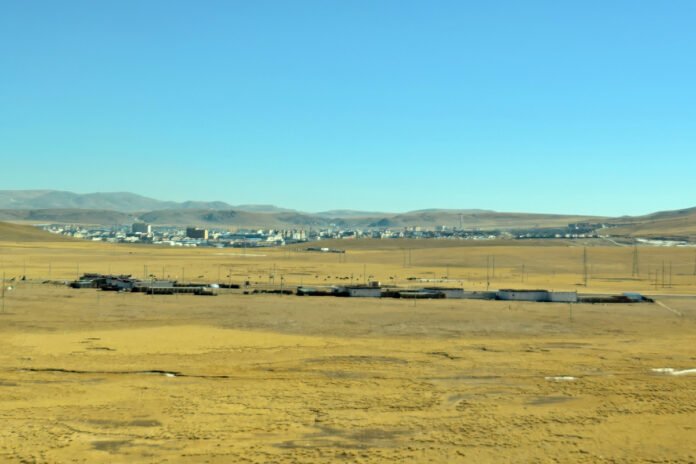
The accounts locate the epicentral area in Baqen County, administered by Nagqu. The city name can therefore refer to a broad administrative area rather than damage concentrated in the urban centre. The file photograph accompanying this article shows Nagqu town in 2017; it does not show the epicentre, rescue operations or damage from this earthquake.
Reports also cite different initial depth measurements from monitoring agencies. AP’s account identifies an 18-kilometre US Geological Survey estimate and a 10-kilometre China Earthquake Networks Center estimate. We retain the attribution rather than presenting those measurements as interchangeable or selecting one without explanation.
What to watch
The next important information is an updated official casualty assessment, access to affected villages, restoration of communications and transport, and the condition of displaced residents. Images of earlier Tibet earthquakes should not be presented as footage of this event. Anyone with relatives in the area should rely on local authorities and verified contact channels rather than unconfirmed social-media casualty lists.
File photo: Nagqu town, Seni District, in 2017; this does not show earthquake damage or the Baqen epicentre. Photo: Baycrest / Wikimedia Commons, CC BY-SA 2.5. Responsive cropping may apply. Image source.
Sources
- Gulf News / AFP: At least 16 dead in magnitude-7 quake in Tibet
- Moneycontrol / AP: Powerful earthquake in Tibet collapses hundreds of homes and kills at least 16 people
- Arab News / AP: A 7.0 earthquake hits China’s Tibet, killing 16 and injuring 32 (earlier report)

The International Desk covers world and Asian affairs, diplomacy and conflict, with a focus on what they mean for India. Stories are checked against at least two credible sources before publication.