November 11: The World Health Organization has launched Together for Science and Health, a global movement intended to strengthen public trust in science and improve the use of evidence in health decisions. WHO’s November 10 announcement says more than 240 organisations have joined the effort.
Key highlights
- The launch coincided with World Science Day for Peace and Development.
- WHO identifies links between science, society, policy and communication as priorities.
- The initiative is a collaboration framework, rather than a new treatment recommendation.
- Its relevance for Asia includes how scientific information reaches diverse audiences.
What the movement is designed to do
WHO describes three priorities: bringing science and society closer together, strengthening evidence in policy-making and improving science communication. Participating organisations are expected to share approaches, resources and lessons and develop practical collaborations.
The release identifies 12 events across countries and regions and associates the launch with the Paris Peace Forum. Its dateline includes Geneva, Paris, Brazzaville and New Delhi. Those details describe the movement’s launch; they should not be taken as proof of a particular programme or grant in every country.
At a glance
| Question | WHO’s announcement |
|---|---|
| What was launched? | Together for Science and Health |
| When? | November 10, 2026 |
| Participation | More than 240 organisations |
| Core focus | Trust, evidence-informed policy and communication |
Trust involves explaining how evidence is assessed
For a reader, the useful question is not simply whether an organisation endorses science. It is how a claim is supported, what remains uncertain and whether new evidence could change the conclusion. Clear communication can acknowledge those limits while still explaining what is currently known.
A preliminary study, a review of multiple studies and an official recommendation serve different purposes. Reporting them under one undifferentiated headline can create confusion. A stronger account identifies the type of evidence and avoids converting an early finding into advice for every individual.
Why this matters to Asian audiences
Health information can move between languages, countries and platforms while losing qualifications from its original context. For publishers serving readers across Asia, retaining those qualifications is part of making the information useful.
The same principle applies to AI-assisted communication. A fluent summary needs a check against the underlying material: who produced it, which population or setting it concerns and whether the conclusion is represented accurately. The movement’s announcement highlights technological change, but the basic responsibility to check a claim remains.
What to watch
The practical test is what participating institutions do after the launch: the resources they publish, collaborations they establish and evidence they provide about results. A count of participating organisations measures reach of the initiative, rather than an improvement in public trust already demonstrated.
Readers can consult WHO’s movement page and declaration for the stated commitments. This article describes an institutional initiative; it does not announce a new clinical guideline or replace individual medical care.
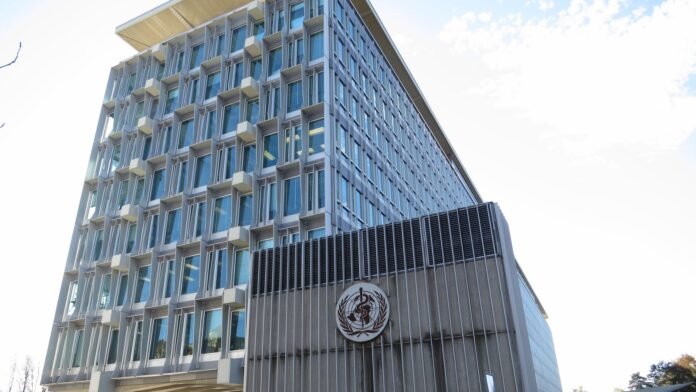
File photo: WHO headquarters, Geneva, October 28, 2013. Thorkild Tylleskar / Wikimedia Commons, CC BY-SA 3.0. Cropped and resized; adaptation retains this licence. Not a photograph of the 2026 launch.
Sources

The International Desk covers world and Asian affairs, diplomacy and conflict, with a focus on what they mean for India. Stories are checked against at least two credible sources before publication.