By The Press of Asia | March 14, 2026
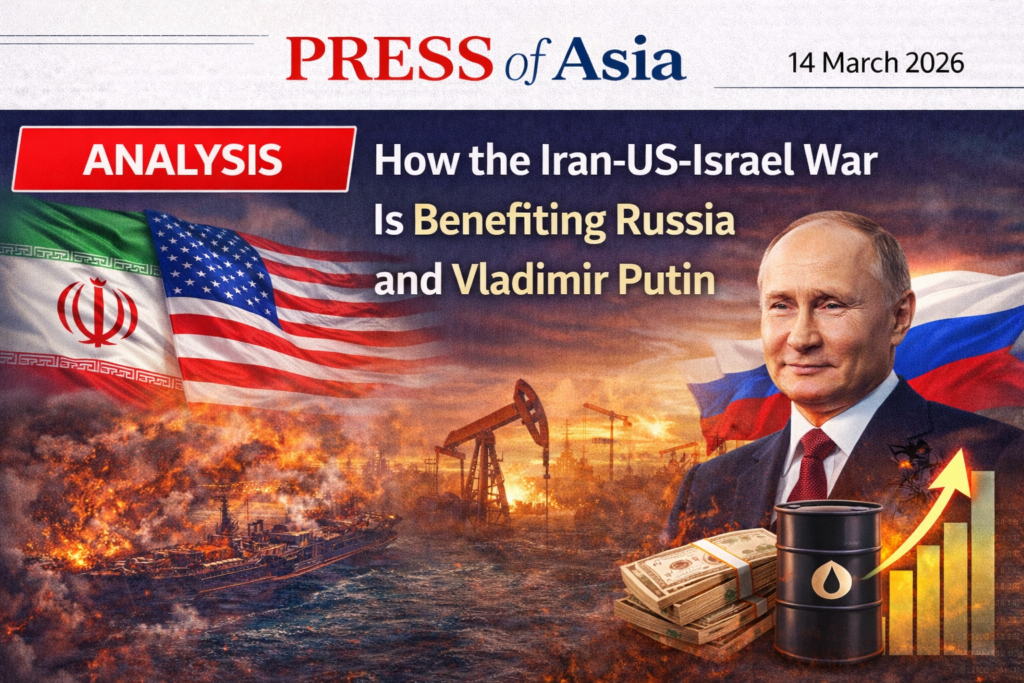
As tensions between Iran, the United States, and Israel escalate into a wider regional crisis, global attention has focused on the immediate military and humanitarian consequences. However, behind the scenes, geopolitical analysts believe that Russia and President Vladimir Putin could emerge as one of the biggest strategic beneficiaries of the conflict.
From soaring oil prices to shifting global diplomatic priorities, the unfolding Middle East crisis is creating a series of economic and political opportunities for Moscow.
Oil Prices Surge – A Financial Windfall for Russia
One of the most immediate benefits for Russia comes from the surge in global oil prices.
Russia is one of the world’s largest oil and natural gas exporters. When geopolitical crises disrupt energy supply routes—especially in the Middle East—global oil prices typically rise sharply.
Recent reports show that crude oil prices have crossed the $100 per barrel mark due to disruptions around the Strait of Hormuz and the wider Iran conflict.
Higher oil prices significantly boost Russia’s government revenues because oil and gas exports form a major part of the country’s budget.
Analysts say rising energy prices can strengthen Russia’s fiscal position, increase tax income, support the ruble, and give Moscow more resources to fund military operations.
In fact, recent estimates suggest Russia has already earned billions of euros in additional fossil-fuel revenues since the conflict began.
Western Focus Shifts Away from the Ukraine War
Another strategic advantage for Putin is the shift in global political attention.
Since Russia’s invasion of Ukraine in 2022, Western governments have been heavily focused on supporting Kyiv and maintaining economic sanctions on Moscow.
However, the Middle East crisis is now forcing the United States and its allies to redirect diplomatic attention, military resources, and political focus toward Iran and the Gulf region.
Analysts say this diversion of attention could ease pressure on Russia’s war effort in Ukraine.
Some Western officials have even warned that a prolonged Middle East conflict could allow Moscow to strengthen its position on the Ukrainian battlefield.
Increased Demand for Russian Energy
As energy markets become unstable due to the conflict in the Persian Gulf, countries dependent on oil imports are scrambling to secure alternative supplies.
This situation is boosting demand for Russian crude oil and natural gas, particularly among large Asian economies such as India and China.
Russian officials have already indicated that they are ready to increase oil exports to Asian markets if demand rises.
Because Gulf oil shipments are being disrupted, Russian producers are finding new opportunities to expand exports and negotiate stronger energy deals.
Possible Easing of Sanctions
Another factor helping Russia is the possibility of temporary easing of Western sanctions on Russian energy exports.
Some policymakers believe that allowing limited Russian oil sales could help stabilize global energy markets during the crisis.
Recent reports indicate that the United States has even considered relaxing certain restrictions on Russian oil shipments to reduce the pressure on global fuel supplies.
If such policies continue, they could significantly increase Russia’s oil revenues despite existing sanctions.
Strengthening Russia-Iran Strategic Partnership
The crisis is also reinforcing the strategic relationship between Russia and Iran.
Both countries share tensions with Western powers and have cooperated in areas such as military technology, drones, and energy policy.
As the conflict intensifies, Moscow may increase diplomatic and military coordination with Tehran, strengthening its influence in the Middle East.
Analysts say that even limited cooperation between Russia and Iran could reshape the regional balance of power.
A Geopolitical Chess Game
Many experts describe the Iran-US conflict not simply as a regional war but as part of a broader geopolitical contest between global powers.
The Middle East remains one of the most important regions for global energy supply and international trade. Any disruption there affects economies worldwide.
While the immediate focus is on military developments, the economic consequences—especially in energy markets—could reshape global power dynamics.
In this complex geopolitical chessboard, Russia appears to be gaining strategic breathing space and economic advantages.
Conclusion
The Iran-US-Israel conflict is primarily a regional confrontation, but its ripple effects are global.
Rising oil prices, shifting diplomatic priorities, increased energy demand, and potential changes in sanctions policy are all factors that could benefit Russia in the short term.
While it remains uncertain how long these advantages will last, one thing is clear: the war in the Middle East is reshaping the global geopolitical landscape—and Moscow is watching closely.