Archive note: This article concerns reporting from March 15, 2026. It is not a current travel or safety advisory. Previously invisible citation labels were restored on October 23, 2026; the original publication date is retained.

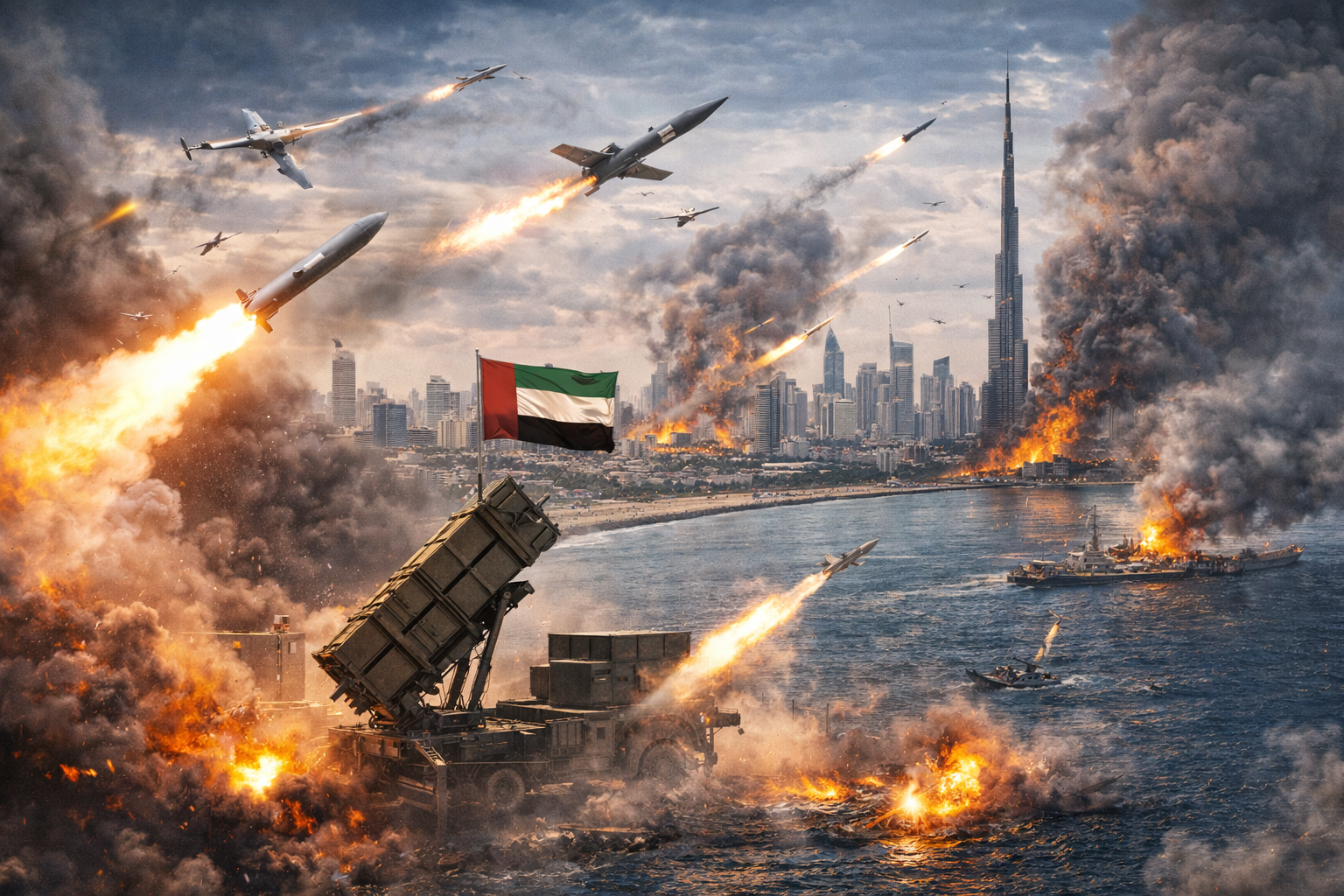
Iran has fired over 1,800 missiles and drones at the United Arab Emirates since the start of the US-Israel-Iran war, making the UAE the most heavily targeted country by Tehran outside of Israel. The UAE Ministry of Defence confirmed that its air defence systems have intercepted a total of 285 ballistic missiles, 15 cruise missiles and over 1,567 drones since the attacks began on February 28 — with the latest interception figures exceeding 1,800 in total. The unprecedented scale of the assault has sent shockwaves through global finance, trade and logistics, given the UAE’s critical role as a regional and international hub. Kurdistan24: UAE interception report
Dubai Tries to Contain the Fallout
Dubai authorities moved swiftly to reassure residents, businesses and international investors, stating that the emirate “is safe and will always be safe.” The UAE government has activated emergency protocols, increased civil defence readiness and coordinated with US military assets based in the country to intercept incoming threats.
Most missiles and drones have been intercepted by air defence systems, but interception debris and falling projectile fragments have caused damage to civilian infrastructure in both Abu Dhabi and Dubai. A Shahed-type drone reportedly struck near the Fairmont The Palm Hotel on Palm Jumeirah, causing a large explosion and fire, with four individuals injured from blast effects and shrapnel. In central Dubai, debris from an intercepted aerial attack hit a building, though authorities stated no injuries were reported.
Abu Dhabi police arrested 45 people for filming incidents and spreading misinformation online — a sign of how seriously UAE authorities are managing the information environment around the crisis.
Why Has Iran Targeted the UAE?
Iran has accused the UAE of allowing the United States to use its military facilities to launch strikes on Iranian targets. The IRGC specifically stated it targeted the US air combat centre and a satellite communications hub at Al Dhafra Air Base in Abu Dhabi — which hosts approximately 5,000 US military personnel and serves as a key staging point for American air operations across the Persian Gulf. Iran International: IRGC statement on Al Dhafra
Tehran has warned that any country providing logistical or military support to the US-Israel alliance would be considered a legitimate military target. The UAE, which had maintained a carefully neutral posture since the war began, has been directly drawn into the conflict as a result. On Saturday, Iran issued evacuation warnings for three major UAE ports — including Jebel Ali, the busiest port in the Middle East — though no large-scale port attack followed immediately. A fire was reported at Fujairah port’s oil facility caused by debris from an intercepted Iranian drone.
Casualties: 6 Dead, 141 Injured
The attacks have so far resulted in six civilian fatalities and 141 injuries across the UAE. The deceased include nationals from the UAE, Pakistan, Nepal and Bangladesh, while those wounded represent 28 nationalities — including nationals from Egypt, Sudan, Iraq, Iran, Oman, Palestine and Sweden. The first death occurred when shrapnel from an intercepted missile struck a residential area near Zayed International Airport in Abu Dhabi, killing a Pakistani national and injuring seven others.
Impact on Global Trade and Tourism
The attacks have disrupted operations at Dubai International Airport, which briefly closed while passengers and staff were directed to bomb shelters following air defence alerts. Several international airlines have temporarily rerouted flights or suspended services to the UAE. Iran’s ballistic missile launches have ranged between 3 and 137 per day at their peak, with Iran firing over 100 drones daily until the rate decreased earlier this week.
Hotel bookings and tourism arrivals have dropped sharply, and Dubai is now actively working to restore its image as a secure global destination. Major multinational corporations with regional headquarters in Dubai have activated contingency plans, with some considering temporary relocation of staff to alternative hubs. Damage has also been reported to the facade of the iconic Burj Al Arab from interception debris.
International Response
The United States has reinforced its air defence assets in the UAE and pledged to defend its Gulf allies. Australia announced it would send a Boeing E-7 Wedgetail AWACS aircraft and missiles to the UAE — though it confirmed it would not deploy ground troops. Several Western governments have issued travel advisories urging citizens to exercise caution while visiting the UAE.
Regional allies including Saudi Arabia and Bahrain have expressed solidarity with the UAE and called for an immediate ceasefire. Air raid sirens sounded in Bahrain after a fire was reported near the airport following Iranian drone strikes. UAE Minister Dr. Anwar Gargash said Iran “must end strikes on Gulf states,” warning that the attacks were destabilising the entire region and threatening the global economy.
For the latest updates on the UAE crisis and the wider US-Israel-Iran war, stay with The Press of Asia — your trusted source for international news.

The International Desk covers world and Asian affairs, diplomacy and conflict, with a focus on what they mean for India. Stories are checked against at least two credible sources before publication.