
June 8, 2026 | International Desk
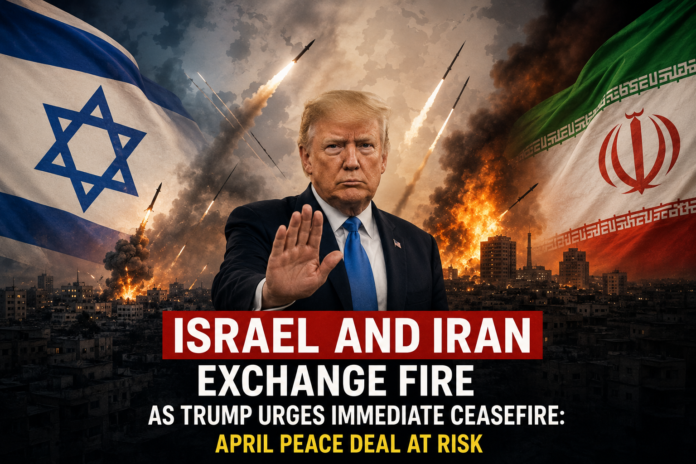
The fragile peace between Israel and Iran has come under severe strain after both nations exchanged missile and air strikes for the first time since the April ceasefire agreement. The renewed hostilities have raised fears of a broader regional conflict, prompting urgent calls for restraint from world leaders, including U.S. President Donald Trump.
Fresh Wave of Attacks Shakes Middle East
Tensions escalated dramatically after Iran launched multiple missile attacks targeting Israeli military installations. According to Iranian military officials, the strikes were carried out under “Operation Nasr” and were described as retaliation for Israeli actions in Lebanon and against Iranian-linked interests in the region.
In response, Israel launched large-scale airstrikes against several strategic targets inside Iran, including defense systems and facilities linked to Iran’s petrochemical sector. Explosions were reported in Tehran and other Iranian cities as Israeli forces expanded their operations.
The exchange marks the most serious confrontation between the two regional rivals since an internationally monitored ceasefire was established in April.
Trump Calls for Immediate Ceasefire
Amid the escalating violence, President Donald Trump publicly urged both countries to halt military operations immediately.
In a statement posted on Truth Social, Trump said that Israel and Iran “must immediately stop shooting” and claimed that both sides were actively exploring an immediate ceasefire. He also stated that final peace negotiations were currently underway despite the latest violence.
Trump expressed optimism that diplomacy could still prevail but warned that any further escalation could jeopardize months of peace efforts between Washington and Tehran.
April Peace Deal Under Threat
The latest exchange threatens to unravel the peace framework that had significantly reduced direct military confrontations between Israel and Iran since April.
Analysts believe the renewed attacks could undermine ongoing negotiations involving the United States, Iran, and regional mediators. Concerns are growing that continued military action could trigger wider instability across the Middle East, drawing in allied groups and neighboring countries.
Iran has accused Israel of violating the spirit of the ceasefire and has warned that any further attacks will be met with stronger retaliation. Israeli officials, meanwhile, insist that their actions are necessary to protect national security and deter future attacks.
Regional Impact
The renewed conflict has already begun affecting the wider region:
- Several countries temporarily restricted or monitored airspace operations.
- Oil prices surged amid fears of supply disruptions.
- Shipping routes near the Strait of Hormuz faced increased uncertainty.
- Iran-backed groups, including Yemen’s Houthis, threatened additional actions against Israeli interests.
India’s Response
India expressed serious concern over the renewed hostilities and urged both nations to exercise restraint and return to dialogue. Indian authorities also issued advisories for citizens in affected areas and closely monitored developments impacting regional stability.
What Happens Next?
While Iran has indicated that it is temporarily halting its latest wave of attacks, Israeli forces remain on high alert. Diplomatic channels are reportedly active, but the situation remains highly volatile. Any new strike from either side could push the region toward a larger confrontation.
For now, the future of the April peace agreement hangs in the balance as world leaders race to prevent another major Middle East conflict.