
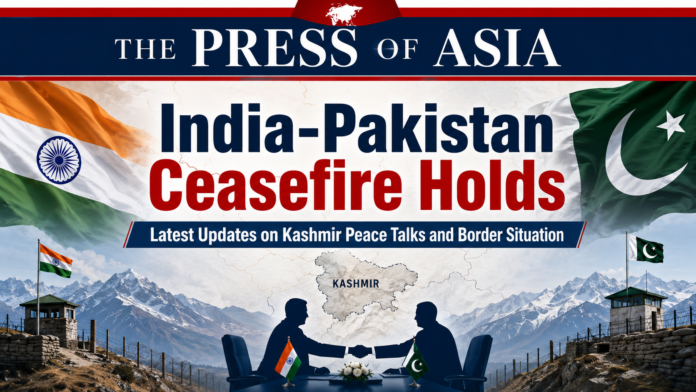

The India-Pakistan ceasefire, brokered on May 10, 2025 following a brief but intense military standoff triggered by the Pahalgam terror attack, continues to hold as of June 16, 2025. Diplomatic channels between the two nuclear-armed neighbors remain active, with backchannel peace talks reportedly making cautious progress. Here is a comprehensive update on the current situation along the Line of Control (LoC) and the broader diplomatic landscape.
Ceasefire Status: Day 37 Update
As of June 16, 2025, the ceasefire between India and Pakistan remains intact, with no major violations reported along the LoC in the past 48 hours. The Indian Army has confirmed that cross-border firing has significantly reduced since the ceasefire agreement came into effect. Pakistani military sources have similarly confirmed restraint on their side. The Wagah-Attari border crossing, which had been closed during the conflict, is expected to partially reopen for trade in the coming weeks, subject to further diplomatic consultations.
Diplomatic Talks: What Is Being Negotiated?
Backchannel diplomacy between India and Pakistan is reportedly focused on several key issues. The primary agenda includes: the release of prisoners of war and civilians who crossed the border accidentally during the conflict; a formal review of the Indus Waters Treaty, which India had threatened to suspend; restoration of diplomatic missions and high-commission staff levels; and a roadmap for resuming people-to-people contact including religious pilgrimages. Both sides have agreed to maintain a hotline between the Directors General of Military Operations (DGMOs) to prevent accidental escalations.
Role of International Mediators
The United States and Saudi Arabia played pivotal roles in brokering the initial ceasefire. US Secretary of State Marco Rubio personally called both the Indian External Affairs Minister and the Pakistani Prime Minister in the critical hours of May 10. Saudi Arabia, which has strong economic ties with Pakistan and growing strategic relations with India, hosted preliminary back-channel meetings. China, Pakistan’s all-weather ally, has urged Pakistan to maintain the ceasefire and focus on economic recovery, signaling that Beijing does not support fresh escalation at this juncture.
Situation in Kashmir: Ground Reality
In the Kashmir Valley, normalcy is gradually returning. Schools and colleges in Srinagar have reopened, and internet services which were restricted during the peak of the conflict have been fully restored. The Amarnath Yatra pilgrimage, which was suspended in May, is set to resume on June 25 following a security assessment by the Indian government. Tourism, a major economic pillar for Jammu & Kashmir, is expected to pick up in July as travel advisories from several countries have been downgraded from ‘Do Not Travel’ to ‘Exercise High Caution’.
Pakistan’s Domestic Situation and Political Impact
In Pakistan, the ceasefire has been received with mixed reactions. The government of Prime Minister Shehbaz Sharif has presented it as a diplomatic success, having averted a full-scale war. However, opposition parties, particularly Pakistan Tehreek-e-Insaf (PTI), have criticized the terms as too conciliatory. The Pakistani economy, already stressed before the conflict, faces additional pressure with the IMF reviewing its bailout package terms. The conflict has led to a temporary spike in food and fuel prices, which the government is trying to address through emergency subsidies and import facilitation.
India’s Strategic Posture Going Forward
India has made clear that while it supports peace, it will not compromise on its core security interests. The Indian government has announced a significant increase in defense budgets for the coming fiscal year, with a focus on border infrastructure, air defense systems, and intelligence capabilities. Prime Minister Narendra Modi, in a national address, stated that Operation Sindoor — India’s military response to the Pahalgam attack — demonstrated India’s resolve and capability to respond to terrorism. India has also signaled that any future terror attack traceable to Pakistani territory will be met with a direct response, establishing a new deterrence doctrine.
What to Watch in the Coming Days
Key diplomatic milestones to watch include: a potential meeting between Indian and Pakistani Foreign Ministers, which could take place on the sidelines of the Shanghai Cooperation Organization (SCO) summit scheduled for late June; the UN Secretary-General’s visit to both Islamabad and New Delhi planned for the last week of June; and the expected resumption of Samjhauta Express train services between the two countries. Additionally, the Indian Supreme Court is set to hear petitions regarding the suspension of the Indus Waters Treaty, which could have significant implications for Pakistan’s agricultural sector.
Conclusion
The India-Pakistan ceasefire represents a critical but fragile step toward stability in South Asia. While the immediate military threat has receded, the underlying issues — terrorism, water rights, Kashmir’s political status, and cross-border trade — remain deeply contentious. The next few weeks of diplomacy will be crucial in determining whether this ceasefire evolves into a more durable peace process or remains a temporary pause. The Press of Asia will continue to provide comprehensive updates on this developing situation. Follow us for daily analysis and breaking news from across the region.