
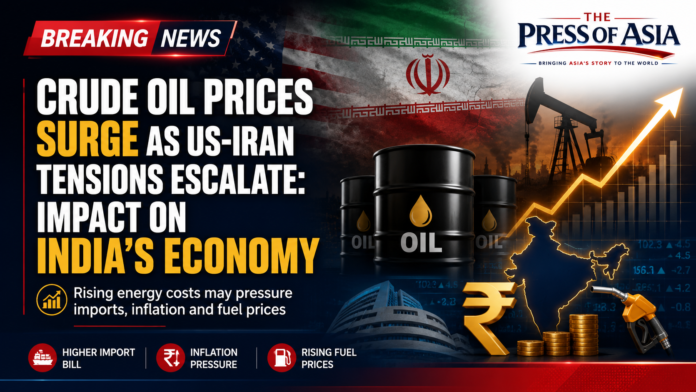

Global crude oil prices have surged sharply in July 2026 amid escalating military tensions between the United States and Iran, with Brent crude climbing above $95 per barrel and West Texas Intermediate nearing $88 per barrel. The price rally, which has seen crude oil rise nearly 30 percent since the conflict began, comes as fears mount over potential blockades and disruptions in the Strait of Hormuz, one of the world’s most critical oil shipping routes.
The latest spike follows repeated rounds of US airstrikes on Iranian military targets and retaliatory attacks by Iran on US facilities in Bahrain, Kuwait, and Jordan. Iran-backed Houthi militants in Yemen have also threatened shipping routes in the Red Sea, further compounding
/heading
How Rising Oil Prices Are Impacting India
India, which imports over 85 percent of its crude oil requirements, is particularly vulnerable to the ongoing price surge. Higher crude prices translate directly into increased fuel costs, elevated inflation, and a widening current account deficit. According to India’s Economic Division, ship transits through the Strait of Hormuz have fallen sharply, constraining hydrocarbon movement and pushing up energy and logistics costs nationwide.
Rising freight costs, driven by higher tanker rates, bunker fuel prices, and war-risk insurance premiums, have further compounded the economic strain. Analysts warn that if the conflict persists, India could see increased pressure on the rupee, higher petrol and diesel prices at the pump, and potential moderation in remittances from the Gulf region, where a large number of Indian expatriates are employed.
/heading
Government Response and Market Outlook
The Indian government has been closely monitoring the situation and exploring alternative crude oil sourcing options to reduce dependency on Gulf supplies. Oil market analysts suggest that prices could remain volatile in the near term, with some projecting Brent crude could test the $100 per barrel mark if hostilities in the region continue to escalate.fears of a broader regional energy supply disruption.