
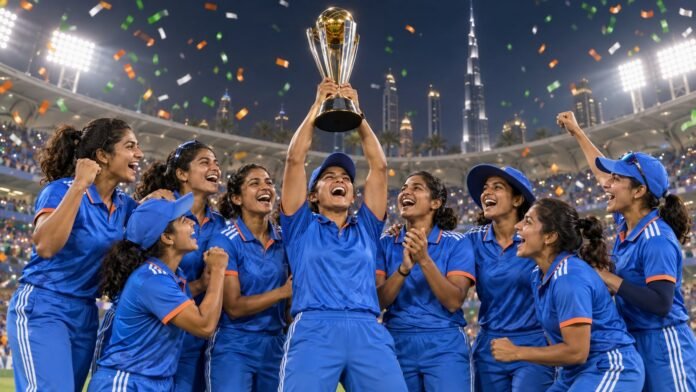

DUBAI, September 14, 2026: India Women defeated Sri Lanka by 72 runs in the final to claim a record-extending eighth continental title. India posted 183 for five and then dismissed Sri Lanka for 111, completing a commanding finish to the India Women Asia Cup 2026 campaign.
The final brought together two teams with recent experience of high-pressure continental cricket, but India controlled the decisive phases. A competitive total gave the bowlers room to attack, and Sri Lanka’s chase never developed the sustained partnership required to threaten 184.
India build scoreboard pressure
India’s 183 for five set a demanding target in a final, where early wickets can quickly increase the required rate. Rather than rely on one late burst, the innings created enough momentum across its stages to keep the pressure on Sri Lanka before the chase began.
Sri Lanka needed both a stable opening and regular boundaries to stay close to the asking rate. India instead forced the batting side into riskier shots, using disciplined lines and changes of pace to prevent a recovery. The widening gap between runs required and balls remaining then allowed the fielding side to keep attacking.
Deepti Sharma leads the defence
Deepti Sharma returned figures of three for 19, giving India control through the middle and closing overs. Her performance added to an influential tournament in which she had already taken 11 wickets before the final, according to the International Cricket Council’s pre-match review.
India had entered the title match after beating Bangladesh by 40 runs in the semifinal. That result underlined the team’s balance: a batting group capable of setting strong totals and a varied bowling attack able to defend them under knockout pressure.
Why the eighth title matters
- It extends India’s record as the most successful team in the Women’s Asia Cup.
- The 72-run margin shows the depth of the team’s performance in the final.
- Bowling discipline remained a strength even after India set a large target.
- The tournament supplied valuable pressure experience across the squad.
Sri Lanka’s run to the final was still significant, and its recent growth has strengthened competition in Asian women’s cricket. More competitive national teams, regular tournaments and investment in domestic pathways will be essential if the region is to build on that progress.
India finish the campaign with authority
The title was secured through a complete final rather than a narrow escape. India established a challenging score, struck often enough to deny Sri Lanka momentum and maintained intensity until the last wicket. The result adds another trophy to a dominant Asia Cup record while giving the team clear evidence of its depth in tournament conditions.
Sources: International Cricket Council and NDTV Sports. Follow our Sports coverage.