November 20: Vietnam and South Korea discussed a joint industrial action plan for 2027–2030 at a working-group meeting in Seoul on November 20. South Korea’s trade ministry says two-way trade reached US$112.1 billion through October, while officials are pursuing the existing goal of US$150 billion by 2030.
Key highlights
- The fifth Korea–Vietnam Plus Joint Working Group met in Seoul on November 20.
- The discussion covered trade barriers, industrial cooperation and energy.
- Officials agreed to prepare a 2027–2030 industrial development action plan.
- The trade target is a future goal; the meeting does not itself change customs or licensing rules.
What today’s meeting covered
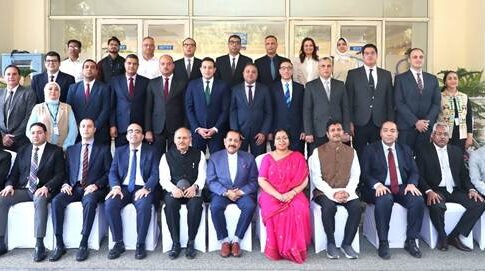
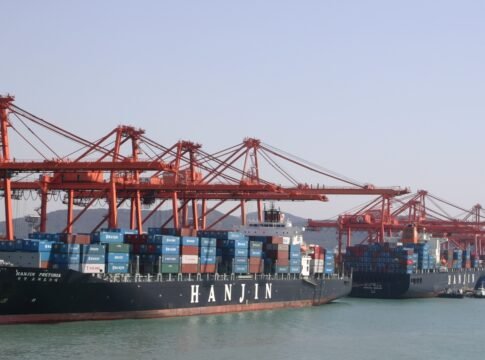
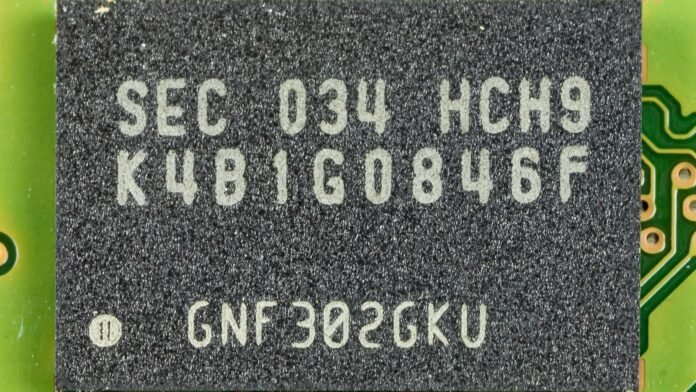
South Korea’s Ministry of Trade, Industry and Resources says the director-level meeting reviewed follow-up work from earlier high-level engagements. Areas identified for the proposed industrial plan include semiconductors, shipbuilding, mobility, critical minerals, steel and LNG power. Officials also reviewed existing energy cooperation arrangements.
A plan covering several industries is a framework for further work, rather than a single construction contract. The ministry’s account does not establish that every project under discussion has secured financing or received the approvals required to begin operating. Specific project notices will matter more to suppliers than a broad list of sectors.
Trade friction remains part of the agenda
The Korean ministry says its side raised customs and certification difficulties affecting products such as health supplements and cosmetics, as well as rules affecting additional retail outlets operated by foreign-invested businesses. Vietnam’s side said the issues would be discussed with relevant agencies and through existing bilateral channels.
For businesses, discussion is not the same as regulatory repeal. An exporter still needs to check the rules that apply to its product, and a retailer needs the relevant operating approvals. Today’s statement should not be treated as a notice that certification requirements or the economic-needs test have automatically disappeared.
The target predates this working-group session
Vietnam’s Industry and Trade Ministry had already described the US$150 billion-by-2030 objective in a September 7 account of the relationship. That earlier statement emphasised higher-value investment, stronger participation by Vietnamese enterprises in supply chains and better market access for consumer and agricultural products.
It also described the links between Korean investment and Vietnamese production in electronics, components and other manufacturing. That background explains why a trade discussion can involve energy, skills, logistics and industrial policy at the same time. The November meeting is a follow-up mechanism within a longer relationship, not the creation of the entire partnership from scratch.
How to read the new trade figure
The US$112.1 billion figure cited by the Korean ministry covers trade through October 2026. It is not a final full-year total, and it should not be presented as though the US$150 billion target has already been reached. Different reporting periods must remain clear when comparing numbers.
Our analysis: the practical question is not only how much trade grows, but how companies participate in it. A rise in intermediate-goods shipments may support a production chain without immediately creating equivalent opportunities for every domestic supplier. Businesses need information on procurement requirements, technical standards and the stage of production a project actually needs.
Diversification is another test. The Korean ministry cautioned that recent trade growth was heavily influenced by semiconductor exports. Broader industrial cooperation could reduce reliance on one cycle, but that remains an objective to be tested through later data and implemented projects. It is not evidence that concentration risk has already been removed.
At a glance
| Item | Position in the official accounts |
| Meeting | Fifth Korea–Vietnam Plus Joint Working Group |
| Date and location | November 20, 2026; Seoul |
| Trade through October 2026 | US$112.1 billion, according to Korea’s ministry |
| Longer-term trade objective | US$150 billion by 2030 |
| Industrial roadmap | 2027–2030 plan to be prepared |
| Market-access issues | Further agency-level discussion, not automatic rule changes |
What to watch
Watch for the published industrial action plan, specific project commitments and formal notices addressing trade barriers. The next trade releases will also show whether growth broadens beyond semiconductors. Until then, distinguish the existing 2030 ambition, the partial-year trade figure and the decisions actually taken at today’s meeting.
Sources
- MOTIR: Korea and Vietnam discuss mutually beneficial and sustainable future growth
- Vietnam Ministry of Industry and Trade: US$150 billion bilateral trade target by 2030
- MOTIR: Strategic cooperation in advanced and high-potential industries

The International Desk covers world and Asian affairs, diplomacy and conflict, with a focus on what they mean for India. Stories are checked against at least two credible sources before publication.