November 20: Thailand and Peru signed a free trade agreement on November 19 during the APEC gathering in Shenzhen. Peru’s official news agency says the accord will widen preferential access to the Thai market once it enters into force. The signing is a new milestone, but it should not be read as an immediate change to every exporter’s tariff bill.
Key highlights
- The trade ministers signed in the presence of Anutin Charnvirakul and Keiko Fujimori.
- The agreement builds on an earlier preferential-trade framework.
- Peru says preferential coverage will expand from 66% to 94% of tariff lines once the new agreement is in force.
- The pact also adds subjects beyond goods tariffs, including services.
What was signed in Shenzhen
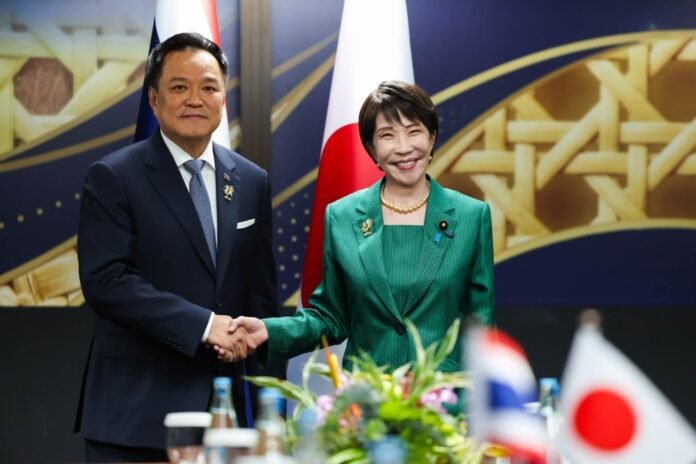
Peru’s official account identifies its Foreign Trade and Tourism Minister Rogers Valencia and Thailand’s Commerce Minister Suphajee Suthumpun as the signatories. President Keiko Fujimori and Prime Minister Anutin Charnvirakul witnessed the ceremony. Thailand’s government media record separately lists the bilateral meeting and FTA signing on November 19.
The Peruvian announcement describes the accord as an expansion of the countries’ existing framework. It says negotiations resumed in 2024 and were substantially concluded in December 2025. The November 2026 signing is a later stage in that process, rather than the first contact between the two governments on preferential trade.
How to interpret the 94% figure
According to Peru’s account, preferential coverage for its products in the Thai market will rise from 66% to 94% of the tariff universe once the agreement takes effect. That is a statement about the coverage of tariff lines. It is not the same as saying that 94% of all bilateral trade by value will automatically be duty-free immediately.
A product-level assessment needs the agreed schedule and its conditions. Different goods can have different treatment and timetables. The rules that establish a product’s origin also matter: a consignment does not necessarily qualify merely because it is shipped from a country that has signed the agreement.
Services broaden the commercial discussion
The Peruvian account says the agreement includes subjects absent from the current protocol, including services, financial services, competition, trade remedies, temporary entry of businesspeople and intellectual property. It points to potential opportunities in products such as furniture, fruit juices, honey, pet food and fishmeal.
For a company, an opportunity is not yet a sale. Finding customers, meeting standards and arranging transport remain practical requirements. A reduction in one trade barrier can improve a project’s economics without removing the need to examine other costs or regulatory conditions. This is especially relevant where goods require careful handling or a reliable delivery schedule.
The difference between signature and implementation
The two governments have completed a visible diplomatic step. The next useful information for businesses will be the legal text, implementation notices and the official commencement date. Those documents determine when and how a particular preference can be used.
Readers should therefore be cautious about a headline that turns a signed agreement into a claim that all new benefits are available today. This report does not establish a start date for every provision or a saving for any particular shipment. Those are matters to check against the final operative documents, not infer from photographs of the signing ceremony.
At a glance
| Question | Verified position |
| Signing date | November 19, 2026 |
| Venue | APEC leaders’ week, Shenzhen |
| Thai prime minister | Anutin Charnvirakul |
| Peruvian president | Keiko Fujimori |
| Coverage figure reported by Peru | 66% to 94% of tariff lines after entry into force |
| Next business checkpoint | Official commencement arrangements and schedules |
What to watch
Watch for the implementation timetable and tariff schedules. Businesses need to match their own goods or services with the operative rules before treating the new agreement as a change they can use.
Sources
- Peru official news agency ANDINA: Government signs FTA with Thailand
- Royal Thai Government: Official meeting and signing media record

The International Desk covers world and Asian affairs, diplomacy and conflict, with a focus on what they mean for India. Stories are checked against at least two credible sources before publication.