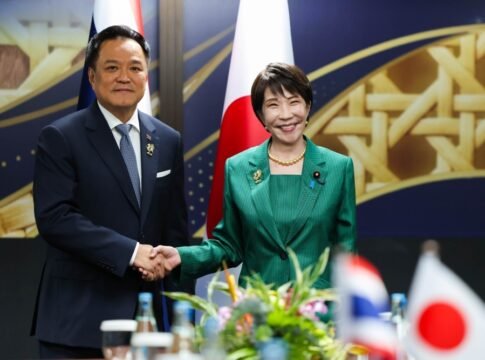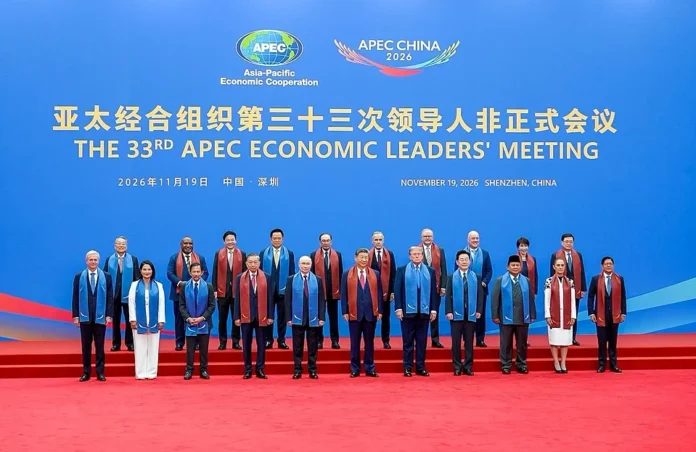
November 20: Indonesian President Prabowo Subianto met Chinese President Xi Jinping at Kylin Villa in Shenzhen on November 20, following the APEC leaders’ gathering. Indonesia’s presidency says the discussion covered the strategic relationship, economic cooperation and investment, alongside regional and global issues.
Key highlights
- The bilateral meeting took place on November 20 in Shenzhen.
- China’s government also confirmed the leaders’ meeting after the November 18–19 APEC gathering.
- Earlier Indonesia–China cooperation commitments totalled about US$71.8 billion across four initiatives.
- Meeting statements and investment commitments should not be confused with completed projects or money already disbursed.
What the two official accounts establish
Indonesia’s presidential account places the meeting at Kylin Villa and describes a discussion about strengthening the bilateral partnership. It reports Xi’s view that the two developing countries have responsibilities concerning stability and development, and Prabowo’s appreciation of China’s longstanding friendship and support. These are the positions described by the presidency.
China’s government separately confirmed that Xi met Prabowo on Friday in Shenzhen. Its initial notice identifies the same city as the host of the 33rd APEC Economic Leaders’ Meeting, held from Wednesday to Thursday. The matching accounts establish the meeting, but they should not be expanded into claims about agreements that neither notice details.
The investment commitments behind the discussion
The meeting follows a separate November 18 exchange of cooperation commitments witnessed by Prabowo. Indonesia’s presidency put their combined value at around US$71.8 billion and identified smart cities, manufacturing and technology, infrastructure financing, and coal-to-ethanol cooperation. The announced framework involves Indonesian and Chinese partners.
The timing matters. Those commitments predate the November 20 bilateral meeting. They are relevant background, not evidence that today’s meeting created an additional US$71.8 billion package. Nor does announcing an investment framework mean that its entire headline value has already entered Indonesia’s economy.
How to read a large investment announcement
Our analysis: a proposed investment passes through several stages before it becomes a functioning asset or service. Depending on the project, these can include detailed contracts, financing arrangements, regulatory approvals, construction and operation. A memorandum can set a direction without resolving all of those steps.
For businesses and communities, the most useful follow-up information would identify the location, timetable, project company and actual financing structure. A single total cannot show how much will be equity, lending, procurement or future expenditure. It also cannot establish the eventual number of jobs or the share of work going to local suppliers.
This distinction does not dismiss the significance of the announcements. It gives readers a way to measure delivery. A completed financing agreement, a disclosed procurement award or the start of construction would each provide a more concrete milestone than repeating the same intended investment value.
Why the relationship matters beyond the summit
The official agenda links economic issues with regional and global affairs. For readers across Asia, that makes the follow-up important for both commercial relationships and diplomatic coordination. However, broad references to stability do not establish that any particular maritime disagreement has been resolved.
The same care applies to trade policy. A meeting between presidents is not by itself evidence that a tariff has changed or that an exporter can immediately claim a new preference. Companies need the applicable legal text and customs guidance before treating diplomatic language as an operational rule.
Our assessment is that the next stage should be judged through documents and implementation rather than the size of a headline alone. The verified development today is the bilateral meeting. The large investment framework is separately dated background that helps explain the economic attention surrounding it.
At a glance
| Date | Development |
| November 18 | Indonesia–China cooperation commitments announced |
| November 18–19 | APEC leaders’ gathering in Shenzhen |
| November 20 | Prabowo–Xi bilateral meeting |
| Next evidence to watch | Detailed agreements, financing and implementation milestones |
What to watch
Watch for fuller official readouts and project-level disclosures. Any new treaty negotiation, financing closure or construction start would need its own supporting announcement. Until then, keep today’s leaders’ discussion separate from earlier commitments and from projects not yet delivered.
Sources
- Presidency of Indonesia: Prabowo and Xi strengthen the strategic partnership
- Government of China: Xi meets Indonesian president in Shenzhen
- Presidency of Indonesia: Four strategic cooperation commitments valued at US$71.8 billion

The International Desk covers world and Asian affairs, diplomacy and conflict, with a focus on what they mean for India. Stories are checked against at least two credible sources before publication.