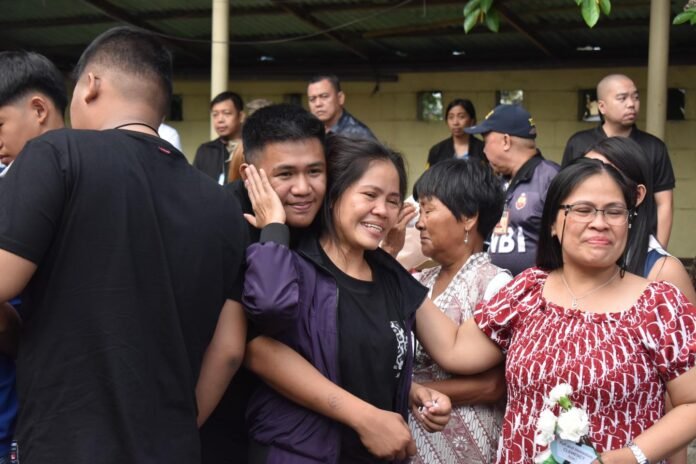
Manila, September 27: Filipino migrant worker Mary Jane Veloso, who spent more than 15 years in jail after being arrested with heroin in Indonesia and once came within hours of execution, has been granted an absolute pardon by Philippine President Ferdinand Marcos Jr. The decision closes one of Southeast Asia’s most closely watched death-row cases, which campaigners have long described as a story of human trafficking rather than drug smuggling.
Key highlights
- Pardon confirmed: Marcos confirmed the absolute pardon on September 25, 2026, telling reporters, “I signed her pardon yesterday.”
- Arrested in 2010: Veloso was arrested at Yogyakarta airport in Indonesia on April 25, 2010, with 2.6 kg of heroin in her luggage.
- Death sentence: She was convicted in October 2010 and faced a firing squad in 2015 before a last-minute reprieve.
- Transfer home: Indonesia and the Philippines agreed on her transfer in December 2024; she had been held since then at the Correctional Institution for Women in Mandaluyong.
- Next step: According to Bernama, she will now have access to government reintegration assistance programmes.
What Marcos said
According to Philstar, Marcos confirmed the pardon during a chance interview while inspecting the Felipe Abrigo Memorial Hospital in Guiuan, Eastern Samar. “I signed her pardon yesterday,” he said. The Bureau of Corrections explained that the pardon papers have to move from the Office of the President to the Department of Justice, then to the Bureau of Corrections and the women’s prison, before release is formally authorised.
A case that began with a job offer
Veloso, who is from Nueva Ecija province, has always maintained that she did not know about the drugs. She has said she was deceived: she travelled to Indonesia on the promise of a job, and her supporters say the suitcase containing the heroin was given to her by her recruiters. She was arrested at Yogyakarta airport on April 25, 2010, and sentenced to death in October 2010.
Her case became a diplomatic issue in 2015, when she was among a group of prisoners scheduled for execution in Indonesia. Philstar notes that an appeal by then-President Benigno Aquino III to Indonesian President Joko Widodo halted her execution. The reprieve came because her testimony was needed in the Philippine prosecution of her recruiters, the Inquirer reported. One of them, Maria Cristina Sergio, was later sentenced to life imprisonment in 2020 for illegal recruitment, according to Philstar.
In December 2024, the two governments agreed to transfer Veloso to the Philippines to serve her sentence at home. With Veloso in Philippine custody, the decision on clemency passed to Manila.
“I couldn’t believe it”: family reaction
Veloso’s mother, Celia, told the Philippine Daily Inquirer that she could not believe the news until human rights lawyer Edre Olalia, who has represented the family, called her to confirm it. Former Nueva Ecija congresswoman Ria Vergara, who had appealed for mercy, welcomed the decision as a fresh start for Veloso.
Why the case matters beyond the Philippines
For years, migrant rights groups have argued that Veloso was a victim of trafficking who was used as a drug courier without her knowledge. Her case highlighted a pattern seen across Asia: workers seeking jobs abroad are recruited through informal channels, promised employment, and then asked to carry luggage or packages that later turn out to contain drugs.
The lesson is relevant to every major labour-sending country in the region, including India, Indonesia, Nepal and Bangladesh. Workers going abroad should use registered recruitment agencies, avoid carrying luggage or parcels for anyone else, and keep their embassy’s contact details at hand. Several Asian governments regularly issue advisories along these lines.
The case also shows how diplomacy can change outcomes in death-penalty cases. The 2015 reprieve, the 2024 transfer agreement and the 2026 pardon each depended on cooperation between Manila and Jakarta. Southeast Asia has faced other strains this month, from floods in Thailand to a deadly ferry disaster in Indonesia (read our report).
What happens next
- Completion of the release paperwork through the Department of Justice and the Bureau of Corrections.
- Veloso’s reintegration with her family in Nueva Ecija and her access to government support programmes.
- Any remaining proceedings against the recruiters in her case.
For regional context, see our earlier coverage of the Philippines’ defence debates (Teodoro’s warning on China).
Sources / References
- Philstar: President Marcos grants Mary Jane Veloso absolute pardon
- Philippine Daily Inquirer: Veloso’s mom in disbelief after Marcos’ absolute pardon
- Bernama: Top news headlines in Southeast Asia, September 27, 2026

The International Desk covers world and Asian affairs, diplomacy and conflict, with a focus on what they mean for India. Stories are checked against at least two credible sources before publication.