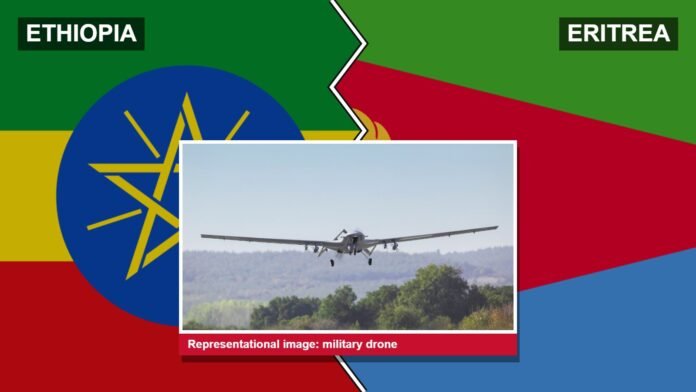
October 3: Ethiopia and Eritrea have broken off diplomatic relations, in the worst confrontation between the two neighbours since they made peace in 2018. Ethiopia closed its embassy in the Eritrean capital, Asmara, and ordered 10 Eritrean diplomats to leave. Eritrea responded on Thursday by cutting all ties. The rupture came hours after explosions shook the Ethiopian capital, Addis Ababa, in what a source linked to an armed opposition alliance described to Reuters as drone attacks by its forces.
Key highlights
- Ethiopia’s move: It shut its embassy in Asmara and gave 10 Eritrean diplomats 48 hours to leave, saying their activities “pose a direct threat to Ethiopia’s national security”.
- Eritrea’s reply: “Eritrea has no option but to reciprocate in kind and sever all diplomatic ties with Ethiopia,” its foreign ministry said.
- The blasts: No casualties or major damage have been officially reported. Accounts differ on the exact targets.
- The war in the north: Fighting in Tigray, Afar and Amhara is the most serious since the 2022 peace agreement, the BBC reported.
- Wider region: Ethiopia and Egypt have also expelled each other’s diplomats. The African Union has urged restraint.
What happened in Addis Ababa
The BBC reported explosions on Wednesday night near the headquarters of Ethiopia’s intelligence service and in other parts of the capital. Al Jazeera described a blast at the Ministry of Defence early on Thursday, and quoted a diplomatic source who told the AFP news agency that “small drones were the most probable cause of the blast”.
Ethiopian authorities have not confirmed casualties or significant damage. A source linked to the opposition alliance told Reuters that its forces had carried out drone attacks in the capital. That claim has not been independently verified.
How the two governments reacted
Ethiopia accuses Eritrea of arming and supporting the Tigray People’s Liberation Front (TPLF). Last month the TPLF joined six other armed movements in an alliance whose stated aim is to remove Prime Minister Abiy Ahmed’s government.
Eritrea called the embassy closure “astounding”. Its foreign ministry accused Ethiopia of years of “incessant hostility” and warned that the break would have “negative corollaries”. A pro-government militia commander told the BBC that Eritrean soldiers were fighting on the front lines. That claim has not been verified.
The fighting behind the rupture
Northern Ethiopia has seen its heaviest fighting since the 2022 agreement that ended a two-year war in Tigray. Clashes have been reported in the Tigray, Afar and Amhara regions, and federal forces are advancing towards the Tigrayan capital, Mekelle, according to the BBC. In the town of Alamata, at least 52 civilians were killed during three days of intense fighting, the broadcaster reported.
The United Nations has warned that the worsening security situation “severely disrupts humanitarian work”.
Egypt and Sudan are being drawn in
The dispute is not limited to two countries. Cairo ordered an Ethiopian diplomat to leave after Addis Ababa expelled an Egyptian diplomat, and called Ethiopia’s action “regrettable and unjustified”, Al Jazeera reported. Sudan’s military government accuses Ethiopia of backing rebel forces on its territory, which Ethiopia denies.
“The conflicts in Ethiopia and Sudan have become more interconnected, with governments accusing each other of harbouring opposition forces,” Ahmed Soliman of the think tank Chatham House told Al Jazeera. The author and analyst Martin Plaut warned of a “real danger” that the conflict could engulf Ethiopia, Eritrea and Sudan.
The African Union, which has its headquarters in Addis Ababa, urged Ethiopia, Eritrea and Egypt “to exercise restraint and resolve their differences through diplomatic channels”.
A long and bitter history
- 1998 to 2000: The two countries fought a border war.
- 2018: Abiy Ahmed, then newly in office, signed a peace agreement with Eritrea that formally ended two decades of hostility.
- 2020 to 2022: Eritrean forces fought alongside Ethiopia’s federal government against the TPLF in the Tigray war.
- Since then: Relations have soured again. Abiy’s stated ambition to secure sea access for landlocked Ethiopia is seen in Asmara as a threat to Eritrean territory, Al Jazeera noted.
Why it matters
Eritrea sits on the Red Sea, one of the world’s busiest shipping lanes and a main route for trade between Asia and Europe, including India’s. A wider war in the Horn of Africa would add to the pressure on a route already disrupted by the fighting in Yemen and the conflict in the Gulf.
What to watch
- Whether Ethiopian and Eritrean forces clash directly along the border.
- Whether federal forces enter Mekelle.
- Any mediation effort by the African Union or regional governments.
Sources
- Al Jazeera: Ethiopia, Eritrea break ties: Does the conflict risk becoming regional war?
- BBC via The Star (Kenya): Ethiopia and Eritrea cut diplomatic ties as northern conflict escalates
- Democracy Now: Ethiopia and Eritrea Sever Diplomatic Ties as Tigray Rebels Claim Drone Strikes on Addis Ababa

The International Desk covers world and Asian affairs, diplomacy and conflict, with a focus on what they mean for India. Stories are checked against at least two credible sources before publication.