October 23: India and New Zealand have signed a customs cooperation arrangement for advance electronic exchange of data showing the origin of traded goods. India’s Finance Ministry announced the October 19 agreement on October 21, describing it as a way to help eligible businesses use preferences under the bilateral free-trade agreement.
Key highlights
- The agreement is between India’s CBIC and the New Zealand Customs Service.
- It concerns origin data for goods, not a new visa programme or a separate services agreement.
- The ministry says the FTA entered into force on October 20.
- Electronic information exchange does not itself establish that every shipment qualifies for a reduced tariff.
What was signed, and by whom?
The ministry’s release identifies the instrument as a Memorandum of Cooperation. It was signed by CBIC Chairman Vivek Chaturvedi and New Zealand Customs Service Comptroller and Chief Executive Christine Stevenson on October 19. The announcement links the arrangement to customs cooperation and implementation of the FTA.
ET Edge Insights independently reported the agreement on October 22, attributing the details to the Finance Ministry. Its report describes the intended benefits as more predictable cross-border processes and better coordination between customs authorities. Those are the agreement’s objectives, not measured results from a completed period of operation.
Why origin matters more than the shipping address
The World Trade Organization explains that rules of origin determine a product’s national source. Origin can affect preferential treatment, trade remedies, statistics and marking requirements. It is therefore a different question from simply identifying the country from which a shipment departed.
The WTO notes that origin tests can involve changes in tariff classification, value added or manufacturing processes. Which test applies to a particular product depends on the relevant rules. This article does not determine the eligibility of any individual shipment or replace advice from a customs professional.
At a glance: three separate questions
| Question | What to establish | Why it matters |
|---|---|---|
| Does the agreement cover the product? | The applicable tariff line and concession | A broad trade announcement is not a product-specific tariff ruling |
| Does the product qualify by origin? | The relevant origin requirement and supporting records | Shipment between two countries alone is not the full test |
| How is the claim submitted? | The current customs procedure and required documentation | Electronic exchange and a trader’s filing obligations are related but distinct |
What digital exchange is intended to improve
According to the ministry, advance sharing is expected to reduce gaps in information and improve the certainty available to traders. In practical terms, the aim is to help the two administrations check the information supporting preferential treatment more efficiently.
The release does not supply a quantified reduction in clearance times, a guaranteed saving for each importer or evidence that all documentation has been abolished. We therefore do not attach a percentage efficiency gain or a fixed financial benefit to the announcement.
What businesses should check next
A useful starting point is to separate the commercial decision from the compliance decision. An exporter may see a potential new market, but the importer still needs to understand how a tariff preference is claimed. Traders should check the applicable product classification, origin evidence and current instructions from the customs authority responsible for the entry.
This checklist is an explanation of the issues raised by the announcement, not a claim that the memorandum changes every one of those requirements. Businesses should not assume that an electronic data link corrects inaccurate product descriptions, unsupported origin declarations or missing records.
How this differs from the earlier FTA story
Our earlier overview of the India–New Zealand FTA explains the wider trade framework. This report focuses on a subsequent customs implementation announcement. It does not announce a second free-trade agreement or a fresh set of immigration entitlements.
What to watch
The next useful evidence is operational guidance explaining how the exchange is used, which records traders must retain and how discrepancies are resolved. Published performance data would help establish whether the promised reduction in information gaps translates into smoother processing. Until that evidence is available, the announcement should be described as a cooperation arrangement with intended benefits, rather than a proven end to customs delays.
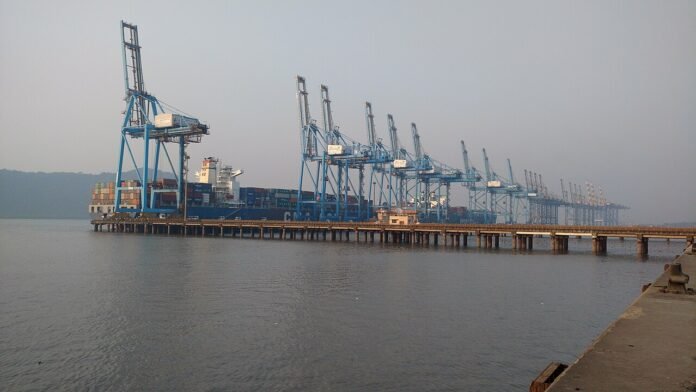
File photo: Container handling at Jawaharlal Nehru Port, India, November 29, 2017; not the 2026 agreement signing. Photo: Ccmarathe / Wikimedia Commons, CC BY-SA 4.0. Resized for display. Image source.
Sources
- PIB / Ministry of Finance: India and New Zealand sign MoC on Electronic Origin Data Exchange
- ET Edge Insights: India, New Zealand sign pact for Electronic Origin Data Exchange under FTA
- WTO: Technical Information on Rules of Origin

The Business Desk covers markets, the economy, companies and personal finance. Stories are checked against at least two credible sources before publication.