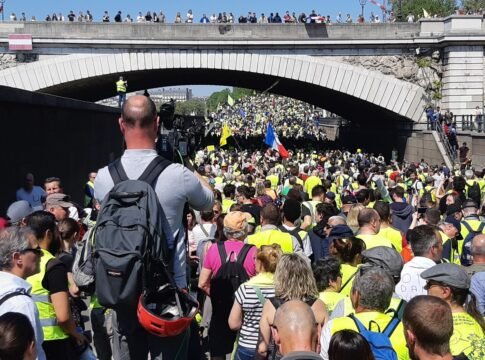
JAKARTA, October 25: Indonesian students have taken their anger over a months-long haze crisis to the streets in more than half a dozen cities, demanding that the government declare a national disaster emergency, as President Prabowo Subianto marked two years in office by promising to strip licences from companies behind the forest and land fires. “Whoever violates the rules, just revoke their licences! I have no hesitation,” Prabowo said in Jakarta on October 23.
Key highlights
- Student protests have spread to more than half a dozen cities since around October 20; more than 500 students gathered outside the Central Kalimantan governor’s office in Palangka Raya on October 23.
- The Health Ministry has recorded more than 333,470 cases of acute respiratory infection in seven provinces since mid-August.
- National Police chief Suyudi Ario Seto said on October 19 that 98 corporations were under investigation over the fires.
- Singapore’s National Environment Agency has moved against 10 Indonesian companies under its Transboundary Haze Pollution Act.
- Prabowo has called the fires “environmental terrorism” and says foreign-linked companies will be named.
What the students want
The protesters’ central demand is that the fires be declared a national disaster. Such a declaration would place the response under national command and open the way for central-government disaster funds, rather than leaving the main burden with provincial authorities in Sumatra and Kalimantan.
The largest gathering on October 23 was in Palangka Raya, the capital of Central Kalimantan, one of the provinces worst affected by smoke. There were minor scuffles with security personnel, but no arrests were reported. Students in other cities have staged similar rallies since Prabowo’s second anniversary in office on October 20.
Prabowo’s message: revoke, prosecute, name names
Prabowo has hardened his language over the past week. At a cabinet meeting on October 21, he described deliberate burning as “environmental terrorism” and turned on critics abroad: “As for certain countries that like to insult Indonesia, when the time comes, we will expose their companies.”
Two days later in Jakarta, he told officials to revoke the licences of any company found to have broken the rules. He said one company is suspected of involvement in as many as 19 fire cases, and that the names of foreign-linked firms will be disclosed later.
The instruction is not new. On September 16, at a meeting at the Merdeka Palace, Prabowo ordered that companies verified as responsible for fires should lose all their permits, that criminal investigations should continue even after permits are revoked, and that the National Police should go “all out”, according to the Cabinet Secretariat. “No mercy starting now,” he said then. Five weeks later, the protests suggest that many Indonesians are still waiting to see results.
The crisis in numbers
| Indicator | Figure | Official source |
|---|---|---|
| Acute respiratory infection cases since mid-August, seven provinces | More than 333,470 | Ministry of Health |
| Corporations under police investigation | 98 | National Police chief, October 19 |
| Fire cases linked to a single suspected company | Up to 19 | President Prabowo, October 23 |
| Indonesian companies issued notices by Singapore | 10 (7 over Sumatra fires, 3 over Kalimantan fires) | National Environment Agency, Singapore |
| Singapore 24-hour PSI, 6 p.m. October 23 | 85–108 (Moderate to Unhealthy) | National Environment Agency, Singapore |
Our calculation: From mid-August to October 23 is about 69 days. More than 333,470 respiratory cases over that period works out to roughly 4,800 new cases a day across the seven provinces — a sustained public-health burden rather than a one-week spike.
The regional spillover
Singapore’s National Environment Agency served notices on seven Indonesian companies on October 16 over fires in Sumatra and said on October 19 that three more would receive notices over fires in Kalimantan. None of the companies is Singapore-based. The notices require the companies to deploy firefighters on land they own or occupy, stop or refrain from burning, and submit a plan to put out the fires or prevent them from recurring. Under the Act, a company found liable can be fined up to S$100,000 for each day of haze pollution, capped at S$2 million.
The agency’s October 23 update put Singapore’s 24-hour PSI at 85–108 and forecast 90–140 for October 24, with smoke drifting from Sumatra. It said winds were expected to turn southwesterly or westerly from Sunday, which may reduce the smoke reaching Singapore. The ASEAN Specialised Meteorological Centre has kept the southern ASEAN region at Alert Level 3, its highest level.
Why it matters
Haze is one of the oldest irritants in Indonesia’s relations with Singapore and Malaysia, and one of the clearest tests of whether Jakarta can enforce its own rules on plantation and pulpwood companies. Prabowo’s threat to name foreign-linked firms also shifts the argument: it presents the fires as partly an outside problem, at a time when neighbours are using their own laws against Indonesian companies.
What to watch
- Whether the government declares a national disaster emergency, as students demand.
- Which licences are actually revoked, by which ministry, and whether the companies named include foreign-linked groups.
- Progress in the police investigations into the 98 corporations.
- Whether the expected change in wind direction and the start of heavier rains bring relief to Sumatra, Kalimantan and Singapore.
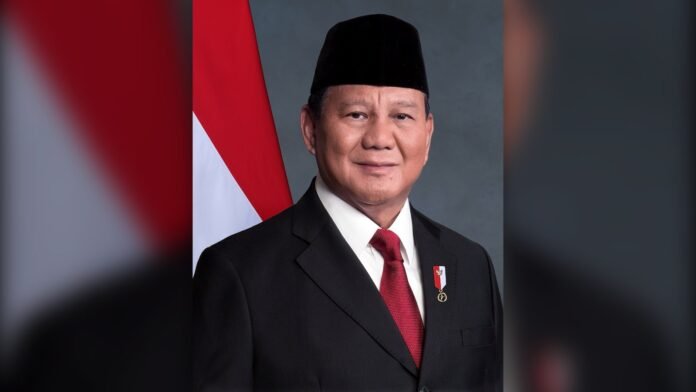
File photo: Prabowo Subianto’s official presidential portrait (2024). Image: Darwis Triadi and Indonesia’s Ministry of State Secretariat, public domain, via Wikimedia Commons. Photo source
Sources
- Cabinet Secretariat of Indonesia: President Prabowo orders permit revocation and criminal probes into companies behind forest fires (September 16, 2026)
- National Environment Agency, Singapore: NEA issues additional notices under the Transboundary Haze Pollution Act
- National Environment Agency, Singapore: Haze situation update (October 23, 2026)
- ASEAN Specialised Meteorological Centre: Regional haze situation

The International Desk covers world and Asian affairs, diplomacy and conflict, with a focus on what they mean for India. Stories are checked against at least two credible sources before publication.