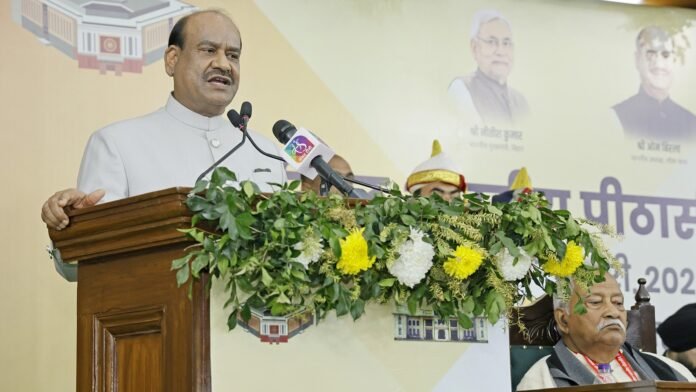
NEW DELHI, October 25: India is preparing to host the 12th BRICS Parliamentary Forum on October 26–27, with the announced programme bringing parliamentary cooperation, digital technology and institutional resilience into the same discussion. Lok Sabha Speaker Om Birla has outlined the meeting at Samvidhan Sadan. Delegation secretaries are scheduled to work on a joint statement on Sunday, ahead of Monday’s inauguration.
Key highlights
- The forum is scheduled for October 26–27 in New Delhi.
- The announced venue is the Central Hall of Samvidhan Sadan.
- The programme includes AI, institutional resilience, global governance and sustainability.
- A parliamentary forum is distinct from a summit of heads of government.
What is confirmed before the opening
The Lok Sabha Secretariat’s announcement says Prime Minister Narendra Modi is to attend and meet visiting delegation leaders. It also provides for bilateral and multilateral exchanges and a meeting of parliamentary international affairs committee chairpersons. These are planned engagements; the announcement is not a record of decisions already adopted.
The Parliament of India’s official gallery records Birla’s October 22 press conference announcing the dates. The continuity with the previous forum is documented in Parliament’s report on the 2025 meeting, which records the handover of the next chairmanship to India.
The programme at a glance
| Track | Question it raises for readers |
|---|---|
| Institutional resilience | How can parliamentary institutions remain effective and accountable? |
| AI and digital innovation | How should legislatures scrutinise the use of new technology? |
| Global governance | What changes do participants seek in international representation? |
| Sustainability | How can commitments be examined through budgets and legislation? |
Why the parliamentary format matters
A meeting of parliamentary leaders has a different role from an executive negotiation. Governments can announce policy or negotiate agreements, while legislatures consider laws, public spending and oversight through their own constitutional processes. Understanding the format prevents readers from treating every expression of support at the forum as a policy that immediately takes effect across member countries.
A joint statement can show where participants have found common language. It cannot, by its existence alone, establish that each country has enacted corresponding domestic legislation. The subsequent evidence would be action within the relevant parliament or government: a bill, a budget provision, an oversight hearing or another published measure.
AI puts scrutiny alongside innovation
The announced digital-technology session creates room for a practical question: what information should public institutions disclose when adopting AI? In our assessment, readers should look for discussion of responsibility, review and public access, rather than assuming that the presence of AI on an agenda signals a specific regulatory model. No common AI law is established by the pre-event programme.
The same test applies to institutional resilience and sustainable development. A broad objective becomes easier to evaluate when it names the problem, the body responsible and a way to assess progress. Without those details, a declaration may express an aspiration while leaving implementation open. That is a limitation of the evidence, not proof that the discussion has no value.
What to watch
The main documents to watch are the opening statements and any agreed text released at the conclusion. Compare that text with the published agenda to see which questions produced agreement and which remained general. Any bilateral announcements should be assessed separately, because an understanding between two delegations is not automatically a commitment by all participants.
For now, the confirmed news is the forthcoming parliamentary gathering and its stated subjects. Claims about a new binding BRICS policy, a completed agreement or a change in domestic law would require further official documentation after the relevant decision is made.
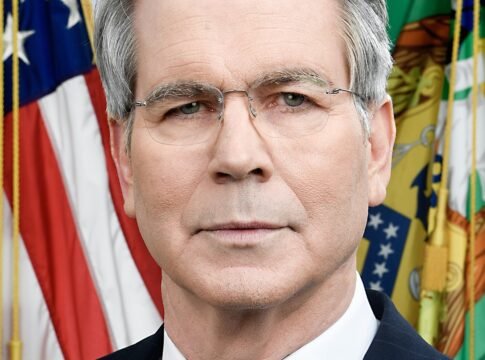
File photo: Lok Sabha Speaker Om Birla addressing a presiding officers’ conference in Patna on January 21, 2025. Ministry of Parliamentary Affairs, Government of India, via PIB; not a photograph of the forthcoming forum. Photo source; GODL-India. Cropped and resized.
Sources
- Lok Sabha Secretariat via PIB: 12th BRICS Parliamentary Forum, October 26–27
- Parliament of India: Official media gallery
- Parliament of India: Report on the 11th BRICS Parliamentary Forum

The International Desk covers world and Asian affairs, diplomacy and conflict, with a focus on what they mean for India. Stories are checked against at least two credible sources before publication.