October 29: SK hynix reported third-quarter revenue of KRW104.6155 trillion and operating profit of KRW83.3338 trillion in preliminary results released on October 28. The South Korean memory-chip company also outlined around KRW100 trillion in 2026 shareholder returns as it expanded business linked to AI computing.
Key highlights
- The company reported an operating margin of 80%, rounded.
- Net profit was KRW39.7756 trillion, a separate earnings measure.
- HBM4 shipments and server-memory demand featured in the results.
- SK hynix said it had discontinued its review of a Solidigm IPO.
The reported quarterly figures
| Metric | Q3 2026 |
|---|---|
| Revenue | KRW104.6155 trillion |
| Operating profit | KRW83.3338 trillion |
| Net profit | KRW39.7756 trillion |
| Reported operating margin | 80% |
| Reported net-profit margin | 38% |
The preliminary release distinguishes operating earnings from profit after other accounting items. These measures should retain their own labels when comparing the company with another chipmaker. A reported operating margin is not the return earned by a shareholder.
Our calculation: dividing reported operating profit by revenue gives approximately 79.7%, consistent with the company’s rounded 80% margin. The calculation uses both amounts in the same currency and unit.
How the return plan is structured
The company described around KRW100 trillion of shareholder returns for 2026, including cash dividends of at least KRW30 trillion and buybacks and cancellations of at least KRW60 trillion. The buyback component includes KRW40 trillion announced in August.
The August amount is therefore part of the stated programme. Adding it again on top of the annual headline would double-count that component. The minimum component figures also should not be treated as an exact reconciliation of the approximate annual total.
For an investor reading the announcement, the next useful records are the formal dividend dates, the relevant eligibility dates and disclosures showing execution of repurchases or cancellations. An annual return plan and completed transactions are different stages.
HBM4, server memory and the supply horizon
SK hynix linked the quarter to server DDR5 demand and HBM4 shipments, alongside its enterprise-storage business. It expected HBM4 to become mainstream from the fourth quarter. That statement is the company’s outlook for product adoption.
Its release also said long-term agreements covered more than half of production capacity for 2027–2028. Such coverage gives a different view from a quarter’s recognised sales: agreements relate to future supply arrangements, while revenue relates to the reporting period.
For Asian electronics supply chains, these distinctions help identify which part of AI infrastructure demand is being discussed. Memory components, packaged systems and completed data-centre capacity are separate stages. A chipmaker’s shipment update alone cannot establish the delivery timetable of an entire computing project.
What the Solidigm statement establishes
Chief executive Kwak Noh-Jung said the review of a Solidigm listing had been discontinued after considering conditions and objectives. The confirmed action concerns that review. It should be read through the company’s own statement rather than expanded into assumptions about every future financing option.
This development also belongs alongside the operating results, rather than being treated as revenue from a completed listing. The announcement does not report proceeds from an IPO.
What to watch
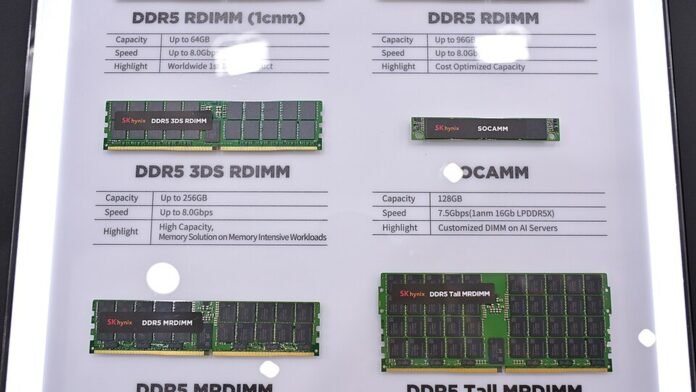
Final financial disclosures, implementation of the shareholder-return programme and subsequent HBM4 shipment updates will provide the next checkpoints. The featured photograph is an archived DDR5 display, identified in its caption; it is not a picture of HBM4 production.
Sources

The Business Desk covers markets, the economy, companies and personal finance. Stories are checked against at least two credible sources before publication.