October 29: Singapore and Indonesia agreed to establish a joint task force on transboundary haze and a hotline between their foreign ministries during Foreign Minister Vivian Balakrishnan’s Jakarta visit. Singapore’s Foreign Ministry set out the agreement in an October 28 account of the visit scheduled for October 27–29.
Key highlights
- The task force is intended to strengthen information-sharing and cooperation.
- The hotline is an institutional channel between the foreign ministries.
- Balakrishnan met President Prabowo Subianto on October 28.
- The announcement does not publish a public telephone number or operational start date.
The diplomatic steps on the visit
| Date | Meeting or programme in Singapore’s account |
|---|---|
| October 27 | Meeting with Indonesian Foreign Minister Arrmanatha Christiawan Nasir |
| October 28 | Meeting with President Prabowo Subianto |
| October 27–29 | Scheduled working visit to Jakarta |
Minister of State Zhulkarnain Abdul Rahim accompanied Balakrishnan. The published account places haze cooperation within bilateral discussions rather than presenting the new mechanism as a completed environmental outcome.
What a joint task force can make more concrete
The ministry identified information-sharing and cooperation as the purpose of the task force. Useful implementation details would include which agencies participate, how information moves between them and which issues are escalated through the new channel.
Those practical arrangements matter because a shared announcement and a working process are different stages. A task force becomes easier to assess when its responsibilities, contact points and review arrangements are published. The immediate confirmed development is the agreement to establish it.
A foreign-ministry hotline can provide a direct route for official communication when an issue needs attention. Readers should distinguish that institutional channel from a public service for reporting local air-quality concerns. The announcement does not give citizens a number to call.
Diplomatic cooperation and the daily haze forecast
Air-quality bulletins answer a time-specific question about conditions and expected changes. The diplomatic agreement concerns how two governments cooperate across that problem. Progress on one track needs its own evidence rather than being inferred from the other.
Singapore’s National Environment Agency separately said on October 29 that inter-monsoon showers and lighter, more variable winds were expected to help improve local haze conditions. That weather assessment is relevant to the daily outlook; it is not a measurement of the new task force’s performance.
The Press of Asia’s separate October 30 haze forecast explains the current air-quality bulletin. Readers planning immediate outdoor activity should use the latest official readings and applicable guidance.
How to judge follow-through
Three developments would make the agreement more specific: publication of the task force’s membership, confirmation that the official channel is functioning and a record of the information or coordinated action it supports. These are observable institutional milestones.
Environmental outcomes need an additional evidence base, including dated observations and relevant assessments of conditions. Neither a meeting photograph nor a favourable weather change, on its own, demonstrates that a newly announced coordination mechanism caused an improvement.
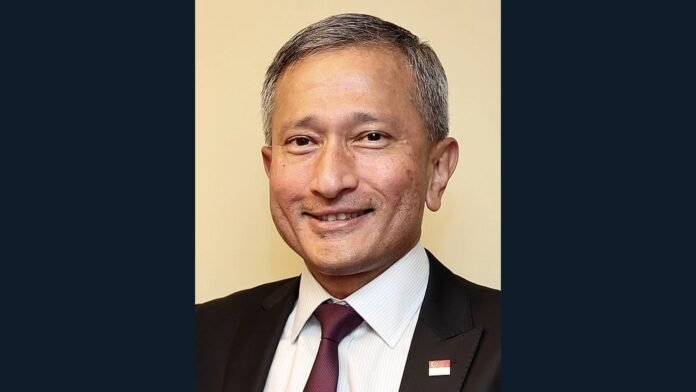
The accompanying photograph is a licensed 2023 portrait of Balakrishnan. Its caption identifies the place and date so it is not mistaken for a photograph of this week’s Jakarta meetings.
What to watch
Further statements from the two governments can establish the membership, operating arrangements and any first actions under the task force. The published October 28 account supplies the agreement and visit chronology; subsequent implementation records will show how that cooperation develops.
Sources
- Singapore Ministry of Foreign Affairs: Jakarta visit, October 27–29, 2026
- Singapore National Environment Agency: Haze situation update, October 29, 2026

The International Desk covers world and Asian affairs, diplomacy and conflict, with a focus on what they mean for India. Stories are checked against at least two credible sources before publication.