NEW DELHI, November 7: Thailand’s headline inflation rose to 3.90% in October 2026 from 2.82% in September, the Commerce Ministry’s Trade Policy and Strategy Office (TPSO) said on Friday. Fuel prices, driven up by the energy crisis in the Middle East, and a flood-hit jump in vegetable prices did most of the work. Core inflation, which strips out fresh food and energy, was much lower at 1.58%.
Key highlights
- Headline inflation: 3.90% year on year in October, up from 2.82% in September; prices rose 0.94% in the month.
- Core inflation: 1.58% year on year, up from 1.50%.
- Energy: up 15.60% year on year; the transport and communication group rose 10.93%.
- Fresh vegetables: up 17.34%, with water spinach, limes and holy basil costlier after floods.
- Ten-month average: 1.77% for January–October; the ministry kept its 2026 forecast at 1.8–2.2%.
| Group (weight) | Change from October 2025 |
|---|---|
| All items | +3.90% |
| Food and non-alcoholic drinks (39.60%) | +4.26% |
| — fresh food | +5.24% |
| Non-food items | +3.66% |
| Transport and communication (23.63%) | +10.93% |
| — energy | +15.60% |
| Housing (23.51%) | −0.94% |
| Clothing and footwear | −0.46% |
| Medical and personal care (6.09%) | −0.35% |
| Recreation, reading and education (3.98%) | +1.51% |
| Tobacco and alcohol | +0.04% |
| Core inflation | +1.58% |
Why prices rose
The TPSO gave three reasons. Domestic fuel prices were being compared with a low base a year earlier. The energy security crisis in the Middle East continued after attacks on Saudi Arabia’s oil production areas, pushing the average price of Dubai crude to its highest in seven months. And flooding in key vegetable-growing areas lifted some fresh vegetable prices early in the month, although the office said those prices returned towards normal by the end of October.
Within food, rice and flour products rose 4.79%, eggs and dairy 6.90% and ready-made meals 4.06%. Lower electricity charges pulled the housing group down 0.94%.
What the ministry expects
The TPSO expects inflation to stay positive in November. It said retail fuel prices remain above last year’s level even after the Energy Ministry trimmed parts of the fuel price structure, that ready-made food costs are rising, that some fares may rise with fuel costs, and that weather could still hit fresh food. On the other side, the electricity tariff for September–December is 3.86 baht a unit, down from 3.95 baht in the previous period, and floodwaters are receding. The ministry kept its forecast for 2026 inflation at 1.8% to 2.2%, with a mid-point of 2.0%.
Our calculation
- Headline inflation rose 1.08 percentage points in one month, from 2.82% to 3.90%.
- The gap between headline (3.90%) and core (1.58%) inflation is 2.32 points, showing that the rise is mostly about fuel and fresh food rather than broad price pressure.
- As a rough guide, for the full year to average the ministry’s 2.0% mid-point after a ten-month average of 1.77%, November and December would need to average a little over 3%, close to October’s pace.
What it means for India and Asia
Thailand joins other Asian economies where fuel costs are lifting inflation. In the Philippines, inflation rose to 7.8% in October, as we reported in our story on Philippine prices. Thailand’s core rate is still low, which gives the Bank of Thailand room to wait; it held its policy rate at 1.00% last month, as covered in our report on that decision. For Indian travellers, fuel-linked fares in Thailand may keep rising, and Indian exporters of food items to Thailand may see stronger demand while vegetable prices are high.
What to watch
- The next consumer price release, scheduled for Friday, December 4, 2026.
- Any further change to Thailand’s fuel price structure by the Energy Ministry.
- Oil prices, which depend on the conflict in the Middle East.
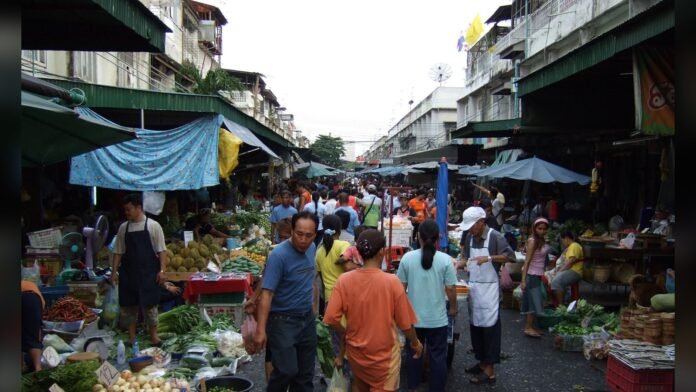
Khlong Toei, one of Bangkok’s biggest fresh markets. Fresh vegetable prices rose 17.34% in October. Image: Kounosu, CC BY-SA 3.0, via Wikimedia Commons. Photo source · Licence
Sources
- Trade Policy and Strategy Office, Ministry of Commerce: Consumer price index of Thailand, October 2026 (released November 6, 2026, in Thai)
- Trade Policy and Strategy Office: Consumer Price Index (CPI) data page

The Business Desk covers markets, the economy, companies and personal finance. Stories are checked against at least two credible sources before publication.