NEW DELHI, November 7: The Petroleum Ministry has rejected the Karnataka government’s claim that petrol sold at some outlets in the state contains 26% to 31% ethanol, saying 893 samples of E20 petrol tested across 27 states and Union Territories, including 56 in Karnataka, all met the national standard. The three state-run fuel retailers have asked for joint sampling and independent testing to settle the dispute.
Key highlights
- The claim: Karnataka’s Department of Food, Civil Supplies, Consumer Affairs and Legal Metrology said petrol at certain outlets had 26–31% ethanol, against 20% for E20.
- The response: IOCL, BPCL and HPCL say the claim is not backed by testing done under the prescribed statutory and technical procedures.
- National tests: all 893 samples tested under the oil companies’ quality programme were within the 19–21% ethanol range.
- Karnataka samples: 56 samples from all three companies showed 19–20% ethanol, an average of 19.30%.
- Cost claims: the ministry disputed Karnataka’s estimate of about ₹1.01 lakh crore a year in mileage loss and repair costs.
| Question | Karnataka’s claim (as described by the ministry) | Ministry and oil companies |
|---|---|---|
| Ethanol in petrol | 26–31% at certain outlets | 19–21% in all 893 samples; 19.30% average in 56 Karnataka samples |
| Testing | Certificates from a third-party laboratory | Must be a laboratory listed under the Control Order, using IS 17021 methods |
| Sampling | October exercise without oil company representatives | Six one-litre samples, jointly signed, with counterpart samples for dealer and company |
| Density | 0.742–0.749 g/cc for samples said to have 26–31% ethanol | 0.752–0.760 g/cc for E20; more ethanol should raise density, not lower it |
| Mileage loss | About ₹62,000 crore a year | 1–2% for E20-calibrated vehicles, 3–6% for others; a blanket 10% loss is not scientific |
| Repair costs | About ₹39,000 crore a year | Needs evidence from actual vehicle data and studies |
The testing dispute
The ministry said samples from a September exercise in Karnataka went to designated oil company laboratories, but that a second exercise in October was carried out without oil company representatives. The companies said they had not received the retention samples, full outlet-wise details or laboratory reports despite asking. Under India’s fuel quality order, six one-litre samples should be drawn, with two given to the dealer, two kept by the company or department and two sent to a notified laboratory, and the labels jointly signed.
It also questioned the method. The certificates cited by Karnataka simply say “Ethanol % by Gas Chromatography”, the ministry said, without naming the standard test method, the 1:1 dilution with ethanol-free petrol or the E10 reference sample required under the Bureau of Indian Standards specification IS 17021. It noted that ethanol is denser than petrol, so the lower density readings in the certificates do not fit with higher ethanol content.
Mileage and vehicle damage
The ministry said more than 30 crore two-wheelers and 4 crore four-wheelers have run on E20 for over three years, and that more than 6 crore people visit petrol pumps every day, without reports of widespread breakdowns. Citing its August 2025 response, it said vehicles calibrated for E20 may lose about 1–2% in mileage and some other vehicles 3–6%, so applying a 10% loss across all vehicles to reach ₹62,000 crore is not a scientific estimate.
Our calculation
- The Karnataka figures of 26–31% ethanol are 6.7 to 11.7 points above the 19.30% average found in the oil companies’ Karnataka samples.
- The 893 national samples break down as 330 from IOCL, 280 from BPCL and 283 from HPCL.
- Karnataka’s two cost claims add up to ₹1.01 lakh crore a year: ₹62,000 crore for mileage and ₹39,000 crore for repairs.
What it means for India and Asia
E20 is central to India’s plan to cut oil imports and support farmers who supply sugarcane and grain for ethanol. A dispute between a state government and the Centre over fuel quality could shake consumer confidence, which is why the oil companies want joint testing. Other Asian countries, including Indonesia and Thailand, also use biofuel blends and will watch how India handles questions about quality and vehicle impact.
What to watch
- Whether Karnataka agrees to joint sampling and testing at a notified laboratory.
- Any response from Karnataka’s department to the ministry’s points.
- Further quality survey results from the oil companies.
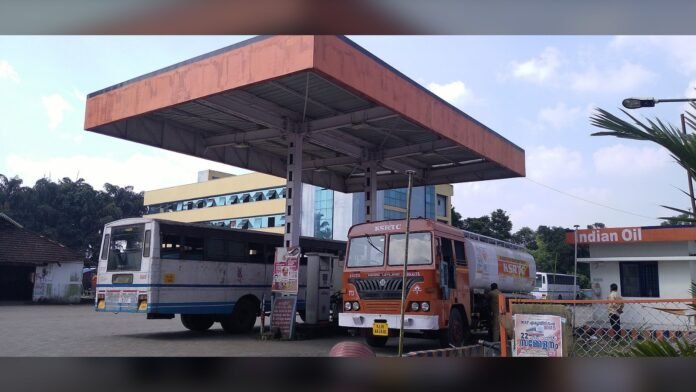
An Indian Oil fuel station in Thiruvalla, Kerala (file photo). Image: Editor8220, CC BY-SA 4.0, via Wikimedia Commons. Photo source · Licence
Sources

The Business Desk covers markets, the economy, companies and personal finance. Stories are checked against at least two credible sources before publication.