DOHA, October 25: Qatar, Türkiye, Pakistan and Indonesia have signed a memorandum of understanding to cooperate in defence manufacturing, bringing together four countries that stretch from the Gulf to Southeast Asia. The agreement, named “Badr”, was signed in Doha on October 21 by the four defence ministries. It covers joint production, training, and research and development, but it is not a mutual-defence treaty.
Key highlights
- The Badr memorandum was signed in Doha on October 21 by Qatar, Türkiye, Pakistan and Indonesia.
- Qatar’s Defence Ministry said it aims “to foster cooperation in the field of defence manufacturing, enhance defence capabilities among the four countries”.
- Indonesia’s Foreign Ministry said the initiative would “drive innovation in defense technology by combining the expertise of all four nations”.
- The deal is about defence industry — production, training and R&D — not a commitment to fight together.
- It adds to a growing web of defence arrangements involving Türkiye, Pakistan and Gulf states.
Who signed
| Country | Signatory | Position |
|---|---|---|
| Qatar | Sheikh Saoud bin Abdulrahman bin Hassan Al Thani | Deputy Prime Minister and Minister of State for Defence Affairs |
| Türkiye | Yaşar Güler, with Haluk Görgün | Minister of National Defence; President of the Defence Industry Agency |
| Pakistan | Khawaja Muhammad Asif | Minister of Defence |
| Indonesia | Yusuf Jauhari | Deputy Minister of Defence |
What the four governments say
Qatar’s Defence Ministry said the memorandum is meant to foster cooperation in defence manufacturing and strengthen the four countries’ defence capabilities, with training and research and development among the areas covered. Pakistan’s Defence Minister Khawaja Asif said the agreement “reflects a shared commitment to contributing to regional peace and stability”.
In Jakarta, Foreign Ministry spokesperson Vahd Nabyl A. Mulachela said on October 22: “We aim to strengthen our national capabilities.” He added that the initiative “will drive innovation in defense technology by combining the expertise of all four nations”. Indonesia traditionally avoids military alliances under its “free and active” foreign policy, which is why its officials have presented Badr as an industrial and technological arrangement.
What each country brings
Türkiye is the industrial centre of the group. Its defence sector exports drones, warships and armoured vehicles, and it already works with each of the other three. It has a military base in Qatar and signed a separate defence-industry memorandum with Doha in October 2025.
Pakistan and Türkiye are building four corvettes for the Pakistan Navy — two in Istanbul and two in Karachi — a model of shared production that the new memorandum could extend.
Indonesia has developed the Harimau medium tank with Turkish partners through its state-owned PT Pindad and agreed in 2025 to buy 48 KAAN fighter jets from Türkiye. Its state defence companies want technology transfer as well as finished equipment.
Qatar brings financial weight and a buyer’s market. Gulf funding has helped other joint projects reach production scale.
Our calculation: The four signatories are home to more than 600 million people — roughly one in every 13 people on Earth — with Indonesia and Pakistan together accounting for most of that. Few industrial partnerships combine a market of that size with an established arms exporter.
How it fits a wider pattern
The memorandum is one of several overlapping arrangements. A joint defence agreement signed in Mecca in August by Saudi Arabia, Pakistan and Türkiye was sent by Ankara to the Turkish parliament on October 21, the same day the Badr memorandum was signed in Doha. Unlike that agreement, the Doha memorandum is focused on industry rather than on mutual defence commitments.
What it means for India
For India, the deal links Pakistan more closely to the defence industries of Türkiye and a Gulf state, and to Indonesia, an important Indian partner in the Indo-Pacific. A memorandum is only a framework, and much will depend on whether it produces funded projects. New Delhi is likely to watch, in particular, whether any joint production involves systems that Pakistan could deploy, and how Indonesia balances its ties with both countries.
What to watch
- Whether the four countries set up working groups or name the first joint projects.
- Any financing commitments from Qatar.
- Whether other states, such as Saudi Arabia, Malaysia or Azerbaijan, are invited to join.
- The Turkish parliament’s handling of the separate Mecca agreement.
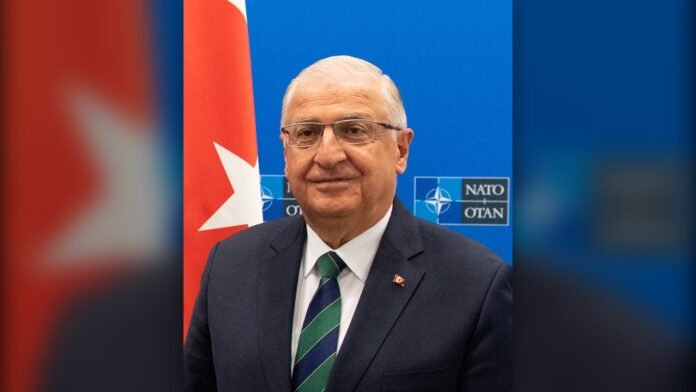
File photo: Turkish Defence Minister Yaşar Güler at NATO headquarters in Brussels, June 16, 2023. Image: US Department of Defense, public domain, via Wikimedia Commons. Photo source

The International Desk covers world and Asian affairs, diplomacy and conflict, with a focus on what they mean for India. Stories are checked against at least two credible sources before publication.