MANILA, October 25: Prosecutors at the International Criminal Court have asked judges to admit the earlier recorded testimony of three more witnesses, along with an expert report, in the crimes-against-humanity case against former Philippine President Rodrigo Duterte. The two public redacted filings, dated October 23 and lodged before Trial Chamber III, rely on Rule 68(3) of the court’s Rules of Procedure and Evidence and come five weeks before the trial is due to open in The Hague on November 30.
Key highlights
- Two prosecution filings dated October 23 ask Trial Chamber III to admit prior recorded testimony under Rule 68(3).
- One covers an expert report by witness P-1400 and 15 associated items; the prosecution says this would cut the expert’s live questioning from about five hours to two.
- The other covers witnesses P-1155, P-1156 and P-1157, whose accounts relate to Count 3 of the charges, which concerns murder and attempted murder.
- According to the filings, the three describe alleged orders “from above”, planning, payments and a policy to “neutralize” suspected criminals.
- A final status conference is set for November 2, and the trial is scheduled to open on November 30.
What the prosecution has filed
The first filing concerns P-1400, an expert witness. The prosecution wants the expert’s written report and 15 related items admitted as evidence so that the witness’s direct examination in court can be shortened from about five hours to roughly two. The filing says the defence has “agreed in principle” to expert reports being introduced in this way.
The second filing is more significant for the substance of the case. It asks the judges to admit the earlier statements of P-1155, P-1156 and P-1157, three witnesses whose evidence the prosecution links to Count 3. According to the prosecution’s summary, P-1155 speaks about orders that came “from above”, instructions given to police and a reward. P-1156 addresses orders, planning, payment and what the prosecution describes as knowledge and intent. P-1157 describes a killing and a planned police operation. All three, the filing says, give evidence about an alleged policy to “neutralize” people suspected of crimes.
These are prosecution descriptions of evidence that has not yet been tested in court. The witnesses’ identities are protected, and the public versions of the filings are redacted. A similar request covering three other witnesses — P-0008, P-1164 and P-1303 — was made public on October 21.
Why Rule 68(3) matters
Rule 68(3) allows a witness’s earlier recorded statement to be admitted in place of part of their live testimony, but only if the witness appears before the chamber, does not object, and can be questioned by the defence and the judges. In practice, the prosecution reads less of its case into the record in open court, and more of the courtroom time goes to cross-examination.
For a trial built on a large number of incidents and witnesses, the rule is mainly a time-saving tool. It does not make the evidence automatically reliable; the judges still decide what weight to give each statement once the witness has been examined.
The case so far
| Date | Step |
|---|---|
| March 2025 | Duterte is arrested in Manila on an ICC warrant and flown to The Hague, where he is held at the court’s detention centre in Scheveningen. |
| 2025–2026 | The defence challenges the court’s jurisdiction and argues that he is unfit for trial; the judges find him fit to stand trial and the case proceeds. |
| October 21, 2026 | A prosecution Rule 68(3) request covering witnesses P-0008, P-1164 and P-1303 is made public. |
| October 23, 2026 | Two further requests are filed, covering expert P-1400 and witnesses P-1155, P-1156 and P-1157. |
| November 2, 2026 | Final status conference before Trial Chamber III. |
| November 30, 2026 | Scheduled opening of the trial. |
Our calculation: The expert request alone would save about three hours of courtroom time for one witness — a 60% cut in that witness’s direct examination. Across the requests made public this week, the prosecution has asked for Rule 68(3) treatment for seven witnesses: P-0008, P-1164, P-1303, P-1155, P-1156, P-1157 and P-1400.
Who is hearing the case
Trial Chamber III is presided over by Judge Joanna Korner, sitting with Judges Keebong Paek and Nicolas Guillou. The chamber will rule on the Rule 68(3) requests; it can grant them in full, in part, or require some witnesses to give all their evidence live.
What it means for the Philippines
The Philippines left the Rome Statute in March 2019, but the court has held that it keeps jurisdiction over alleged crimes committed while the country was still a member. The case concerns killings linked to Duterte’s anti-drug campaign, during his years as mayor of Davao City and as president. It remains politically divisive at home, where his supporters describe the prosecution as unfair and families of victims have pressed for accountability.
Duterte, now 81, has not yet entered a plea. Under the court’s procedure, the charges are read and the accused is asked to plead at the start of the trial.
What to watch
- Whether the judges grant the Rule 68(3) requests before or at the November 2 status conference.
- The final order of witnesses and how much time each side is given for questioning.
- Any further defence motions on fitness, detention or the admissibility of evidence before November 30.
- Duterte’s plea when the trial opens, and whether he attends in person.
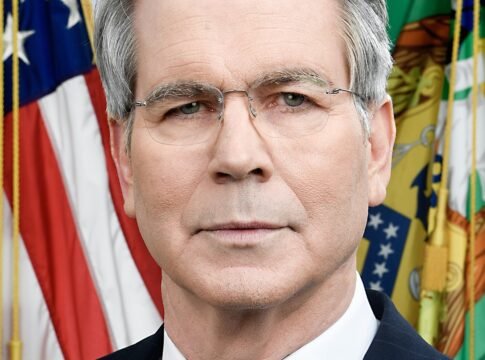
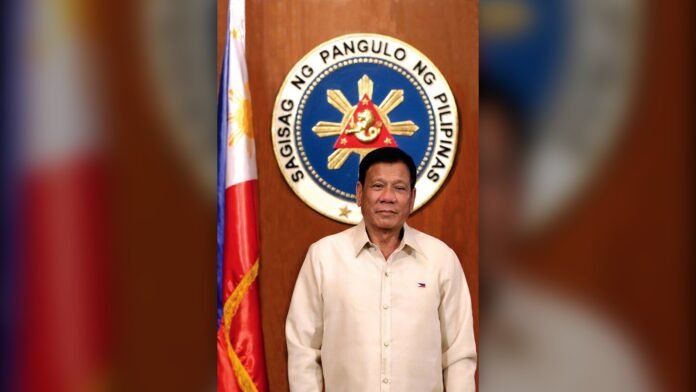
File photo: Rodrigo Duterte’s official presidential portrait (2016). Image: Government of the Philippines, public domain, via Wikimedia Commons. Photo source
Sources

The International Desk covers world and Asian affairs, diplomacy and conflict, with a focus on what they mean for India. Stories are checked against at least two credible sources before publication.