September 30: After heavy rain in Nepal, the Gandak (Narayani) river has created flood-like conditions in the border districts of Uttar Pradesh and Bihar. In Uttar Pradesh’s Kushinagar, the river’s AP embankment breached late on Monday night, letting water into several villages and putting more than 30 villages at risk of flooding. At Bagaha in Bihar, the Gandak rose to 91.25 metres, its highest level on record. Chief Minister Yogi Adityanath toured the flood-hit areas of Kushinagar on Tuesday.
Key highlights
- Embankment breach in Kushinagar: the AP (Amwakhas) embankment in Tamkuhiraj tehsil breached at about 10:30 pm on Monday, and a stretch of about 10 metres was washed away.
- Water in villages: water entered Jawahi Dayal, Gaurha, Siswa Nahar, Bagh Khas and Birwat Konwaliya. People from 10 villages have been moved to safer places.
- Record level in Bihar: the Gandak reached 91.25 metres on the Bagaha gauge, 35 cm above the previous record of 90.90 metres set in 2024.
- Heavy release from the barrage: 5,43,500 cusecs were released from the Gandak barrage at Valmikinagar at 6 am on Monday.
- Relief work: NDRF, SDRF and PAC teams are deployed. During the Chief Minister’s visit, 5,000 dry ration packets were distributed.
What happened in Kushinagar
The embankment broke in Tamkuhiraj tehsil, between Jawahi Dayal and Birwat Konwaliya, opposite Gaurha village. Amrit Vichar reports that water had been seeping through the embankment for three days before it suddenly gave way around midnight. On the Bhainsaha gauge, the river was recorded at 96.43 metres, 43 cm above the danger mark of 96 metres. Three or four flood-division workers fell into the water during repair work at the breach and were rescued with ropes.
Kushinagar District Magistrate Sanjay Chauhan said: “Villages are being evacuated… flood-division officials are working to repair the embankment” (translated from Hindi).
The numbers behind the flood
| Measure | This flood | Comparison | Difference (our calculation) |
|---|---|---|---|
| Gandak level at Bagaha (Bihar) | 91.25 m | Previous record 90.90 m (2024) | +0.35 m, new record |
| Level at Bhainsaha gauge (Kushinagar) | 96.43 m | Danger mark 96.00 m | +0.43 m above danger |
| Release from Gandak barrage, 6 am Monday | 5,43,500 cusecs | 2024 peak 5,62,500 cusecs | 19,000 cusecs lower (about 97% of the 2024 peak) |
| Barrage discharge, Tuesday morning | 1,91,200 cusecs | 5,43,500 cusecs on Monday | Down about 65% |
The figures show why the record came even though the release from the barrage was below its 2024 peak:, more than five lakh cusecs flowed for 13 hours and more than four lakh cusecs for 32 hours.
The Chief Minister’s visit and announcements
Chief Minister Yogi Adityanath inspected the flood-affected areas of Kushinagar on Tuesday and met those affected. He said the Narayani usually carries three to four lakh cusecs, but a sudden surge of five and a half lakh cusecs caused the embankment to breach. He said families would get ₹4 lakh in assistance in the event of a death. He also ordered cleaning and sanitisation once the water recedes, and steps to stop infectious diseases from spreading.
The situation in Bihar
More than five lakh cusecs flowed through the Gandak barrage for 13 hours, and more than four lakh cusecs for 32 hours. That was below the highest discharge of 5,62,500 cusecs in 2024, yet the level at Bagaha still set a new record. On the night of September 28–29, two breaches appeared in the Champaran embankment on the river’s left bank in West Champaran: at Khairatwa village in Bagaha-1 block and at Fuliyakhar village in Bairia block. One breach was recorded on the right bank in Kushinagar.
The Water Resources Department has repaired and secured 169 points of seepage and piping. Four teams of executive engineers were sent overnight to Bagaha, Bettiah, Motihari and Gopalganj. In Bihar, the West Champaran, East Champaran, Gopalganj, Saran, Muzaffarpur and Vaishali districts are reported to be affected. According to NewsBytes, the discharge at the barrage had fallen to 1,91,200 cusecs by Tuesday morning.
Why the flood came
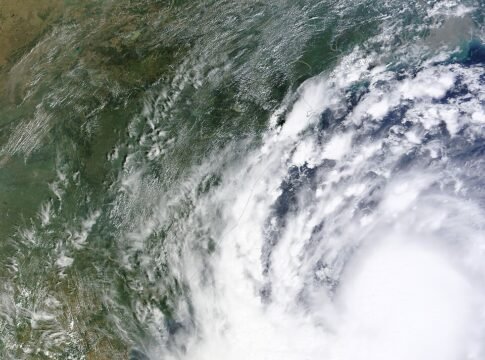
Very heavy rain fell over a short period in the Gandak’s catchment in Nepal. The border districts also received substantial rain on September 26 and 27. Earlier, on September 27, an alert had been issued in Bihar for the Kosi and Gandak because of rain in Nepal, as we reported at the time.
What to watch
- Repairs to the breached embankments in Kushinagar and West Champaran.
- Arrangements in relief camps for people moved out of their villages.
- Disease prevention once the water recedes, as ordered by the Chief Minister.
What it means
The flow at the barrage has started to fall, but the water that escaped through the breaches may stay spread across low-lying villages for some days. Residents of affected areas have been advised to follow the district administration’s instructions and stay on higher, safer ground. This story will be updated when new information comes in.
This article was first published in Hindi and has been translated. The Press of Asia now publishes in English only.

The National Desk covers India's politics, governance, security and public-interest news. Stories are checked against at least two credible sources before publication.