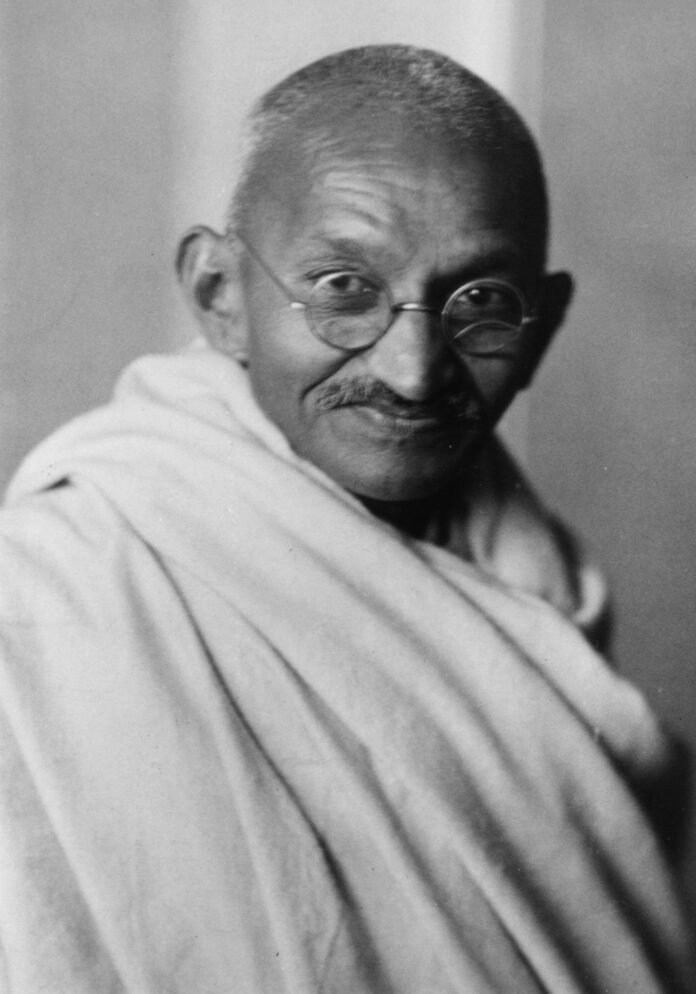
History explainer | Reviewed on October 17, 2026. Gandhi Jayanti and the International Day of Non-Violence fall on the same date, October 2, but they are not identical observances. One remembers Mahatma Gandhi’s birthday and his place in India’s history. The other is a United Nations observance intended to encourage education and public awareness about non-violence across the world.
The distinction is useful because an anniversary can become a string of ceremonial photographs without explaining the history behind it. Gandhi’s life, the development of his political methods and the UN’s later decision belong to different periods. Understanding the connection requires keeping those timelines separate.
Why Gandhi Jayanti falls on October 2
Gandhi Smriti and Darshan Samiti’s official chronology records Mohandas Karamchand Gandhi’s birth at Porbandar on October 2, 1869. His parents were Karamchand Gandhi and Putlibai Gandhi. The birthday is the basis of Gandhi Jayanti.
In 2026, October 2 marked the 157th anniversary of his birth: 2026 minus 1869 equals 157. That calculation should not be confused with the number of years the UN observance has existed. The international commemoration was established much later, in 2007.
An anniversary article also needs to make its own date clear. This is a historical explanation published after the 2026 birthday, not a claim that ceremonies are taking place today. Reports about a particular event, attendance or speech need separate, dated evidence.
How October 2 became a UN observance
The General Assembly adopted resolution A/RES/61/271 on June 15, 2007, establishing the International Day of Non-Violence on October 2 each year. The resolution invites participation by countries, UN bodies, regional and non-governmental organisations, and individuals.
The UN’s explanation of the day emphasises spreading the message through education and public awareness. Its significance therefore extends beyond a tribute to an Indian national leader. It offers a recurring occasion to consider peaceful methods of responding to conflict.
The resolution is a statement about an observance, not a finding that violence has ended or a guarantee that peaceful campaigns always succeed. A commemoration creates an opportunity for learning; the quality of that learning depends on what institutions and participants actually do.
Why the South African years matter
Gandhi’s public life cannot be understood solely through his later role in India. The High Commission of India in Pretoria records that he arrived in South Africa in May 1893 for legal work. Its account describes his removal from a first-class railway compartment at Pietermaritzburg on June 7, 1893, and his subsequent organising against discrimination.
The same account places the formation of the Natal Indian Congress in 1894 and a mass meeting against compulsory registration in Johannesburg on September 11, 1906. These episodes show political methods developing through particular disputes, organisations and campaigns, rather than appearing fully formed in one moment.
The High Commission also describes the Phoenix Settlement and Tolstoy Farm, as well as imprisonment during the campaigns. Gandhi left South Africa in 1914 and reached Mumbai on January 9, 1915. His work in India followed that earlier period of legal practice, community organisation and resistance.
A historical figure, not just a collection of slogans
A short birthday tribute cannot substitute for a full account of Gandhi’s ideas or the arguments surrounding them. A useful starting point is to separate three questions: what happened, what Gandhi wrote about it, and how later readers interpret it. Those questions require different forms of evidence.
The Gandhi Heritage Portal’s chronology section provides access to day-by-day records and event-based material, including marches, imprisonment and campaigns. That structure allows a reader to place a statement alongside the circumstances in which it was made.
For example, a quotation attached to a modern political image may omit the year, audience or surrounding paragraph. Finding the original text is more informative than deciding whether a slogan sounds like something Gandhi might have said. An attractive social-media design is not evidence of authorship.
Where readers can study the original writings
The portal’s key-texts collection lists works including Hind Swaraj, Satyagraha in South Africa and The Story of My Experiments with Truth. Its catalogue provides editions and language options rather than only modern summaries.
Readers should note which text, edition and translation they are using. A passage from an autobiography, a political argument and a later commentary are not interchangeable. Reading more than a detached sentence also makes it easier to distinguish Gandhi’s own words from explanations supplied by editors.
What meaningful observance can look like
For a school, a useful activity could be comparing a verified passage with a widely circulated quotation and discussing the difference. A community group could use a documented historical dispute to examine how people organised, negotiated and responded to setbacks. These are suggested educational approaches, not claims about an official programme.
In everyday public discussion, disagreeing without threats and checking a claim before sharing it are practical ways to think about responsibility. They do not erase difficult questions about power, injustice or the limits of a particular campaign. They help keep the discussion anchored in evidence and conduct rather than personal abuse.
Gandhi Jayanti is most informative when remembrance leads to reading. The international day adds a wider question: how can societies address conflict without treating violence as the inevitable first response? Neither question is answered by an anniversary alone. Both benefit from examining the historical record carefully.
Image credit: Studio photograph of Mahatma Gandhi in London, 1931, attributed to Elliott & Fry. Source: Wikimedia Commons, which identifies the photograph as public domain. Historical file photograph, not an image of a 2026 ceremony.

The History Desk tells the stories behind the news: the people, events and turning points of India, Asia and the world, with timelines and original sources. Stories are checked against at least two credible sources before publication.