JAKARTA, November 9: Indonesian consumers grew more confident in October, with Bank Indonesia’s Consumer Confidence Index rising to 119.9 from 118.1 in September, the central bank said on Monday. Households reported better income and job prospects, but they also spent a smaller share of their income and saved more.
Key highlights
- Consumer Confidence Index: 119.9 in October, up from 118.1. A reading above 100 means optimism.
- Current conditions: 109.1, up from 107.5; the job-availability index jumped to 105.5 from 101.1.
- Expectations for the next six months: 130.7, up from 128.7.
- Spending and saving: the share of income spent fell to 73.6% from 74.9%, while the share saved rose to 16.4% from 15.4%.
- Weak spot: households spending Rp1–2 million a month were pessimistic about their current income.
The survey in numbers
| Index | October 2026 | September 2026 |
|---|---|---|
| Consumer Confidence Index | 119.9 | 118.1 |
| Current Economic Condition Index | 109.1 | 107.5 |
| – Current income | 114.9 | 114.6 |
| – Job availability | 105.5 | 101.1 |
| – Durable goods purchases | 106.7 | about the same |
| Consumer Expectation Index | 130.7 | 128.7 |
| – Expected income | 138.6 | 136.9 |
| – Expected job availability | 129.3 | 127.7 |
| – Expected business activity | 124.3 | 121.5 |
Who is most and least confident
Confidence rose in almost every spending group. It was highest among households spending more than Rp5 million a month (123.0) and among respondents aged 20 to 30 (125.2). The biggest increases were recorded in Makassar, Bandung and Banten.
Not every group shared the optimism. Bank Indonesia said households spending Rp1–2 million a month were pessimistic about their current income, with the index below 100. Graduates reported the strongest improvement in job availability, with an index of 110.6. Younger respondents aged 20 to 30 were less upbeat about business activity ahead than in September, even as older groups grew more positive.
Households are saving more
| Share of household income | October 2026 | September 2026 |
|---|---|---|
| Spent on consumption | 73.6% | 74.9% |
| Paid towards loan instalments | 10.1% | 9.7% |
| Saved | 16.4% | 15.4% |
The central bank said the share of income spent fell across all spending groups, while the share saved rose across all groups.
Our calculation
Between September and October, the share of income households spent fell by 1.3 percentage points while the share they saved rose by 1.0 point. In other words, Indonesians said they felt better about jobs and income but chose to put more money aside rather than spend it. The job-availability index rose by 4.4 points, the largest move among the current-condition components.
What it means for India and Asia
- A firm domestic market: Indonesia is South-East Asia’s largest economy, and steady consumer demand supports imports into the country, including goods from India.
- A contrast in the region: Thailand’s consumer confidence index (on a different scale) fell to 46.5 in October, so the two largest ASEAN consumer markets are moving in opposite directions.
- Caution beneath the optimism: higher saving suggests households are still wary, with the rupiah weak and energy costs high across the region.
What to watch
- Bank Indonesia’s next retail sales survey, which will show whether confidence is turning into spending.
- Bank Indonesia’s policy meeting later in November and its view on the rupiah.
- Whether higher savings turn into spending during the year-end holiday season.
Related: Indonesia’s economy grows 5.47% in the third quarter · Indonesia’s stability committee flags pressure on the rupiah · Thai consumer confidence falls to 46.5
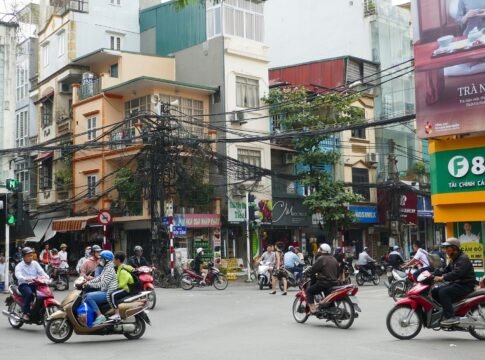
Ciputra Mall in Jakarta (file photo) Image: OzMark17, CC BY-SA 2.0, via Wikimedia Commons. Photo source · Licence
Sources
- Bank Indonesia: Consumer Survey October 2026: Consumer Confidence Increasing (press release No.28/245/DKom, November 9, 2026)
- Bank Indonesia: Survei Konsumen Oktober 2026 (full report, in Indonesian)

The Business Desk covers markets, the economy, companies and personal finance. Stories are checked against at least two credible sources before publication.