WASHINGTON, November 9: The United States has put off for two more months the fees it planned to charge Chinese-linked ships at American ports, along with duties on Chinese ship-to-shore cranes, to allow more talks with Beijing. The Office of the US Trade Representative (USTR) said the measures, suspended for a year under the November 2025 trade arrangement with China, will now stay suspended until January 10, 2027.
Key highlights
- What is paused: fees on maritime transport services linked to China’s shipbuilding and shipping sectors, and duties on Chinese ship-to-shore cranes and other cargo-handling equipment.
- New end date: the suspension, which was due to end on November 9, 2026, now runs through 11:59 pm US Eastern Time on January 9, 2027.
- Effective: November 9, 2026.
- Why: USTR said discussions with China on the issues in its Section 301 investigation are still going on.
- Public comments: about 60 unique comments, both for and against a further pause.
Timeline
| Date | Step |
|---|---|
| April 17, 2025 | USTR determines action in its Section 301 investigation |
| October 16, 2025 | Action modified; the measures include fees on maritime transport services and duties on Chinese cranes and cargo-handling equipment |
| November 1, 2025 | White House announces the trade and economic deal between Presidents Trump and Xi |
| November 10, 2025 | One-year suspension begins |
| October 23, 2026 | USTR proposes a further two-month pause and invites comments |
| November 9, 2026 | Further suspension takes effect, through January 9, 2027 |
What the notice says
The fees on maritime transport services were set out in USTR’s April 2025 action against what it called China’s targeting of the maritime, logistics and shipbuilding sectors for dominance. Under the November 2025 arrangement, Washington agreed to suspend those actions for a year from November 10, 2025, to allow negotiations with China and work with allies on reviving American shipbuilding.
In its new notice, USTR said “the circumstances that warranted the initial suspension continue to exist”. During the extra two months, no party will accrue liability for or have to pay the maritime fees or the crane duties.
Arguments for and against
USTR said it received about 60 unique comments. Supporters of a further pause said it would avoid higher shipping costs and commercial disruption and give time for negotiations. Opponents argued the fees are needed to create incentives to invest in US shipbuilding and related industries such as container manufacturing, and that without them China’s dominance in maritime, logistics and shipbuilding would grow. Some commenters asked for certain fees to be dropped permanently.
Our calculation
The original suspension lasted 365 days (November 10, 2025 to November 9, 2026). The extension adds 61 days (November 10, 2026 to January 9, 2027), bringing the total pause to about 14 months.
What it means for India and Asia
- Shipping costs: port fees on Chinese-linked ships would have raised costs on the trans-Pacific routes that carry much of Asia’s exports to the US. The pause keeps those costs off the table for now.
- Shipbuilding competition: the US measures aim at China’s dominance in shipbuilding. South Korea and Japan, the other big shipbuilding nations, and India, which is trying to grow its own shipbuilding industry, are watching how the dispute is settled.
- Short horizon: two months is a short extension, so shipping lines and exporters face another deadline in early January.
What to watch
- Whether China extends its own one-year suspension of the special port fees it imposed on US-linked ships, which China’s Ministry of Transport paused from November 10, 2025.
- Other parts of the November 2025 arrangement tied to November 10, 2026. The White House fact sheet said heightened “reciprocal” tariffs on China would stay suspended until that date; USTR’s shipping notice does not address them.
- Any further US–China trade talks before January 10, 2027.
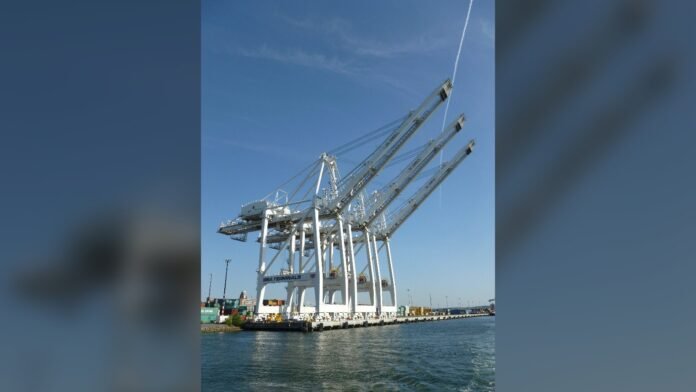
Chinese-made ZPMC container cranes at the Port of Seattle (file photo) Image: Michael Adams, CC BY-SA 3.0, via Wikimedia Commons. Photo source · Licence
Sources
- USTR: Section 301 – China’s Targeting of the Maritime, Logistics, and Shipbuilding Sectors for Dominance (investigation page)
- USTR: Notice of Modification to Further Suspend Action for Two Months (November 2026)
- USTR: Proposed Modification to Further Suspend Action for Two Months (Federal Register, October 26, 2026)
- The White House: Fact Sheet on the US–China economic and trade deal (November 1, 2025)
- Ministry of Transport of China: Announcement suspending special port fees on US ships (November 2025, in Chinese)

The Business Desk covers markets, the economy, companies and personal finance. Stories are checked against at least two credible sources before publication.