The Press of Asia Asia Desk
Palangkaraya/Jakarta | 30 August 2026
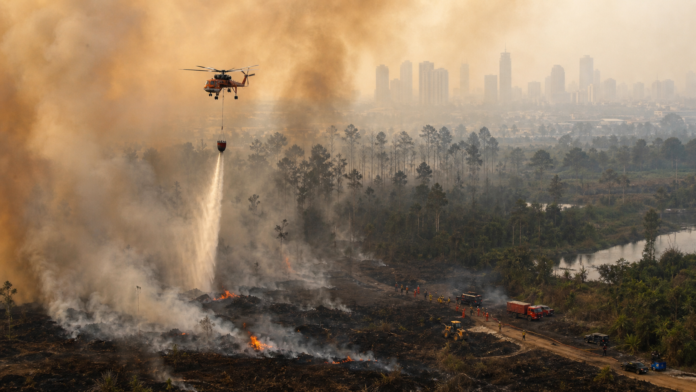
Indonesia has intensified cloud seeding, helicopter water drops and ground operations against forest and peatland fires as smoke exposes more than five million people on Sumatra and Borneo to unhealthy air, according to government health figures reported this weekend.
\nAbout 13,500 people were treated for respiratory infections during July and August, Deputy Health Minister Dante Saksono Harbuwono said. Schools have closed intermittently in some areas, child shelters have opened in Central Kalimantan and haze has also affected people in neighbouring Malaysia and Singapore.
\nThe health emergency behind the fire map
\nWildfire coverage often focuses on hectares burned and hotspot counts, but the immediate public danger is the air people breathe. Fine particles in smoke can travel deep into the lungs and aggravate asthma, heart disease and other conditions, especially during prolonged exposure.
\nHealth officials identified children, older people, pregnant women with asthma and outdoor workers as groups requiring close attention. Indonesia has distributed more than five million masks, while local organisations in Palangkaraya have created small shelters with oxygen, medicine and supplies for babies and young children.
\nA mask can reduce some exposure, but it cannot replace clean indoor air, timely health advice and lower outdoor pollution. Residents should follow local air-quality alerts and medical guidance, particularly when coughing, breathing difficulty or chest symptoms persist.
\nHow Indonesia is fighting the fires
\nThe national disaster agency, BNPB, said operations include ground crews, water bombing and weather modification. More than four million litres of water have been dropped on burning areas in recent weeks, while thousands of kilograms of salt were dispersed into suitable clouds to encourage rainfall.
\nCloud seeding depends on moisture and rain-bearing clouds; it cannot create storms from a clear sky. BNPB officials therefore describe it as one tool within a larger response that includes extinguishing active fires, cooling peat, patrolling vulnerable zones and enforcing restrictions on burning.
\nThe government has mobilised thousands of personnel across South Sumatra, Jambi and provinces in Kalimantan as the August–September risk period peaks. Indonesia’s geography makes coordination difficult: fires can burn in remote concessions, protected forests, small farms and deep peatlands at the same time.
\nWhy peat fires are hard to stop
\nDrained peat can ignite below the surface and smoulder for long periods. Even when visible flames disappear, heat can remain underground and flare again when wind and dry conditions return. That is why crews must soak affected ground and monitor it after the initial fire front is contained.
\nMany Indonesian fires have historically been linked to land clearing, although causes vary by location. Police said earlier this month that dozens of suspects had been arrested and companies were being investigated. Enforcement matters because repeated burning turns a seasonal weather hazard into a preventable regional crisis.
\nFires from January through July burned more than 200,000 hectares, according to government figures cited by regional media. The total exceeds the area affected during some recent El Niño years and underscores how quickly a strong dry pattern can overwhelm local control.
\nThe cross-border haze problem
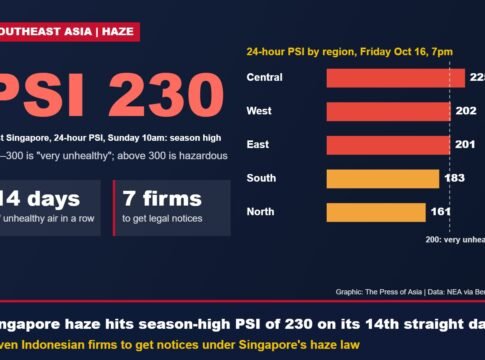
\nWinds can carry smoke from Sumatra and Borneo toward Malaysia, Singapore and Brunei. The health and economic effects then extend beyond Indonesia, affecting schools, outdoor work, aviation, tourism and public confidence across Southeast Asia.
\nCross-border movement does not mean every period of poor air in a neighbouring country comes from Indonesian fires. Local pollution and weather conditions also influence readings. Satellite data, wind models and official monitoring are needed before attributing a specific pollution episode.
\nThe regional dimension makes timely data sharing essential. Readers can follow wider developments through The Press of Asia’s Asia coverage and our continuing report on the Nepal–Tibet climate disaster, another emergency where weather and difficult terrain are shaping response operations.
\nEl Niño raises the stakes
\nEl Niño shifts rainfall and wind patterns around the world and typically brings drier conditions to parts of Indonesia. Officials have described the current event as unusually strong, creating long dry spells that help vegetation and peat ignite and allow smoke to persist.
\nClimate variability does not remove human responsibility. Land management, canal drainage, plantation practices, fire prevention and enforcement determine how much dry weather becomes destructive fire. Environmental groups are pressing the government to address those structural causes rather than depend on emergency suppression each year.
\nThe strongest near-term relief would be sustained rain over affected provinces, but heavy rain can be uneven and short-lived. Authorities will continue looking for reductions in hotspots, lower particulate readings, fewer medical visits and successful cooling of peat areas.
\nWhat residents and travellers should watch
\nAir-quality indices, school notices and health advisories are more useful than judging conditions by smell or visibility alone. Pollution can remain harmful even when the sky appears clearer, and conditions may worsen quickly as winds change.
\nFor the response, the key tests are whether crews can contain underground peat fires, whether enforcement prevents new ignitions and whether smoke continues crossing borders. The World desk will update major regional travel or health consequences as authorities confirm them.
\nSources / References
\n- Channel NewsAsia — exposure, health and firefighting figures
- Associated Press — aerial operations and cross-border haze
- Indonesia BNPB — official coordination for the August–September peak

The International Desk covers world and Asian affairs, diplomacy and conflict, with a focus on what they mean for India. Stories are checked against at least two credible sources before publication.