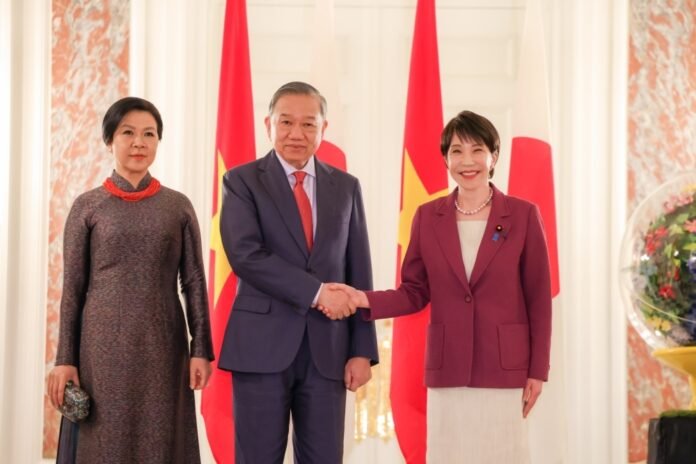
November 12: Japan and Vietnam have put rare-earth supply chains, artificial intelligence and energy security at the centre of a new joint vision, following talks between Japanese Prime Minister Sanae Takaichi and Vietnamese leader To Lam in Tokyo on November 9.
Key highlights
- The leaders issued a Joint Vision Statement during To Lam’s November 8–11 visit.
- Japan’s foreign ministry identifies rare-earth cooperation under initiatives including RISE+ as a priority.
- AI research, skills, infrastructure and safety also featured in the talks.
- Energy projects and security assistance remain implementation priorities, rather than completed outcomes.
What the summit agreed
According to Japan’s Ministry of Foreign Affairs, the leaders backed concrete cooperation to improve rare-earth supply-chain resilience. They also welcomed work on AI through joint research, including NEXUS, and through workforce and infrastructure development.
The ministry says the two governments want early progress on LNG- and gas-fired power projects involving Japanese companies. Coordination on Vietnam’s national energy reserve is also envisaged under POWERR Asia. The announcement does not provide a complete project-by-project financing schedule or demonstrate that new power capacity is already operating.
Cooperation at a glance
| Area | Focus in the official summit account |
| Economic security | Rare-earth supply-chain resilience |
| Artificial intelligence | Research, people, infrastructure and safety |
| Energy | LNG and gas power projects; energy reserves |
| Security | Peacekeeping-related equipment under Japan’s OSA framework |
A relationship elevated in 2023
The joint statement places this week’s agreements within the Comprehensive Strategic Partnership established in 2023. It describes cooperation across trade, investment, education, science, energy and security, and records both leaders’ intention to deepen the relationship.
To Lam’s visit also included engagements with Japan’s Emperor and Empress, an address to the Japanese Diet and a visit to Kanagawa, according to the statement. These details help distinguish the wider official visit from the November 9 summit itself.
Why supply-chain language matters
Analysis: A diplomatic commitment to resilient supply chains can lead to several different kinds of activity, from resource assessment to processing, investment or skills development. It is not, on its own, proof of a new mine, a guaranteed supply contract or an immediate reduction in import dependence. Those claims require separate commercial or regulatory announcements.
The same distinction applies to AI: collaboration on research and safety is broader than the launch of a specific consumer service. Treating the summit as a framework for future work gives readers a more accurate picture than presenting every stated objective as an accomplished project.
What to watch
Follow-up announcements on project contracts, financing, research partnerships and delivery schedules will show how the vision translates into activity. The leaders also agreed to cooperate on Vietnam’s 2027 APEC chairmanship, according to Japan’s foreign ministry.
Sources

The Business Desk covers markets, the economy, companies and personal finance. Stories are checked against at least two credible sources before publication.