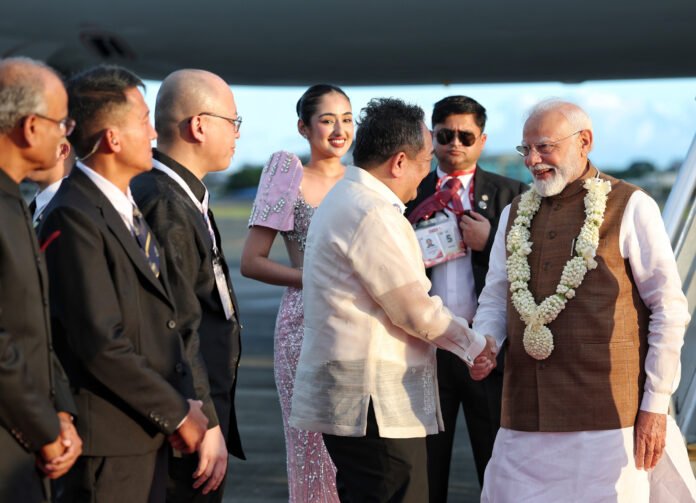
November 17: Prime Minister Narendra Modi proposed hosting an East Asia Summit cybercrime conference at India’s National Forensic Sciences University during his November 17 statement in Manila. The proposal follows regional concern about online scams, but the statement does not announce a conference date or a completed enforcement operation.
Key highlights
- India proposed an East Asia Summit cybercrime conference at NFSU.
- Modi welcomed the summit’s statement on tackling online scams.
- A separate seafarer safety initiative would focus on training and emergency response.
What India proposed in Manila
According to the Prime Minister’s Office’s English translation, Modi called for cooperation against cyber fraud and online scams and proposed NFSU as the conference venue. He also referred to safe, inclusive AI and technologies such as digital watermarking to address deepfakes.
The official translation says India is launching a Seafarers’ Safety Initiative involving joint training and emergency response. These maritime and digital proposals were presented as cooperation priorities, rather than evidence that a particular threat has already been eliminated.
Why the issue has regional significance
INTERPOL’s Asia and South Pacific Cyber Threat Assessment Report 2025/2026 describes a growing range of cyber-enabled crimes involving AI and deepfake technology reported by member countries. That assessment supplies background to the regional concern; it does not independently verify the delivery of India’s new conference proposal.
Analysis: digital fraud can cross jurisdictions quickly. A victim, a bank account, communications infrastructure and the people directing an operation may be in different countries. Effective cooperation therefore needs more than a public declaration: agencies must be able to preserve evidence and communicate through lawful channels.
What a conference could—and could not—establish
Analysis: a specialist meeting can help officials compare investigative practices and identify gaps in coordination. It is not, on its own, a new law, a mechanism for recovering every victim’s money or a guarantee that offenders will be prosecuted.
The practical value will depend on the programme, participating institutions and any follow-up arrangements. Readers should wait for those details before assuming that new reporting procedures or legal powers have taken effect. The PMO describes its English text as an approximate translation of remarks delivered in Hindi.
At a glance
| Announcement | What is known |
|---|---|
| Cybercrime conference | Proposed at NFSU; date not stated |
| Online scams | India welcomed a summit joint statement |
| Seafarer safety | Joint training and emergency response envisaged |
What to watch
Watch for an official conference schedule, participating agencies and concrete follow-up measures. For an individual suspected scam, a future summit conference is not a substitute for using existing official reporting channels.
Sources
- Prime Minister’s Office: English translation of the statement at the 21st East Asia Summit
- INTERPOL: Asia and South Pacific Cyber Threat Assessment Report 2025/2026

The Tech Desk covers technology, artificial intelligence and cybersecurity. Stories are checked against at least two credible sources before publication.