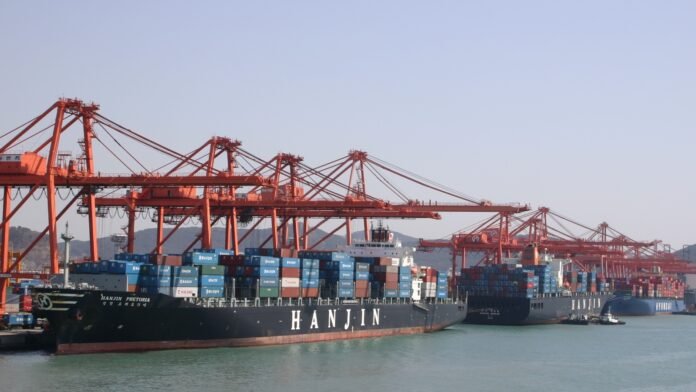
November 18: An International Monetary Fund mission projects South Korea’s economy will grow 3.9% in 2026 and 3.3% in 2027, with the AI-related semiconductor boom providing a powerful lift. Its November 17 statement also warns that the benefits remain concentrated and calls for policies that contain inflation while spreading productivity gains.
Key highlights
- The end-of-mission statement gives preliminary staff findings, not a completed Executive Board decision.
- IMF staff see inflation at 2.7% in 2026 and 2.3% in 2027.
- The mission favours tighter near-term policy and reforms to broaden growth.
A stronger outlook with an important qualification
The mission, led by Corinne Deléchat, held discussions from November 3 to 17. Its statement links the expansion to technology exports, investment and consumption. The IMF’s country material provides the framework for this surveillance exercise: it is an assessment of economic conditions and policy, rather than a guarantee that the projected outcome will occur.
The distinction between a forecast and an observed result matters. The 2026 annual growth number is not a measurement of output already completed for the full year, while the 2027 estimate depends on assumptions about demand, investment and the international environment.
Why a chip boom does not describe every household
The staff statement identifies ageing, regional disparities and uneven productivity as constraints. It argues for wider AI adoption, stronger labour participation and social protection, alongside diversification of external demand. These qualifications are central to the outlook: rising aggregate output can coexist with very different experiences across workers and firms.
Our analysis: a technology-led expansion should be assessed through both its scale and its distribution. Export earnings can support investment and spending, but a headline GDP rate alone cannot show whether smaller businesses, non-technology employees or regions outside the main industrial centres receive comparable gains.
How to read the policy message
Staff recommend further monetary tightening and a more contractionary fiscal stance, while retaining targeted support for vulnerable households and firms. These are recommendations. They do not announce a Bank of Korea rate decision, a new tax measure or a change to the national budget.
The policy challenge is therefore two-sided: allowing productive investment to continue while preventing stronger demand from embedding price pressures. Readers should distinguish the IMF team’s diagnosis from subsequent decisions made by Korean authorities.
At a glance
| Indicator | 2026 staff forecast | 2027 staff forecast |
| Real GDP growth | 3.9% | 3.3% |
| Inflation | 2.7% | 2.3% |
| Assessment status | End-of-mission findings | Forecast, not an outcome |
What to watch
The IMF says Board discussion of the staff report is tentatively scheduled for January 2027. Before then, watch official growth and price releases and actual policy decisions, rather than treating the mission’s recommendations as enacted measures.
Sources
- IMF: Staff completes 2026 Article IV mission to the Republic of Korea
- IMF: Country surveillance and policy advice

The Business Desk covers markets, the economy, companies and personal finance. Stories are checked against at least two credible sources before publication.