The Press of Asia Asia Desk
Seoul | 30 August 2026
North Korea has replaced its defence minister and reshuffled several senior military posts, state media reported on Sunday, placing Kim Song Gi in charge of the ministry while moving his predecessor No Kwang Chol to a role in the ruling party’s munitions apparatus.
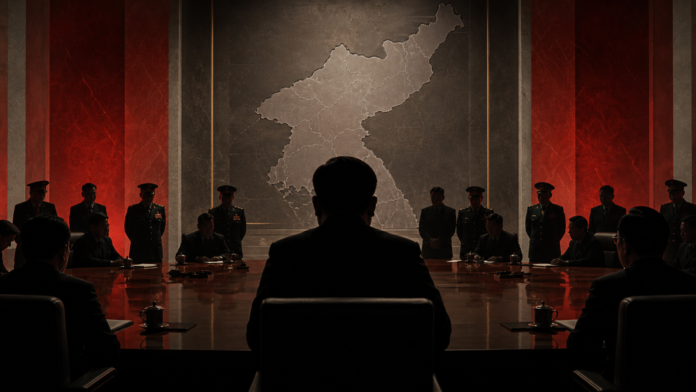
\nThe change was approved at a meeting of the Workers’ Party of Korea’s Central Military Commission chaired by leader Kim Jong Un on Saturday. Because Pyongyang provides little explanation for elite personnel moves, the announcement establishes what changed but leaves the motive open to careful interpretation.
\nWho moved where
\nKim Song Gi, previously director of the General Political Bureau of the Korean People’s Army, was appointed minister of national defence. That background places a senior political officer—responsible for party discipline and ideological control inside the armed forces—into the formal defence portfolio.
\nNo Kwang Chol was dismissed as minister, removed from parts of the party’s central leadership and appointed first vice-director of the Munitions Industry Department, according to reports citing the Korean Central News Agency. The reassignment suggests that he remains inside the state’s defence establishment rather than disappearing from public office.
\nPak Jong Chon, a veteran military figure who has moved in and out of senior positions, was named vice-chairman of the Central Military Commission and returned to the party’s Political Bureau. Other promotions were announced, indicating a broader reorganisation rather than a single ministerial replacement.
\nWhy the timing attracts attention
\nThe reshuffle follows the annual South Korea–United States military exercises, which Pyongyang routinely condemns as preparation for invasion. This year’s drills were shortened after pressure from US President Donald Trump, but North Korea still criticised the exercise and continued missile activity.
\nIt also precedes the trilateral Freedom Edge exercise planned by South Korea, the United States and Japan for 7–11 September. Our explainer on Freedom Edge 2026 details the air, sea and cyber coordination expected around waters near Jeju Island.
\nPersonnel changes around exercises do not prove a direct connection. North Korea frequently rotates officials to enforce accountability, balance institutional influence and place trusted cadres around priority programmes. The sequence is therefore notable, but the public record does not establish that the allied drills caused the reshuffle.
\nKim Song Gi’s appointment
\nThe defence minister is a prominent diplomatic and administrative face of North Korea’s military establishment, but the country’s command system is centred on Kim Jong Un, the Central Military Commission and the party. The minister does not operate with the independent authority associated with the same title in many other states.
\nKim Song Gi’s political-bureau experience may help tighten party supervision of the armed forces during a period of weapons development and external pressure. Analysts will watch whether he appears in meetings with Russian, Chinese or other foreign defence officials, and whether state media changes the way it describes military priorities.
\nThe appointment also gives observers a new name to track across parade order, inspection visits and official photographs. In North Korea, seating positions and the sequence in which officials are named can offer clues, but such signals require repeated evidence rather than conclusions drawn from one image.
\nNo Kwang Chol remains relevant
\nNo Kwang Chol’s transfer to the Munitions Industry Department is consequential because that body is associated with the party’s oversight of weapons production. It could represent a demotion in formal rank while retaining a role in an area Kim Jong Un has repeatedly described as strategically important.
\nState media separately said Kim honoured scientists, researchers and officials involved in defence technology and referred to progress on new combat systems without identifying them. The pairing of technical accolades with leadership changes reinforces the impression that weapons development remains central to the regime’s agenda.
\nOutside governments will be cautious about reading too much into the personnel move. The practical test is whether it is followed by changes in missile testing, arms production, military diplomacy or command structure.
\nRegional and diplomatic implications
\nSouth Korea and Japan will assess the reshuffle alongside missile launches, border activity and North Korea’s statements toward Washington. US officials have signalled interest in renewed leader-level diplomacy, but Pyongyang has not publicly committed to talks.
\nThe change also occurs as Asian powers prepare for a major regional gathering in Bishkek. Developments involving China, Russia and India at the summit are being tracked in The Press of Asia’s Central Asia diplomacy coverage.
\nFor now, the verified facts are limited: Kim Song Gi is defence minister, No Kwang Chol has been reassigned, Pak Jong Chon has returned to a senior commission role, and Kim Jong Un chaired the meeting. Claims about a purge, policy reversal or imminent test would go beyond the evidence released so far.
\nWhat to watch next
\nThe next signals will include Kim Song Gi’s first public engagement, the composition of delegations at military events, state-media references to the munitions department and any new weapons test. Regional militaries will also monitor whether North Korea adjusts activity before or during the September trilateral drills.
\nNorth Korea’s opaque system makes restraint essential. A leadership change is newsworthy, but its policy meaning becomes clearer only through subsequent appointments, appearances and operational decisions. The Asia desk will update the story when those indicators are confirmed.
\nSources / References
\n- Yonhap News Agency — KCNA-based personnel details
- Channel NewsAsia — reshuffle and regional context
- NK News — specialist reporting on the military commission meeting

The International Desk covers world and Asian affairs, diplomacy and conflict, with a focus on what they mean for India. Stories are checked against at least two credible sources before publication.