October 26: The Reserve Bank of India has confirmed the inauguration of its new Data Centre and Cybersecurity Training Institute in Bhubaneswar on October 25. Prime Minister Narendra Modi opened the facilities, according to separate RBI and Prime Minister’s Office accounts. Their stated purpose is to strengthen the technology and skills supporting India’s financial system.
Key highlights
- The new facilities were inaugurated in Bhubaneswar, Odisha, on October 25.
- RBI says the data centre will house mission-critical systems including RTGS and NEFT.
- The institute is intended to develop cybersecurity, AI and emerging-technology expertise.
- The inauguration does not itself establish a change in customer fees or transfer procedures.
What RBI has confirmed
RBI’s dated release identifies the two facilities and records their inauguration. It attributes the intended role of the data centre in hosting RTGS and NEFT to Finance Minister Nirmala Sitharaman’s address. The wording describes what the centre will house; it does not say that every system migration has already finished.
Governor Sanjay Malhotra emphasised digital infrastructure, cybersecurity and indigenous technological capability, according to the central bank. These are institutional priorities announced at the event, rather than an independently tested assessment of the new centre’s performance.
The government’s account of the event
The Prime Minister’s Office separately published an October 25 account describing the facilities as part of a stronger digital financial infrastructure. Modi linked secure banking to robust computing and data-centre capacity. That is the government’s stated rationale for the investment.
The announcement brings a national financial-technology institution to Bhubaneswar. It should not be confused with a new retail bank branch: the facilities are described in terms of infrastructure and training, not a public counter for opening personal accounts.
| Facility | Stated role | What is not established by inauguration alone |
|---|---|---|
| Data centre | Hosting mission-critical RBI systems, including RTGS and NEFT | Completion date of every application migration |
| Training institute | Cybersecurity, AI and emerging-technology expertise | Specific public admissions or recruitment arrangements |
| Combined initiative | Stronger financial technology capability | A guarantee against every future outage or attack |
Why infrastructure and training belong together
A payment system depends on both technology and the people operating it. Computing capacity provides one part of that foundation; operational procedures, monitoring and trained staff provide another. Building a centre and building expertise therefore address different needs within the same service chain.
A useful way to assess the project is to ask about availability, resilience and preparedness separately. Availability concerns whether a service can be accessed. Resilience concerns how operations withstand and recover from disruption. Preparedness concerns whether people can recognise problems and respond effectively.
Those are evaluation questions, not claims that RBI has published particular performance scores for the new facility. Neither official account cited here supplies a measured uptime improvement or a quantified reduction in cyber incidents attributable to the inauguration.
What it means for a bank customer today
The releases do not announce new customer charges, revised transfer limits or replacement steps for sending a payment. Customers should continue using their bank’s authorised service channels and current instructions. A major infrastructure announcement is not, by itself, a reason to change an account or download a new application.
Readers interested in working or studying at the institute should likewise wait for the relevant official notices. The inauguration account does not establish a public course application process, vacancy count or admission deadline.
What to watch next
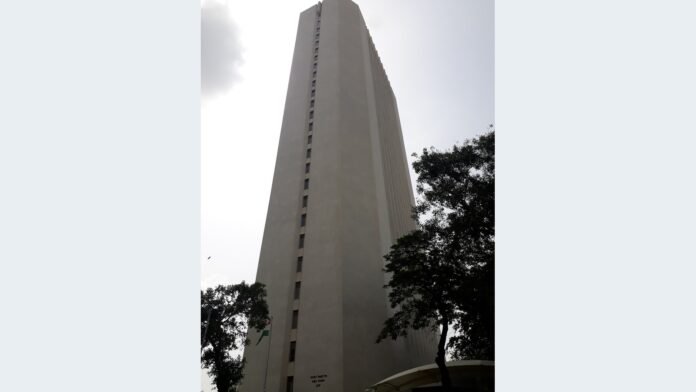
Further RBI documentation can clarify operational milestones, training programmes and the scope of systems hosted at the centre. Those details will provide a firmer basis for assessing delivery than ceremonial remarks alone. The featured photograph shows RBI’s Mumbai building in 2018, not the new Bhubaneswar premises.
File photo: Reserve Bank of India building in Mumbai, not the new Bhubaneswar facility, June 12, 2018. Photo: Pinakpani / Wikimedia Commons, CC BY-SA 4.0. Cropped and resized; not a photograph of the current event. Photo source; CC BY-SA 4.0.
Sources
- RBI: Inauguration of the Data Centre and Cybersecurity Training Institute
- Prime Minister’s Office: Bhubaneswar inauguration and stated objectives

The Business Desk covers markets, the economy, companies and personal finance. Stories are checked against at least two credible sources before publication.