Update: Brent later rose above $100 a barrel (our report). Iran offered a conditional return to the June ceasefire framework without a restored deal (our report), and in early October the US sent a third aircraft carrier and 9,000 more troops towards Iran (our report).
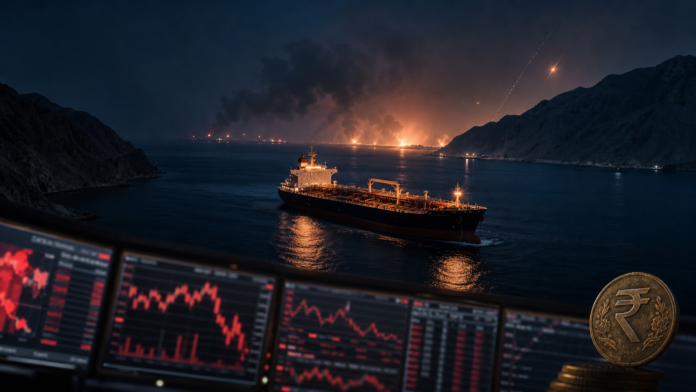
New Delhi/Dubai, September 2: Direct strikes between the United States and Iran have resumed after a month of relative calm. Oil markets immediately added a risk premium: Brent crude rose to about $95.7 a barrel in Asian trading on September 2, and Indian shares opened nearly 1% lower, according to Reuters.
Key highlights
- The US military confirmed strikes on Iranian targets linked to air defence, radar, maritime and mine-laying capabilities.
- Iran fired missiles and drones at US bases and towards Gulf states; fires were reported in Kuwait City and interceptions in Bahrain.
- Brent was at $95.68 and WTI at $90.83 a barrel at 06:05 GMT; both had risen more than $4 on Tuesday.
- At 9:46 a.m. the Nifty 50 was down 0.89% at 23,841.40 and the Sensex down 0.79% at 76,333.20.
- The rupee opened at 94.89 to the dollar; RBI dollar sales partly held back pressure from oil and US yields.
Why the attacks escalated again
According to US Central Command (CENTCOM), the new operation responded to alleged attacks by Iran’s Revolutionary Guards on commercial shipping in the Strait of Hormuz and on US personnel in the region. CENTCOM said it hit air-defence sites, radar, maritime assets, mine-laying capabilities and communications sites. US officials told Axios that Tuesday’s action involved about 100 targets and two Iranian government tankers.
Iran retaliated. According to the Associated Press, Iranian drones started fires in Kuwait City and Bahrain intercepted incoming drones. Iranian claims of hitting US bases in Jordan and Bahrain have limited independent confirmation, so casualty claims cannot be treated as confirmed facts. Likewise, responsibility for and the circumstances of an Iranian allegation that a US strike killed civilians at a wedding venue remain to be investigated.
The biggest economic question is Hormuz. Before the conflict, the strait carried about a fifth of the oil consumed worldwide. The Revolutionary Guards said the new attacks would tighten traffic restrictions, while US forces talk of guiding ships through. That means not normal traffic, but heavy security risk, less available tanker capacity, and higher insurance and freight costs.
Oil prices and the market reaction
| Measure | Level | Move |
|---|---|---|
| Brent crude (06:05 GMT) | $95.68 a barrel | +1.1% |
| WTI crude (06:05 GMT) | $90.83 a barrel | +0.7% |
| Nifty 50 (9:46 a.m.) | 23,841.40 | −0.89% |
| Sensex (9:46 a.m.) | 76,333.20 | −0.79% |
| Rupee (open) | 94.89 per dollar | From 94.95 on Tuesday |
Our calculation: Brent traded about $4.85 above WTI, a gap that partly reflects the extra risk on seaborne Middle East supply. The rupee opened 6 paise stronger than Tuesday’s close, which Reuters linked to RBI dollar sales rather than to any easing of oil pressure.
All 16 major sectoral indices in India were lower. Oil marketing companies, airlines, tyre makers and paint companies came under more pressure, because their raw-material or fuel costs are tied directly to crude. Despite strong domestic growth, global risk-off trading dominated; India’s 7.8% first-quarter GDP growth cannot fully offset an external shock like this. These figures are from the morning of September 2, not the day’s final settlement.
Five big risks for India
1. Pressure on the import bill and current account. India imports most of the crude it needs. Higher prices raise the import bill directly; if companies buy more dollars, the currency comes under extra pressure and the current-account deficit can widen.
2. The rupee’s stability depends on the RBI. Reuters, citing dealers, said the RBI sold dollars and has limited currency volatility in recent days. Intervention is a short-term buffer; it cannot remove the economic cost of persistently expensive oil.
3. New inflation pressure. Costlier crude lifts costs for transport, aviation fuel, plastics, chemicals, paints and logistics. Retail petrol and diesel prices depend on tax policy and oil companies’ pricing decisions, so an immediate matching rise at the pump should not be assumed, but wholesale and core inflation can feel the effect over time.
4. A harder path for interest rates. Expensive oil raises inflation expectations, making the RBI’s balance between supporting growth and price stability harder. Rising global bond yields can also make emerging-market assets less attractive.
5. Company margins and consumer spending. Margins at airlines, logistics firms, paint, tyre and chemical makers and oil marketing companies may come under pressure first. If household fuel and transport bills rise, discretionary spending can weaken; upstream energy producers and coal suppliers may gain relative support.
What not to conclude yet
Markets are discussing whether Brent could cross $100, but that is a forecast, not a fact. Claims that the strait is “fully open” or “fully closed” should be tested against actual ship transit data and official maritime advisories. Our report on Iran–US ceasefire diplomacy shows that signs of talks and battlefield escalation can run side by side.
What to watch
- Commercial vessel transits through Hormuz over the next 24–72 hours.
- Verified military statements from the US and Iran.
- Whether Brent holds near $100 or falls back, and the RBI’s currency intervention.
- Shipping insurers’ risk pricing, which will show whether markets see a short incident or a long disruption.
What it means
For India, the best case is limited strikes, safe tanker passage and quick diplomacy. The worst case is a wider Gulf confrontation in which oil supply, freight and insurance all become dearer at once.
This article was first published in Hindi and has been translated. The Press of Asia now publishes in English only.
Sources
- Associated Press: report on Iran firing on Gulf neighbours after US strikes
- Axios: report on US tanker strikes and CENTCOM context
- Reuters (via MarketScreener): Oil up nearly 1% as US and Iran trade fresh strikes
- Reuters (via MarketScreener): Indian shares decline as oil prices surge on US-Iran strikes
- Reuters (via MarketScreener): RBI’s bid to lift Indian rupee put to test by oil, US yields

The Business Desk covers markets, the economy, companies and personal finance. Stories are checked against at least two credible sources before publication.