November 13: New Zealand has confirmed that Prime Minister Christopher Luxon and Trade and Investment Minister Todd McClay will attend the APEC leaders’ meeting in China, while Foreign Minister Winston Peters will represent the country at the East Asia Summit in the Philippines. The November 13 government statement says participation is proceeding under the caretaker convention, in consultation with the Opposition.
Key highlights
- The East Asia Summit meetings are scheduled in Manila on November 16–17.
- APEC leaders’ meetings are scheduled in Shenzhen on November 18–19.
- New Zealand says APEC economies buy 75% of its exports.
- Attendance does not itself confirm a new trade agreement or a separate bilateral summit.
Two forums, different purposes
The government describes the East Asia Summit as a forum for political, strategic and economic dialogue. It presents APEC as an opportunity to support practical measures that make trade easier and less costly. The itineraries should not be merged: Peters is assigned to the Manila meeting, while Luxon and McClay are named for Shenzhen.
The confirmed representation
| Forum | Location and dates in NZ announcement | New Zealand representation |
| East Asia Summit | Manila, November 16–17 | Winston Peters |
| APEC leaders’ meeting | Shenzhen, November 18–19 | Christopher Luxon and Todd McClay |
Why Asian meetings matter to New Zealand
The statement identifies China as New Zealand’s largest trading partner and places three-quarters of exports within APEC economies. Analysis: That makes the region important for exporters even when domestic politics are unsettled. Practical arrangements affecting customs, digital processes or commercial certainty can matter to firms as much as high-profile political announcements. The meeting’s outcome, however, still has to be assessed from the documents and decisions that emerge.
What APEC is preparing
In its own November briefing, the APEC Secretariat highlighted trade, artificial intelligence, supply-chain resilience and energy and food systems. It described openness, innovation and cooperation as the host year’s priorities. Analysis: Those themes explain the breadth of the meeting, but they do not establish that leaders have already agreed to a particular AI rule, market-opening measure or new funding commitment.
The caretaker qualification matters
New Zealand’s government explicitly says it is consulting the Opposition on attendance. Analysis: That qualification distinguishes representation at an ongoing international forum from an assumption that domestic political questions have been resolved. It also limits what readers should infer from the travel announcement. The release confirms who will represent the country and how participation is being handled; it is not an election-result announcement.
What to watch
The important next documents are the leaders’ outcomes, any separately announced bilateral meetings and clear descriptions of commitments accepted by New Zealand. Until those appear, claims about a new trade pact or a meeting between other leaders require separate confirmation. The immediate development is a confirmed New Zealand presence at two major Asian forums, with an explicit statement about the caretaker arrangements governing the trip.
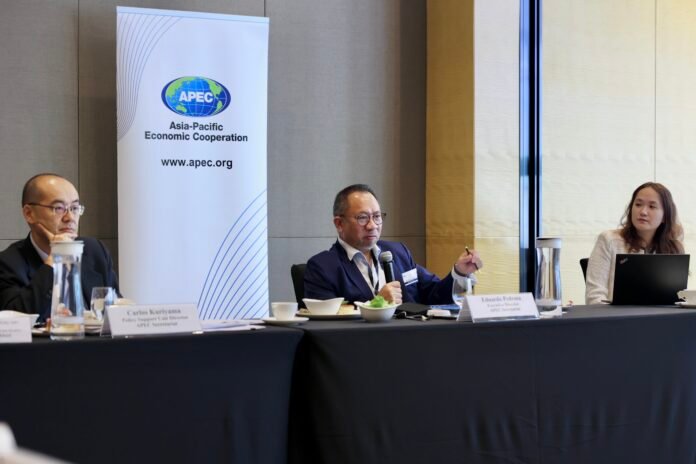
File photo: Official image issued with APEC’s November 3, 2026 Leaders’ Week briefing. Credit: APEC Secretariat. This is not a photograph of the upcoming leaders’ meeting. Photo source.
Sources
- New Zealand Government: NZ to attend APEC and East Asia Summit
- APEC Secretariat: Trade and AI cooperation ahead of Leaders’ Week

The International Desk covers world and Asian affairs, diplomacy and conflict, with a focus on what they mean for India. Stories are checked against at least two credible sources before publication.