November 15: The central banks of Malaysia, Indonesia, Thailand and the Philippines have signed a single agreement to promote the settlement of trade and investment between their countries in their own currencies, reducing the need to convert through a third currency such as the US dollar. The memorandum of understanding, signed on Friday by the four governors, brings the Philippines into a local currency framework that Malaysia, Indonesia and Thailand have run together since 2015, and replaces the separate bilateral agreements the three signed in August 2023.
Key highlights
- Signed: November 13, 2026, by Bank Negara Malaysia, Bank Indonesia, the Bank of Thailand and Bangko Sentral ng Pilipinas.
- Scope: bilateral trade, investment and “other eligible transactions” between the four countries.
- New member: the Philippines joins the Local Currency Transaction Framework (LCTF).
- Replaces: the bilateral MoUs signed by Indonesia, Malaysia and Thailand in August 2023.
- Aim: cheaper and faster cross-border settlement, fewer currency conversions and more ways for firms to manage exchange-rate risk.
Who signed
| Central bank | Governor |
|---|---|
| Bank Negara Malaysia | Abdul Rasheed Ghaffour |
| Bank Indonesia | Destry Damayanti |
| Bank of Thailand | Vitai Ratanakorn |
| Bangko Sentral ng Pilipinas | Eli M. Remolona, Jr. |
How the framework has grown
| Year | Step |
|---|---|
| 2015 and 2016 | Indonesia, Malaysia and Thailand sign their first local currency settlement agreements |
| August 2023 | New bilateral MoUs widen the scope beyond trade and direct investment |
| November 2026 | A single four-country MoU adds the Philippines |
Under such frameworks, a Malaysian importer buying from Thailand, for example, can pay in ringgit or baht instead of first converting into a third currency. The central banks said the new agreement is expected to “gradually expand local currency transactions” and strengthen regional financial cooperation and resilience. The releases did not give figures on how much trade is currently settled this way.
Our calculation
| Question | Answer | How we got it |
|---|---|---|
| ASEAN members now in the framework | 4 of 10 | Malaysia, Indonesia, Thailand, the Philippines |
| Bilateral currency pairs the framework can cover | 6 | 4 countries, each pair counted once |
| Years since the first agreements | 11 | 2015 to 2026 |
What it means for India and Asia
Southeast Asia’s move mirrors India’s own push to use local currencies in trade. The Reserve Bank of India signed similar agreements with Bank Indonesia in March 2024, covering rupee–rupiah transactions, and with the Maldives Monetary Authority in November 2024, covering rupee–rufiyaa transactions. Both efforts aim at the same goal: cutting dependence on a third currency for regional trade.
For the region, using local currencies reduces exposure to swings in the US dollar, which can raise costs for Asian importers when the dollar strengthens.
What to watch
- Which banks are appointed to handle settlement in each currency pair.
- Whether other ASEAN members, such as Vietnam or Singapore, join.
- Any data from the central banks on the volume of local-currency settlement.
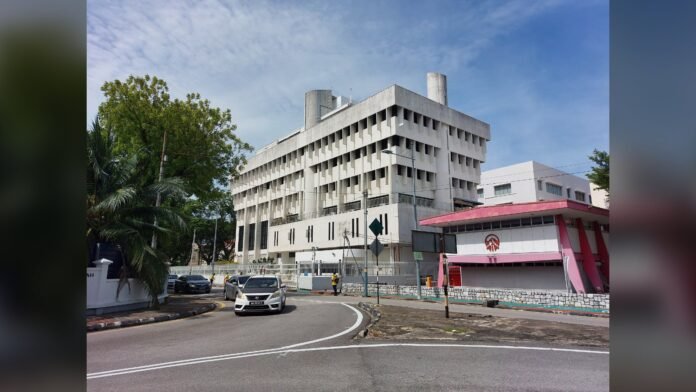
The Penang branch of Bank Negara Malaysia (file photo). Image: C.W. Tan (alias PenangLion/gavreauri), CC BY-SA 2.0, via Wikimedia Commons. Photo source · Licence
Sources
- Bank Negara Malaysia: MoU on cooperation under the Local Currency Transaction Framework (November 13, 2026)
- Bank Indonesia: BI, BNM, BOT and BSP strengthen cooperation in the local currency framework
- Bank Negara Malaysia: BI, BNM and BOT strengthen cooperation on local currencies (2023)
- Reserve Bank of India: MoU with Bank Indonesia on local currency transactions (March 2024)
- Reserve Bank of India: MoU with the Maldives Monetary Authority (November 2024)

The Business Desk covers markets, the economy, companies and personal finance. Stories are checked against at least two credible sources before publication.