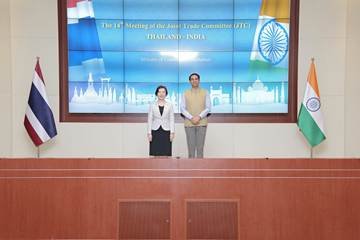
November 17: India and Thailand discussed linking UPI with PromptPay and improving market access at their November 16 Joint Trade Committee meeting in Nonthaburi. India’s Commerce Ministry said the talks followed bilateral trade of $21.49 billion in 2025–26, up 12.6% from the previous financial year.
Key highlights
- Officials discussed payment connectivity and local-currency settlement.
- Agricultural access, certification and other regulatory barriers were on the agenda.
- The announcement records discussions; it does not establish a consumer launch date.
What the meeting covered
The Commerce Ministry identified financial connectivity as one part of a wider trade agenda. The two sides also reviewed use of existing preferential arrangements and discussed working-level follow-up before the next committee meeting in India.
The distinction between discussing a payment link and activating one matters. A traveller cannot assume that every merchant accepting a domestic QR code will accept an overseas banking app. Participating institutions, transaction limits, fees and eligible payment types would need to be established in a separate operational announcement.
The Bank of Thailand describes PromptPay as payment infrastructure introduced in 2016, supporting transfers through identifiers such as mobile numbers and citizen IDs. That domestic service should be distinguished from each separately implemented international linkage.
Why market access involves more than tariffs
The official account describes discussions on agricultural, livestock and marine products, including sanitary measures, certification and quality requirements. It also identifies opportunities across manufacturing, healthcare and services.
A lower tariff is only one part of selling across a border. A supplier may still need to meet the destination’s product standards, demonstrate compliance and arrange an importer or distributor. That is why a trade-committee meeting can focus on administrative obstacles even when a preferential trade framework already exists.
How businesses should read the announcement
For a company assessing the opportunity, the useful next step is to identify its product and the specific restriction it faces. A general statement of cooperation is not an exemption from a customs requirement, a product registration or a safety standard.
Our reading is that the immediate significance lies in keeping implementation issues on the bilateral agenda. The commercial effect will depend on which discussions produce published decisions and whether businesses can actually use them.
At a glance
| Issue | Current position in the announcement |
| UPI–PromptPay connectivity | Discussed; no operational start date stated |
| Trade preferences | Better utilisation and review discussed |
| Regulatory obstacles | Market-access and certification concerns reviewed |
| Next step | Working-level follow-up; next JTC in India |
What to watch
Watch for separate notices from the relevant central banks and payment-system operators before treating cross-border payments as available. For goods, check any subsequent tariff, certification or market-access notice rather than relying on the meeting summary alone.
Sources
- India Commerce Ministry: Fourteenth India–Thailand Joint Trade Committee meeting
- Bank of Thailand: PromptPay payment infrastructure

The Business Desk covers markets, the economy, companies and personal finance. Stories are checked against at least two credible sources before publication.