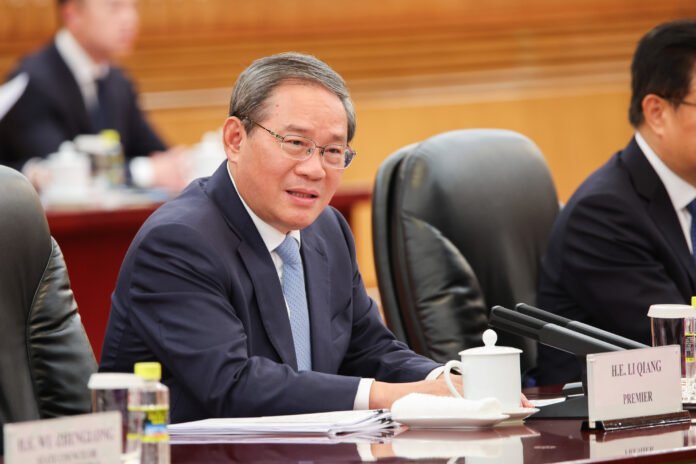
November 17: Chinese Premier Li Qiang has outlined plans for a year of artificial-intelligence cooperation with ASEAN in 2027, alongside digital scholarships and health-sector training. His November 16 Manila summit address presents new cooperation priorities rather than an immediately available application programme.
Key highlights
- Li proposed linking AI cooperation with ASEAN’s digital-economy agenda.
- China announced plans for 100 full digital-academy scholarships next year.
- ASEAN’s official account reaffirmed implementation of the 2026–2030 partnership plan.
What Li announced
In an address published by China’s embassy in Singapore, Li said the China–ASEAN Digital Academy would provide 100 full scholarships for ASEAN countries in 2027. He also outlined training for 1,000 professionals through a women’s and children’s health cooperation centre over three years.
His speech called for an early South China Sea code of conduct and greater infrastructure, industrial and supply-chain cooperation. These were presented as policy priorities; the speech is not evidence that an unresolved maritime agreement has been concluded.
What ASEAN confirmed separately
The ASEAN Secretariat’s summit summary confirms that leaders met Li in Manila on November 16. It says they reviewed the Comprehensive Strategic Partnership, now in its fifth anniversary year, and reaffirmed implementation of the ASEAN–China Plan of Action for 2026–2030.
That institutional account establishes the broader framework. It should be read separately from the specific programmes described by the Chinese premier, which will require their own delivery arrangements.
What this means for applicants and businesses
A scholarship number is useful information, but it does not tell a prospective applicant which courses qualify, who administers selection or whether travel and living expenses are included. Those details must come from an official call. An announcement should not be treated as permission to submit personal documents to an unofficial intermediary.
For companies, the same distinction applies to AI cooperation. A summit priority can signal where governments want collaboration to grow, but it does not identify procurement eligibility, data-handling obligations or a commercial contract. Those depend on the programme and jurisdiction involved.
At a glance
| Proposal or framework | Time horizon |
| AI cooperation year | 2027 |
| Digital Academy scholarships | 100 full scholarships planned for 2027 |
| Health professional training | 1,000 over three years |
| Partnership action plan | 2026–2030 |
What to watch
Look for official scholarship notices and named implementing institutions. For trade and infrastructure, subsequent agreements and published implementation measures will matter more than broad summit commitments.
Sources
- Chinese Embassy in Singapore: Li Qiang’s 29th China–ASEAN Summit remarks
- ASEAN Secretariat: Twenty-ninth ASEAN–China Summit

The Tech Desk covers technology, artificial intelligence and cybersecurity. Stories are checked against at least two credible sources before publication.