November 17: The Philippines and Australia have expanded their defence-cooperation framework, with maritime awareness, secure communications and operational coordination among the priorities. An Australian government announcement on November 15 and a joint leaders’ statement on November 16 set out the scope of the initiative.
Key highlights
- The new arrangement updates the framework for practical defence cooperation.
- The joint statement includes consultations on contingencies affecting shared security interests.
- Implementation remains subject to each country’s own processes.
What the new arrangement covers
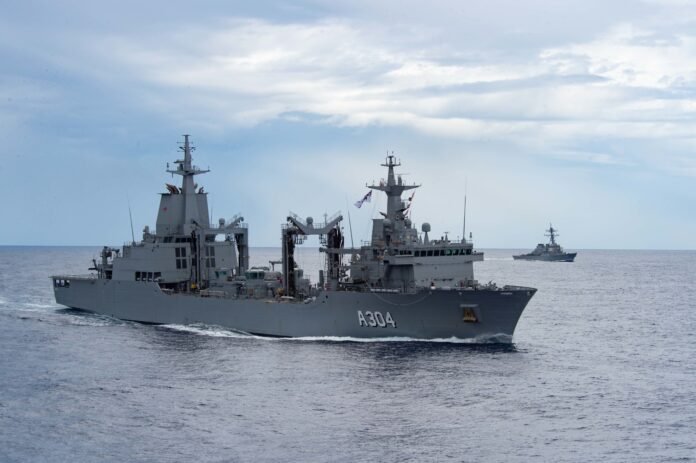
Australia’s Prime Minister’s Office said Anthony Albanese witnessed the signing after a visit to HMAS Stalwart in Manila. The arrangement builds on the existing defence memorandum and covers information-sharing, training, planning and infrastructure cooperation.
The announcement also describes investment in Southeast Asia maritime partnerships, including drones, secure communications and operator training. Those regional activities are intended to improve detection and response capabilities, rather than simply add another diplomatic declaration.
What the leaders said the following day
The November 16 joint statement identifies maritime awareness, littoral operations, logistics, cyber defence and disaster response among the priorities. It says the countries will consult on contingencies affecting sovereignty or shared defence and regional-security interests, and consider responses consistent with their respective processes.
The statement also reaffirms navigation rights under international law and continued maritime cooperative activities. Its formulation should not be turned into a claim that every contingency automatically triggers a specific military response.
Why the operational details matter
Sharing a maritime picture, maintaining secure communications and coordinating logistics address different parts of the same problem: whether forces and civilian authorities can understand an incident and cooperate effectively. Training and equipment only become useful when people can operate, maintain and integrate them.
For regional shipping and coastal communities, the relevant outcomes will be practical: clearer situational awareness, reliable communication and more effective responses to emergencies. A cooperation framework does not by itself demonstrate that a particular capability has already been delivered or deployed.
At a glance
| Document | Main significance |
| November 15 announcement | New defence cooperation arrangement |
| November 16 leaders’ statement | Broader security and economic agenda |
| Operational priorities | Maritime awareness, logistics and cyber defence |
| Contingencies | Consultation within each country’s processes |
What to watch
Watch for named projects, implementation schedules and exercise announcements. Any future deployment or procurement should be checked against its own official notice, rather than inferred from the framework.
Sources
- Australian Government: Defence cooperation and maritime security in Southeast Asia
- Philippines and Australia: Kasandigan joint leaders’ statement

The International Desk covers world and Asian affairs, diplomacy and conflict, with a focus on what they mean for India. Stories are checked against at least two credible sources before publication.