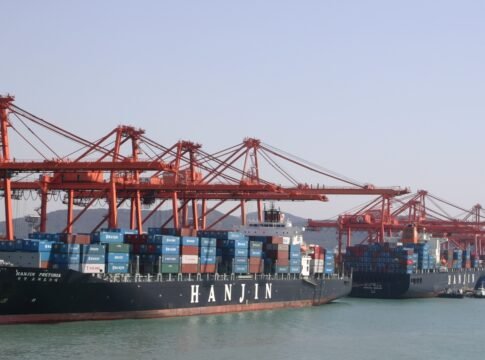
November 18: Japan recorded a ¥476.5 billion merchandise trade deficit in October even as exports rose 20.5% from a year earlier, according to preliminary Finance Ministry figures released on November 18. The result shows why strong overseas sales do not necessarily translate into a trade surplus when the import bill is also climbing.
Key highlights
- Exports reached ¥11.7688 trillion; imports were ¥12.2453 trillion.
- Export volumes rose 5.8%, while import volumes slipped 0.2%.
- The deficit was larger than a year earlier; this is a preliminary release.
The two sides of the trade account
The ministry’s release puts import-value growth at 21.6%, slightly faster than exports. It identifies crude oil among the main contributors to import growth and cars and semiconductor-related products among the export drivers. The figures describe goods crossing the border, rather than the entire balance of Japan’s transactions with the world.
A merchandise deficit is not interchangeable with a current-account deficit. The latter also includes services, investment income and other flows. This release therefore cannot, by itself, establish the overall external position or the profitability of Japanese companies operating overseas.
Why value and volume point in different directions
The official volume indices are particularly useful: exports increased in physical-volume terms, whereas imports edged lower. A rising yen-denominated import bill alongside falling volume means it would be misleading to read the headline as a comparable surge in the quantity of goods purchased.
Prices, exchange rates and the mix of goods all matter when interpreting nominal trade values. The ministry reports an average customs exchange rate of ¥157.84 per dollar, 5.6% weaker year on year. That is a reference used in the statistics; it is not a prediction for the yen or an instruction to investors.
What the figures mean for Asian supply chains
For regional manufacturers, the useful distinction is between final demand and the movement of parts through production networks. Japan’s semiconductor and machinery exports can connect to investment elsewhere in Asia, while its energy purchases affect the costs faced by domestic producers. These are transmission channels, not a quantified forecast of another country’s growth.
Our calculation: subtracting reported exports of ¥11.7688 trillion from imports of ¥12.2453 trillion gives a deficit of ¥0.4765 trillion, or ¥476.5 billion. Keeping the original currency avoids adding an exchange-rate conversion that can change during the day.
At a glance
| Measure | October 2026 | Year-on-year change |
| Exports | ¥11.7688 trillion | +20.5% |
| Imports | ¥12.2453 trillion | +21.6% |
| Trade balance | −¥476.5 billion | Deficit +57.8% |
| Export / import volume | Index-based comparison | +5.8% / −0.2% |
What to watch
Watch for detailed commodity and partner-country figures and subsequent revisions. Comparisons with earlier months should use the same seasonal-adjustment basis; the unadjusted year-on-year results and seasonally adjusted monthly series answer different questions.
Sources
- Japan Finance Ministry: October 2026 preliminary trade statistics
- Japan Customs: Trade statistics release calendar

The Business Desk covers markets, the economy, companies and personal finance. Stories are checked against at least two credible sources before publication.